Exploring family, darkness, and betrayal
An interview with Diana Rojas
By Tamar Shapiro
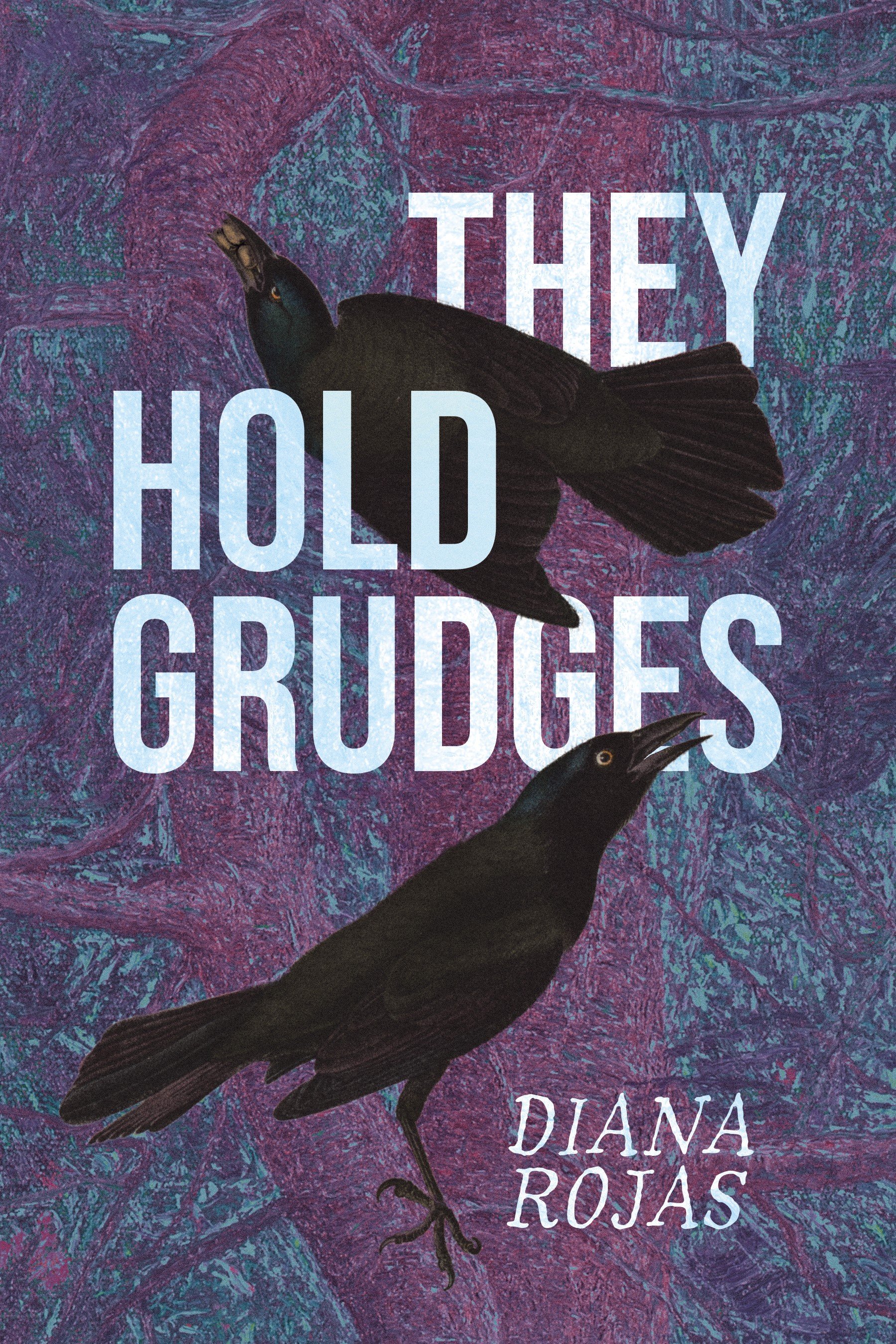
Diana Rojas’ They Hold Grudges (Arte Publico Press, 2026) is a taut and compelling story of family, loyalty, and betrayal. Rojas introduces us to the joys of a large, tight-knit family—gatherings, gossip, and a deep sense of belonging—only to tear this image apart piece by piece. Childhood memories shape-shift, gossip is never harmless, and the bonds of family are not what we expect. We watch with growing fascination and horror as one questionable decision leads to another until our very understanding of what it means to be a family is shaken. Rojas is unafraid to tackle difficult topics and expose the darkness that people hold deep inside.
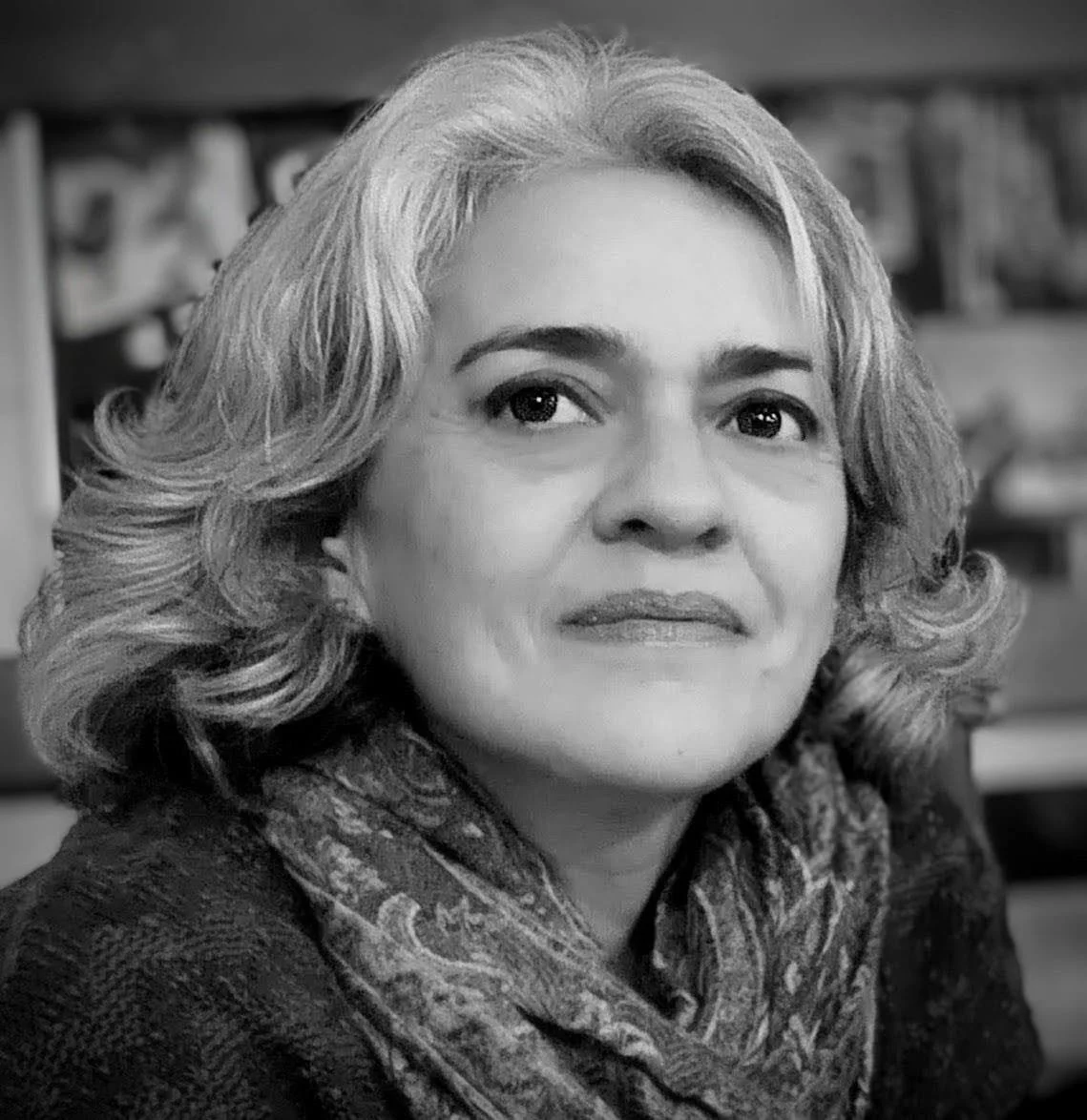
Rojas is the author of the novella collection, Litany of Saints, as well as the forthcoming children’s book, Clara’s Big Green Coat (Spring 2027), and serves on the Board of Directors of the PEN/Faulkner Foundation. Her essays are featured in Grit & Gravity, The Washington Independent Review of Books, and the Latino News Network, among others. She was kind enough to share some insights about her new book.
WU: You chose to tell this story from the point of view of the accused, Roberto. Because we are always in his mind, we are inclined to believe his version of the story. At the same time, we are never fully certain he is telling the truth. Can you speak to why you chose this first-person, single narrator point of view to tell a story that is fundamentally about what we believe and whom we trust?
DR: I wanted the reader to be in Rob’s head, to feel what he was feeling, to journey with him through this crisis so that they could understand – and dare I say, empathize a little? – with the decisions he makes. I’m a very judgmental person. It’s very easy for me to say X is right, Y is wrong, to see things in black and white. But in reality, there is so much nuance to morality, isn’t there? Growing up we had this plaque in our basement romper room that said “Never judge a man until you have walked a mile in his moccasins.” I still have to remind myself of that with regularity, so, naturally, I make my readers walk a couple of hundred pages in Rob’s moccasins! His version of the story molds our understanding of it, but I’m deliberate in showing that he might not be the most reliable narrator. I did that to discourage readers from being too quick to take his side. I want them to keep their moral compasses handy while reading. I don’t think our belief systems, no matter how rock solid we think they are, are always foolproof. I wanted to mess with people’s understanding of right and wrong in a sometimes ambiguous, sometimes outrageous, series of events.
WU: Your story is all about family. Roberto’s family gives him his identity and a sense of belonging, but his family also poses the greatest threat to him. He is accused by his cousin, inadequately defended by his parents and siblings, and gossiped about by everyone else in his extended family. What made you want to explore the dark side of family in your novel?
DR: I am from a very big, close-knit extended family – I’m one of about 40 first cousins, with a three-continent spanning WhatsApp group that is active almost daily! There is something magical about our Cousindom: I can walk into a room filled with them, and even though I haven’t seen them in years, or decades, I feel an immediate connection and sense of belonging. They know me, they know my family, and vice-versa. We share a history. We don’t need to explain ourselves. But in order for that many people to maintain connection throughout the years, there is an etiquette that needs to be observed. Politeness, affection, tolerance must always be manifested. If there is any darkness, we don’t discuss it out loud. Ever.
So what happens in families when these rules of engagement don’t exist, or when someone decides to blow them up? When Rob’s cousin accuses him, his family– not wanting to create a permanent rift – does not rush to his defense. Rob loses his sense of identity of being one among many. He is stripped of that Cousindom magic and exposed as an individual. I get to put this individual against the backdrop of a dismantled myth of familial harmony. And because neither he, nor his accusing cousin, Pablito, are singing in tune with the rest of the group, they stand out. Their clanging stories get amplified.
I spend an inordinate amount of time pondering the what-ifs in life. One of my favorite games is wondering what would happen if we broke free of the constraints we’ve been trained within since birth – cultural, familial, personal. That’s what I’m exploring, in a very dark way, in this novel.
WU: Your story, like real life, is full of complex and deeply flawed characters. They claim to love each other (and they probably do), but their relationships are full of betrayals, both large and small. Your narrator, Roberto, is no exception. Do you, as a reader, gravitate toward stories with flawed narrators and why?
DR: For sure! Partly because reading about deeply flawed humans makes me feel better about my own flaws. Trained as I’ve been since infancy to be “good,” I crave flaws because they add spice and nuance to the story. Perfection is boring and flat. I have a hard time believing that good people, saints and such, don’t have putrid thoughts on the daily. It’s not humanly possible to have yin without yang, good without bad. So reading and writing stories with flawed narrators or characters is just reading and writing about real humans. We can recognize ourselves in them.
But I like to veer beyond flawed and into unlikeable characters, because it’s harder to recognize a shared humanity when people behave in ways we’d condemn in real life. When I encounter deplorable behavior on the page, I enjoy that delicious shock of realizing that maybe, if all the social and emotional constraints I abide by to be a decent person fell away, I might act and react like my characters. Realizing that we, the unlikeable character and myself, might not be so different after all.
WU: One of your epigraphs and all your chapter headings are drawn from the writings of the philosopher, Søren Kierkegaard. Your narrator is also fascinated by Kierkegaard’s philosophy. When his life begins to spiral, he looks to Kierkegaard’s views on belief and forgiveness for guidance. Can you speak more about your own interest in Kierkegaard and how it shaped your story?
DR: I’m a failed philosopher on so many levels! I grew up learning Christianity and really got down with Jesus’ philosophy. But when I started losing my religion in college, I decided to take a survey course on European philosophy to find another thought school I could embrace. Søren Kierkegaard stood out in that class for me, probably because he approached life through a Christian lens and I was still daunted by my religious about-face. So I latched onto him for dear life, only to realize I couldn’t understand even half of his writing. And what I could understand…meh. He was trying to be too good. Or a martyr.
[Worse yet,] he took precepts I understood – like “turn the other cheek” – and complicated the heck out of them. That one he explained like this: If you feel aggrieved by someone, understand you just got in the middle of a a spat between the aggressor and God. No need to ask for apologies, or grant forgiveness. Just step away and let the sinner figure it out with God. I’m sure I mangled that idea, but, please. Telling me forgiveness is between you and God, like I’m not hurting? That’s gaslighting! I believe in choice: I can hold a grudge for a long time (and I’m good at that) or I can accept an apology and forgive. I dumped Søren and the study of philosophy after that one semester.
When I started to flesh out Rob’s story, I realized that having him be a failed philosopher like me would be helpful. He has to unwind his moral dilemma from a position of philosophical weakness: He is wishy-washy, a beginner at thinking, full of self-doubt. He’s forced to re-invent the wheels that have fallen off his easy life by creating his own philosophy.
Using Kierkegaard’s quotes as chapter titles was a fun way to put all my past reading to good use. That man had A LOT of thoughts and some good turns of phrase! NOW I feel like I got my money’s worth from that class.
WU: Your story ends with several shocking twists. Without spoiling anything, can you share whether you had these twists in mind from the very start, or did your characters lead you to this conclusion as you developed them over time?
DR: I like to think out the story, in general, before I ever sit down to write. I do a lot of this planning and plotting and scene setting away from the keyboard, on walks or when I wake up before getting out of bed. A couple of the twists were part of the original idea. I’m a lonely thinker – I tend not to bounce ideas off anyone. But I do leave the door open to my characters to make suggestions, to lead me in the direction they want. And in the case of They Hold Grudges, the characters forced some twists on me that I did not see coming! I delight when that happens: it’s like the story comes to life.
They Hold Grudges will be published September 30. Preorder your copy directly from the publisher. Learn more about the author on her website at https://www.bydianarojas.com/
Upcoming book events!
October 2. Author event. In conversation with Laura Scalzo at Lost City Books in Washington, D.C.
October 9. Author event. In conversation with Abby Higgs at The Ivy Bookstore in Baltimore, Md.
October 7. Unearthed Truths panel with Shasta Grant. Fall for the Book festival at George Mason University in Fairfax, Va.
September 23. Contemporary Central American Voices, Teaching for Change panel. At Busboys and Poets 14th Street in D.C.
Nov 22. Author event. In conversation with Tamar Shapiro at Politics and Prose Connecticut Avenue in Washington, D.C.
Diana Rojas is the author of Litany of Saints: A Triptych (Arte Público Press, 2024) and the forthcoming bilingual children’s book, Clara’s Big Green Coat (Piñata Books, 2027). Her essays have appeared in Grit & Gravity, The Washington Independent Review of Books, Barrelhouse Magazine and the WWPH anthology America’s Future. She serves on the Board of Directors of the PEN/Faulkner Foundation and lives in Washington, D.C.
Tamar Shapiro’s debut novel Restitution was named a 2025 Foreword INDIES Award Winner, a 2026 IPPY Award Medalist, and one of the 49 Must-Read Books of Fall 2025 by Town and Country Magazine. A former housing attorney and non-profit leader, Shapiro received her MFA from Randolph College in January 2026 and is a DC Commission on the Arts and Humanities Fellow.
(Read Norah’s review of Tamar’s novel Restitution, here.)