
Remembering a remarkable chapter in D.C. theater history
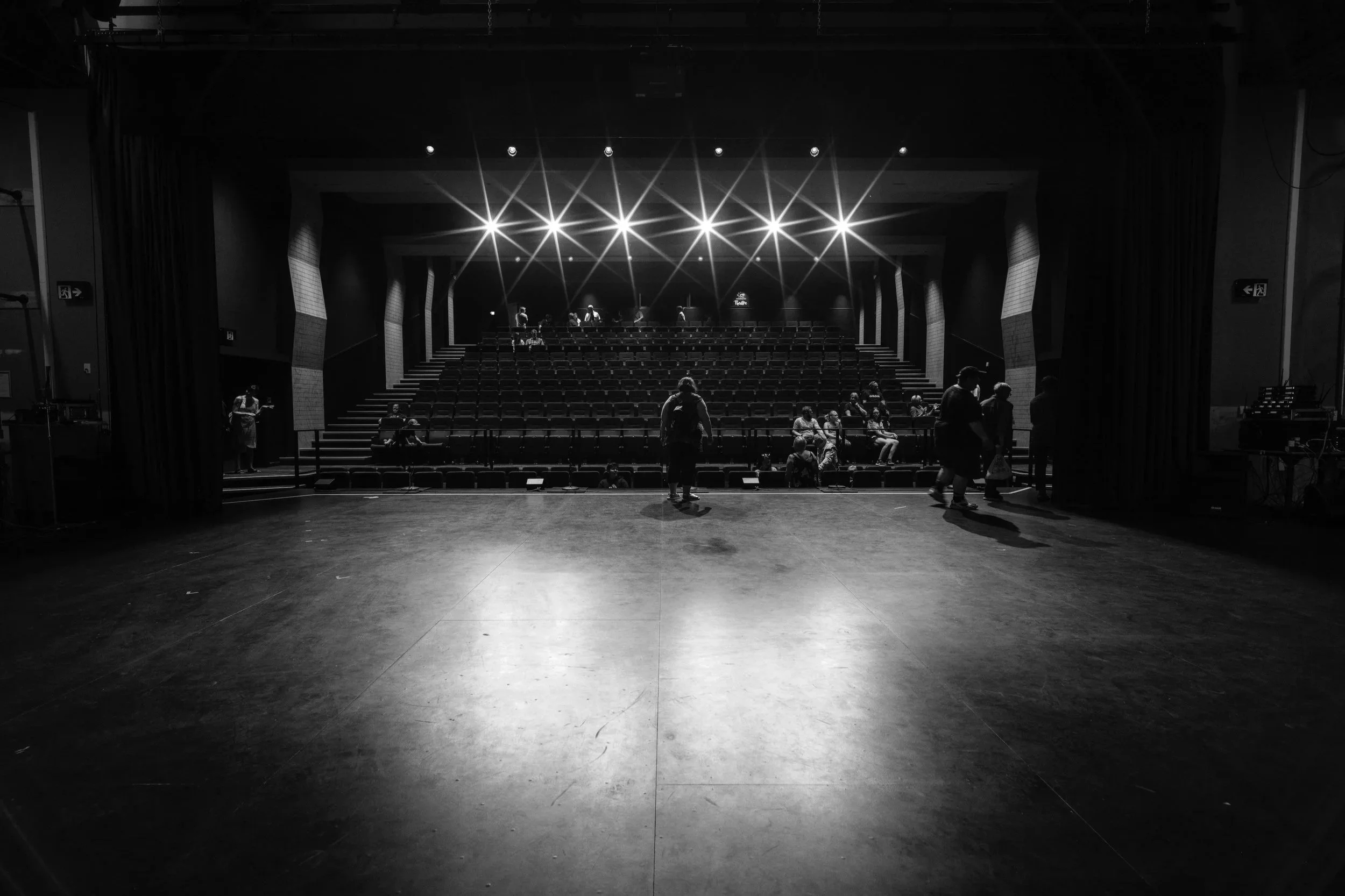
An interview with Amy Schmidt, author of Making the Scene: Theater on 14th Street in the 1980s
by Gregory Luce
Anyone who lived in the Washington, D.C. area in the 1980s will remember the string of theaters lining 14th Street that comprised D.C.’s “Theater Alley.” How this area came to be a Washington theater destination, what happened, and who populated it is the subject of a fascinating recent book, Making the Scene: Theater on 14th Street in the 1980s. The volume is a comprehensive and stunning collection of images, interviews, and narratives featuring many of the leading lights of the 1980s theater scene in D.C.
The author, Amy Schmidt, co-founded SCENA Theater with Robert McNamara (legendary D.C. theatrical entrepreneur, not the former Secretary of Defense). As staunch supporters of DMV theater, and aficionados of our region’s arts and literary history, we were eager to learn more about this remarkable era in Washington.
WU: Can you first give us a little personal background? What drew you to theater? Have you performed, written plays, or served in an administrative capacity for a theater or theaters?
AS: I was born in Washington D.C., but my family moved around a lot, so I never lived here until the late 1970s when I returned to take a job at the National Archives. At the time, I was still working on my doctoral dissertation for the History Department at Kent State University. Between work and writing the dissertation (eventually completed in 1984), I was sick and tired of academia, and a bit bored at work. A wise friend gave me a bit of invaluable advice: when you don’t know what to do next, just move in the direction of something that really interests you and you will eventually find what you are looking for. So that is what I did. The sign post pointing the way was an ad in the Open University catalogue, dispensed back then, circa 1981, in one of those street corner boxes scattered throughout the city. Someone named Bart Whiteman was teaching a playwriting class weekends, down on 14th Street. I signed up and, long story short, the rest is history.
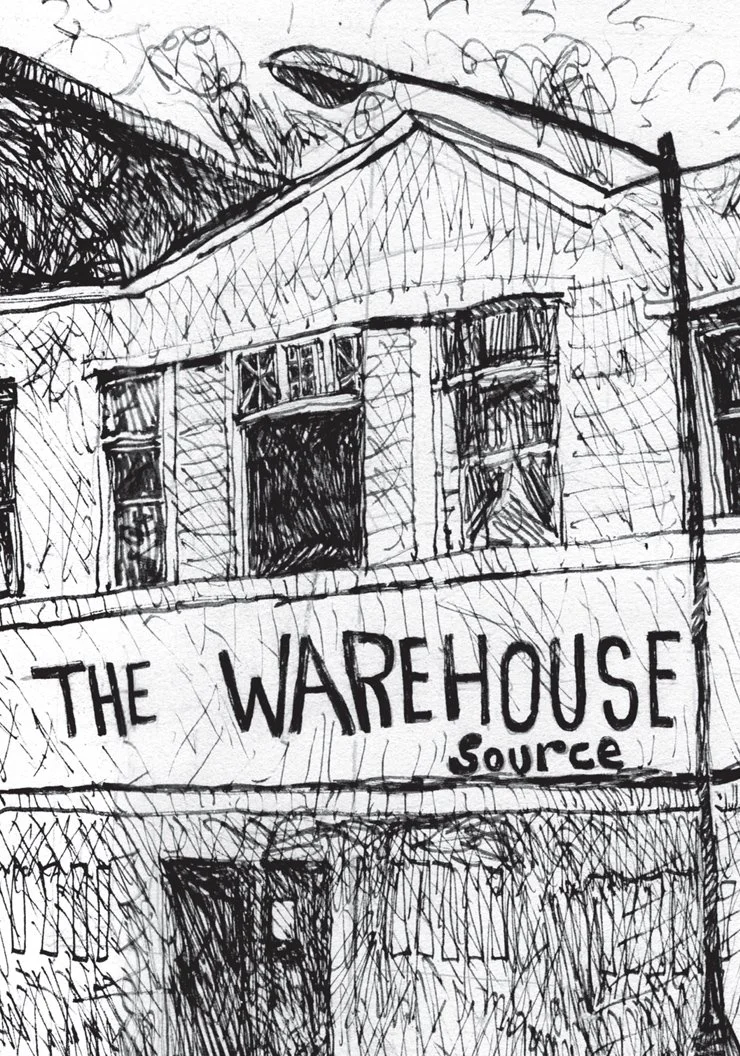
Of course, I had no background in theater but I was (for reasons inexplicable) working on a play called “Cancer Sell” about a technician at NIH who discovers a cure for cancer while taking a weekend vacation at Rehoboth Beach. The play was never finished but, as I say in my book, once I discovered 14th Street, I felt the tug of attraction. I distinctly recall walking into Source Theatre for the Sunday morning class and seeing Megan Morgan, wearing red cowgirl boots and surrounded by a group of fellow actors, banging away on an old upright piano. I wanted to be part of that!
14th Street in the 1980s was a derelict neighborhood, left in ruins after the 1968 riots. The transformation of the riot corridor into Washington’s theater row was largely due to the availability of cheap real estate. Again, as I write in my book, the theater pioneers(Joy Zinoman, Bart Whiteman, B. Stanley, Robert Alexander and Howard Shalwitz) led the way and were followed by the great hordes—baby boomers!—I was one of those. Resumes were not required but acquired on site, learning by doing. Again, I fit the mold. I went to see plays and just hung around, trying to figure out where I might fit in. One thing I did was begin writing backstage stories about theater topics for the Washington City Paper, and Washington Review of the Arts. Eventually I met Keith Parker, the Source Theatre literary manager, who invited me to read new scripts for the annual Washington Theatre Festival.
Then I met Robert McNamara [legendary D.C. theater entrepreneur, not the former Secretary of Defense], worked on a few of his shows, designing props and assisting the costume designer. In 1987, Robert and I decided to found our own company, SCENA Theater. As managing director, I just kept doing what I had been doing, learning by doing.
To answer your specific question: No, I have never acted in a play. I wrote one ten-minute play for The Source Theatre's annual summer Washington Theatre Festival, “Camel Call,” which was performed. For about twenty years I served as SCENA’s managing director, all the while working full time at the National Archives, a day job that continued until I retired in 2014.
I knew from the get-go that something special was happening on 14th Street. There was so much energy and talent concentrated in that six-block span that became Washington’s “theater row.”
WU: How did Making the Scene come about? Was it entirely your idea?
AS: Given my background as an historian/archivist, I collected artifacts along the way—theater programs, significant press clippings. I kept a camera with me, photographing the buildings, interesting personalities. Through my freelance writing, I recorded interviews. Two of those, with Bart Whiteman (1986) and B. Stanley (1994), appear in Making the Scene. So, over time, I built up my own personal archive. As early as 1990, I self-published a handmade chapbook based on the Bart Whiteman interview, titled A Short History of the Source. The chapbook’s launch took place at Bookworks, a wonderful book arts venue that was part of the Washington Project for the Arts. The event was a sort of farewell party for Bart before he left DC.
WU: How long did the book take to write? How many people were involved in collecting the artifacts, photos, et al., and how many people contributed through interviews, reminiscences, etc.?
AS: Around 2005 (more than 20 years ago!) I started keeping a notebook, sketching out ideas for a full-length history of theater on 14th Street in the 1980s. Big projects, like writing a book, find their own time. The time to actually sit down and write Making the Scene came during the pandemic. By that time I was retired from the National Archives and living in the foothills of western North Carolina, a wonderful place to write! So I toted all my research materials down to North Carolina and set to work. The project took six years and required a lot of back and forth to the D.C. area to record more interviews and explore archival materials at the Martin Luther King, Jr. Library, as well as the theater archives at the University of Maryland and George Mason University. Meanwhile, I contacted several photographers—Lucian Perkins, Michael Horsley, Ian Armstrong and Jeff Crespi—who gave me the rights to use some of their vintage images. So, I would calculate, two years of research, three years of thinking and writing, and another year to work out the book design.
It was the design part that kept me awake at night! I spent days scouring the internet for the right papers. Agonizing over the typeface. Ordering books from as far away as France to get ideas. And the all-important book cover? At last I had an inspiration. I contacted the Pittsburgh artist Brian McCall who agreed to provide a pen and ink drawing, a panoramic view of “the scene” along with other drawings and hand-drawn lettering. Brian began his career at the Alexandria Torpedo Factory Arts Center, and we were old friends. We had worked together on an earlier SCENA Press publication, Drago Jancar’s play Stakeout at Godot. The rats in Making the Scene are actually recycled from that book. I love those rats! And his art work proved perfect to give that book its hand-made look. I did not want slick. I wanted the 1980s. Plain old brown paper, hand-drawn lettering, and rats.
I should write an ode to Deborah Eckbreth, the graphic designer. She has worked with me—I should say, suffered with me—through all the SCENA Press publications. Somehow we click. I tell her my vision and she, with her vast technical skills, makes it happen. This is how it works. We sit together in her studio. Try out different things. Yes, no, yes, okay, let’s go with that. She is very patient, and we do not move ahead until we both agree. So I would say that the final design of Making the Scene was a collaboration born out of push and pull and mutual respect. Deborah also provides the technical interface with the company in Asheville, North Carolina, that printed the book. I like to say without good technical support, all else fails. She made sure that everything was technically perfect.
WU: Tell us a little about SCENA Press. Any upcoming publications? How’s the book doing in terms of sales, reach, etc.?
AS: The book is a SCENA Press publication. SCENA Press is part of Washington’s SCENA Theatre. I founded the press back in the 1990s to publish English language translations of international plays produced by our theater. We have also published a book of poetry by Washington actor Kryztov Lindquist, so doing a theater history was not a complete departure. Making the Scene: Theater on 14th Street in the 1980s was printed in an edition of 500 copies. The book launch took place at the Arts Club of Washington on May 11. It was a gala event, with about 120 guests representing all of the pioneering theater companies from Washington’s now long-gone 14th Street “theater row.” I was busy the whole evening signing books! After that, well, selling books is a difficult business. I have sent complimentary copies to Washington area archives and libraries as well as to artistic directors of DC theaters and theater conservatories that train Washington actors. This generates sales and puts the book into the hands of people who may find it interesting. I am especially eager to have the book reach acting students.
Theater is once again in a difficult period and I am thinking that reading about the hardships and dedication of theater artists in “the olden days” might serve as an inspiration. Busboys and Poets on 14th Street is interested in carrying the book, and it may soon be on sale at Woolly Mammoth Theater. And —Voila!—a theater professor at American University wants to use it for one of his classes.
Making the Scene is a book of interconnected stories that sketch out the history of Washington’s first authentic “theater row.” It is certainly not the last word on the subject. As I say in the prologue, “Everyone who showed up has a story to tell, how they got there and what part they played. So don’t take my word for it. Tell your own stories.” I am hoping the book will inspire others to do this. I can envisage a series of chapbooks— perhaps a boxed set!—preserving these stories in an analog form.
Meanwhile I have been collecting books on Washington theater history. There are a few. A biography of Father Gilbert Hartke, the “showbiz priest,” who established a graduate program in drama at Catholic University in 1937. Donn Murphy’s history of the National Theatre. More recently, there is Todd London’s The Long Revolution, an edited collection of the writings of Zelda Fichandler, founder of Arena Stage. Blair Ruble’s Proclaiming Presence from the Washington Stage. Julianne Brienza just came out with Book of Fringe detailing the history of the Washington Fringe Festival. Elizabeth Bruce and Michael Oliver have an on-going “Theatre in Community Podcast Series” which already includes important interviews with significant members of the Washington theater community. Just last month I talked with Blair Ruble about the idea of a Washington Theater History Day. We could have book displays, collections of memorabilia, films, photographs, speakers from the various theaters and theater archives. Maybe even a guided walking tour of 14th Street to revisit the ghosts of theaters past. How about that!
Making the Scene: Theater on 14th Street in the 1980s is available in a signed limited edition of 500 books by mail order ($50 plus $7 for packing and shipping, payment by check, cash, or money order only) from Amy Schmidt, SCENA Press, PO Box 1212, Columbus, NC 28722. Payment is also possible by Venmo and Zelle. To order by Venmo or Zelle, please email the author at amy.schmidt2024@gmail.com.
Note: Washington Unbound co-editor Norah Vawter interviewed author Alexis Green regarding her book Shakespeare Theatre Company: The History of a Classical Theatre. That book would be an excellent companion volume to Making the Scene.
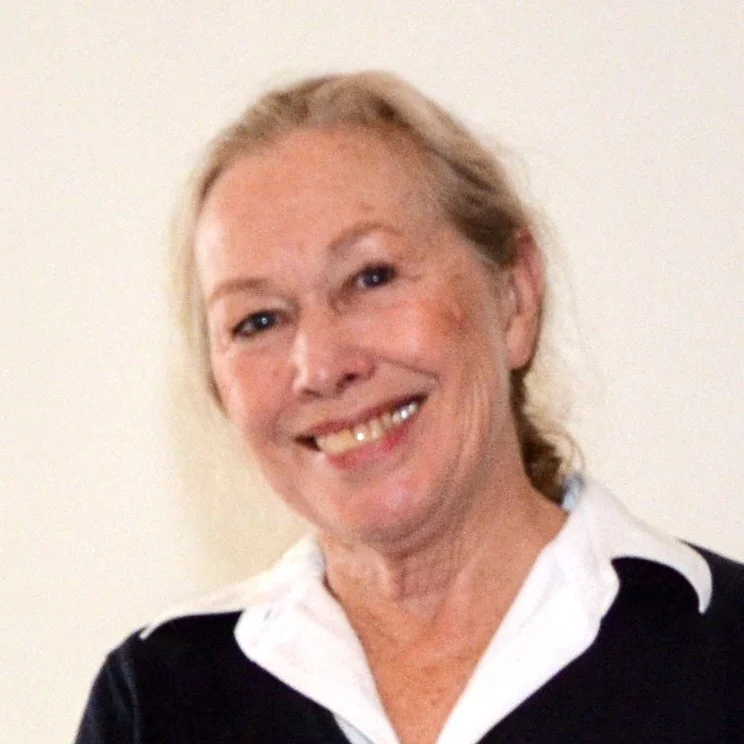
Amy Schmidt is the co-founder and managing director emeritus of SCENA Theatre. She is also the founding editor of SCENA Press. In her off-hours, she completed a doctorate in history at Kent State University and enjoyed a long career as an historian at the National Archives in Washington, DC. Today she lives in Alexandria, Virginia, but spends most of her time in the foothills of North Carolina’s Blue Ridge Mountains where she enjoys daily riding and barn chores at Mendoza Dressage.
Gregory Luce is the co-founder and poetry editor of Washington Unbound. He has published six chapbooks. He lives in Arlington, serves as Poetry Editor of The Mid-Atlantic Review and writes a monthly column for the online arts journal Scene4.