
Crafting fiction

An interview with Stephanie Dupal
by Gregory Luce
When Rachel Coonce from The Inner Loop reached out and invited us to collaborate in publicizing their 2026 Author's Corner series, we naturally agreed at once. For over ten years, TIL has been a major force in the DMV literary community, offering multiple opportunities such as readings, workshops, podcasts, and writers’ retreats, all focused on local authors. They were also one of the first organizations to offer their support when we were first launching Washington Unbound, for which we remain eternally grateful.
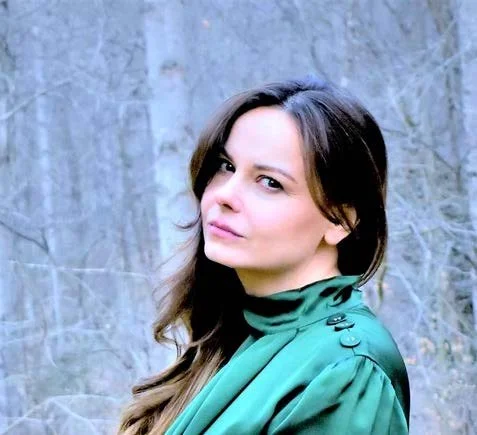
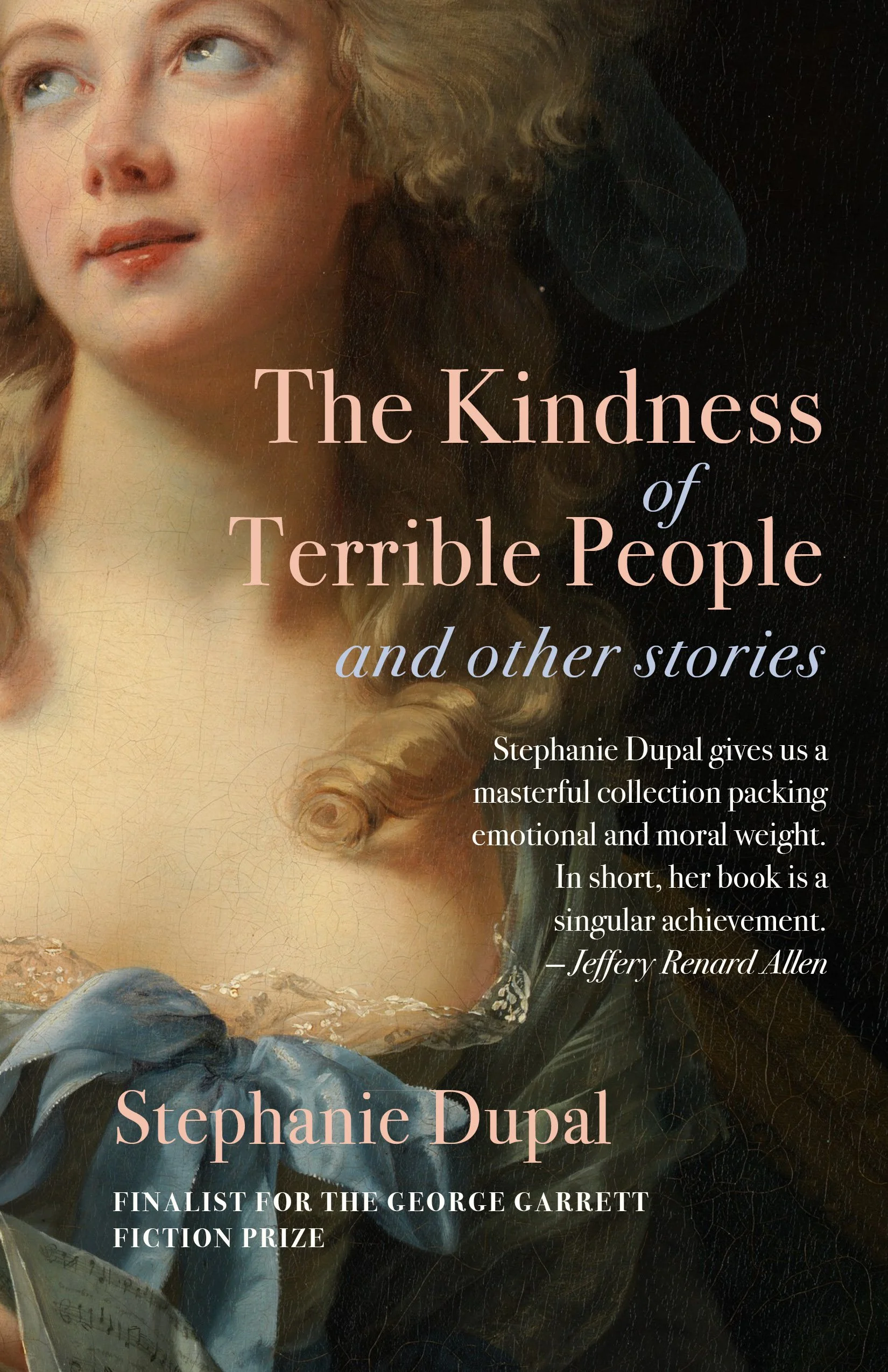
The first author to be featured in this series is fiction writer Stephanie Dupal. Born in a small town in Quebec, Canada, Stephanie made her roundabout way to Woodbridge, Virginia, where she teaches at the Woodbridge campus of Northern Virginia Community College. Her splendid debut collection of short stories, The Kindness of Terrible People, is all the more remarkable given that English is not her first language.
We were eager to talk to Stephanie and learn how she became a writer, who she learned from, and what she might be planning. She also spoke about her ongoing struggle to write a novel, which should be of particular interest to the fiction authors in our readership.
WU: Could you tell us about your background? How did you come to writing, and when did you first start writing fiction specifically?
SD: So I've been writing since the 1990s, quite actively, and then in the early 2000s, I completed a master's degree in literature from James Madison University. I had just come from spending five years in Italy, where my son was born. Doing that master's degree really solidified my love of literature. I focused on postcolonial literature, and the professors I worked with certainly encouraged me to continue writing. During that time period, however, because I was so involved with the process of getting that master's degree, and I had a very young child at home, the writing of fiction sort of became a bit of a hobby, if you will, instead of my main focus.
But let's say in the 2010s, I really picked up writing again, and several of the stories in The Kindness of Terrible People actually date from the various periods of my writing career, which is quite interesting because the collection spans 26 years of my writing, and I know exactly where each story falls on that timeline, and I'm still just as enthusiastic about some of the older stories as I am about some of the new ones. In fact, I think I have a little bit of a tenderness for the writer that I used to be, and I've revised these stories over a number of years.
WU: You have also written other things than fiction professionally. Could you talk about your other writing? What have you've written about? What subjects have you chosen to write about, and how did you go about that?
SD: Absolutely. I was hired officially by Patch AOL in 2011. At the time they were doing these brilliant little stories on neighborhoods. AOL had just sunk millions, and I do mean millions, of dollars into creating these sort of miniature websites about communities and localities, and they would basically send me to cover anything that was happening in our Greater Woodbridge, Prince William County area. For example, an art festival that I would go and cover. It could be sports events going on in the area, including events for teenagers, high schools, or things of that nature, but mainly it was a way to get the community excited about events in the area. And during that time period, I felt so connected to Lake Ridge, Woodbridge, this area that I live in. I was attending all these sort of incredibly small things. You know, I showed up to a little art festival one year that sadly probably had twelve individuals in attendance. But I still felt that there was a love for the artist and a love for what people were creating, and it really sparked my love of —not journalism actually because I did not have any formal training in journalism—but it spurred a love for art in general, writing and music and painting, sculpting, all of it really.
And as I was covering all of these local events, including incredible individuals who were doing fantastic things with, let's say, local farming and farmers markets and things of that type. I just knew that was what I wanted to do, to be involved in some way in the artistic community. I think it’s really important to discuss what our art produces, and for me at least, it's been incredibly difficult. It's been difficult to stay enthusiastic in an industry that closes more doors than it opens for a variety of individuals, and I know I'm not alone.
WU: Yes. This is a difficult time for the arts. That’s a big part of why we started Washington Unbound. It seems to me that that kind of coverage of these very local events is excellent training for writing fiction, especially the kind you write, which is so focused on people in specific situations. I take it you probably had already been writing some fiction by then, but that must have fed into it.
SD: Oh, absolutely! Yes, I have been writing short stories since the ‘90s. The short story is by far my bread and butter. I wish that I could write a novel. I've written fiveish, two to completion. They're terrible, and I don't say that out of some sense of humility. They're truly horrible because I have a misunderstanding of structure that I don't have with a short story. I understand the short story, but I don't understand novel structure. Strangely enough I understand it fully and completely when I'm analyzing and close-reading other people's work. It’s funny how much we understand of others' works that we don't understand in ours. But the novel really eludes me to the point where my attempts at writing novels have become quite dispiriting. And yet I'm attempting a novel again.
I can keep focus on something for as long as 8000 words, and certainly most of my stories fall between 3500 and 8,000 words. That seems to be where I'm most comfortable. Just as I have difficulty with the long form, the novel, I also have difficulty with flash. Interestingly enough, that very short form also kind of kills me. So somewhere in the middle seems to be my preferred place of comfort.
WU: That sounds like something that would make a really good essay, to really explore.
SD: That is an excellent idea. What I have found with my nonfiction is that it is very difficult to place, which has hindered my willingness to write more of it, because I've been publishing fiction, and certainly that road has never been incredibly smooth. As we know, we need to accept rejections and to continue and to forge on in the face of adversity, in the face of rejection. Certainly, I think I've now racked over 700 rejections—not from magazines—but from a combination of magazines, contests, literary agents, publishers, the gamut of where we submit, and quite frankly, that number is not extraordinary at all.
WU: Something that I noticed in reading several of the stories and looking into some of the other ones, was how widely the stories vary in styles and subjects. They're all very good, but often in completely different ways. Do you set out with an idea, or do you decide over some period of time that you want to consciously try for these kinds of variations? For example, I'd like to write a sort of a speculative story now, then I'd like to write like the one you mentioned, the second story in the collection, which has some affinities with Richard Ford or Raymond Carver, what’s often called “dirty realism.” Does an idea just occur to you, and you decide to pursue it, or do you deliberately strive to create a wide variety?
SD: No, variety is never on my mind. Every single short story for me comes from an opening sentence that pops into my head. I don't know where it comes from. It just pops into my head, and then I have to figure out what is this about. Where are we? Who's saying this? It's not necessarily even a line of dialog per se. It's just a line, or sometimes an image. Some of these stories are very much image based.
Most of the stories in the collection have taken me years to revise. I write them fairly quickly, so the writing process, the drafting process, is generally really brisk for me. And then I let it sit. I like to forget its movements, if you will, so that when I'm looking at it with fresh eyes, which I suppose, for lack of a better term, really does work, I'm looking at this as though someone else wrote it, and so immediately everything that I find annoying or cliched or just on the nose, gets taken out completely and utterly. Anything that annoys me in my own writing has to go. That's one of my rules. And then I look at what does work, and I ask myself questions about why I think this particular section works, and why it's happening in this in form, in this way.
One of the stories, “The Beast Who Knew the Songs of Billie Holiday,” which was originally published as “Lost and Found,” came out of an absolute need to survive an atrocious meeting at NOVA. Pre-COVID, we used to have these twice a year assemblies of all of the various faculties. So English faculty would gather in an enormous room on the Annandale campus, and these meetings would last hours. And quite frankly, these meetings consisted —really, you could call these meetings people talking and nothing coming out of it. And for me, for someone with attention difficulties, they are hard to survive. So I sat with a notebook. I was sitting in the back of this room, and I wrote the entire short story during that meeting, the entire thing, and it came from this idea of a lost cat. That was it. I sat there and I thought, what would happen? What would happen if a beloved pet didn't return? Of course I revised it multiple times afterward. But that one in particular isn't so different from the original draft. I found the notebook that contains that short story recently, and read over it, and thought this is quite impressive. It's quite close to the final published version.
WU: Who are some of your influences, some writers you find yourself returning to most often?
SD: Someone who's been—I like to call her the goddess on whose altar I worship—Carol Shields. Not just because of her journey as an American woman who then naturalized as a Canadian citizen and wrote these beautiful, beautiful Canadian stories. She had the ability to inhabit both of those worlds. As a French Canadian, growing up solely speaking French and then coming to the English language much later, I have a reverse journey, but I also have a different linguistic journey since Carol Shields was here in the United States speaking English, and she moved to the anglophone portions of Canada. But her writing contains a luminosity at the sentence level that absolutely blew me away.
In the same way, I read Edith Wharton's The House of Mirth. I read that as a teenager, and I was just blown away because of that unforgiving ending, which is so right, so correct. That this character wants to be part of this world and yet fights it again and again, makes all the choices that pull her away from that world even as she's trying to enter it. That book also informed my writing in so many ways.
WU: I thought I detected the influence of or affinity with Mavis Gallant in “To Lie Engulfed in the Waves of the Sea.”
SD: You are correct in detecting the influence of another Canadian woman—Mavis Gallant—who, like me, was from Montreal. I teach Gallant’s stories, and I love the way she violates point of view in the most unexpected, yet subtle ways. It would be easy to overlook her ability to push technical boundaries. I came to Gallant recently, in the past six years or so, and the discovery of her work has delighted me, as did Frances McDormand’s impersonation of a Gallant-like character in Wes Anderson’s film The French Dispatch, which I also teach. I share my love of her stories with Jeffery Renard Allen, who kindly and generously provided the endorsement that graces the cover of my collection. Our friendship was born of our mutual admiration for Mavis Gallant.
The writer Robert Bausch was hugely influential in supporting my career. He was a dear friend and mentor, and a NOVA colleague at the Woodbridge Campus. In the spring of 2016, I shadowed him while he taught creative writing. Bob pushed me to write difficult things. Bob was a brilliant storyteller. For years, he ran a three-day workshop with his twin [the author Richard Bausch], and I learned much about humor simply by listening to their repartee. Those of us who attended these workshops consider ourselves exceptionally fortunate. Bob passed away in 2018. I miss him terribly.
To answer your question regarding writers to whom I return often, in addition to those I mentioned, here’s a brief list: Maryse Condé; Anne Enright and Cynan Jones, both of whom I had the pleasure to meet at Wroxton Abbey; Claire Keegan; Barbara Kingsolver; and Miriam Toews. There are so many authors I love and admire.
WU: I mentioned that “The Ethics of Keeping Company With Strangers” put me in mind of the “dirty realism” often associated with male writers like Carver and Richard Ford.
SD: The original title of that story was “Pitstop Jericho.” (Yes, “pitstop” is written as one word, though it’s a misspelling.) I still love that title, and it inspired the grittiness of the desert setting. During the same period when I composed “Pitstop,” I wrote a few other stories that share the same kind of “dirty realism.” They didn’t make it into the collection, but they are among my favorites. One of these I never submitted for publication. It’s a long story set in Venezuela in the 1990s, told from the perspective of a man who was an extra in one of John Hughes’s Chicago films and who believes he might be possessed. It may be time for me to revisit and revise it.
WU: You’ve taken a rather roundabout route to Northern Virginia. When and why did you come here?
SD: Yes, I grew up in Quebec, then moved to Utah to live with one of my sisters, then to Italy, and then to Virginia. I came to Virginia to pursue a graduate degree in literature at James Madison University. My sister Annick teaches there, and I was fortunate enough to receive two graduate assistantships, which enabled me to study while raising a toddler. I’ve lived in Woodbridge now for twenty years, and this is the longest time, by far, I’ve stayed in one place. My husband’s work could be taking us overseas for part of the year in the near future. While I have loved living here, I would certainly welcome the change.
WU: Finally, what’s next? More stories, a novel, a nonfiction collection…?
SD: I am working on two projects: a historical novel set in 1935 titled The Foot of the Rainbow and a second short story collection tentatively titled Obscure References. I was working on a collection titled Referendum, but it took on too many political overtones that were outside my ken. I may have to wait a decade or two before I am capable of tackling that project. The reward of having been so slow in ushering my first collection into the world is a sort of dogged and saintly patience that allows me to sit with a project for decades!
We spoke about much more than we have room for here. A fuller version of the interview will be available to paid subscribers in the next few weeks. In the meantime, learn more about Stephanie and order The Kindness of Terrible People.
This Thursday, August 13, you can attend The Writer’s Center virtual craft chat with Stephanie. Details here.
And next Tuesday, August 18, don’t miss Stephanie reading alongside other talented local authors at the August Inner Loop Reading, which takes place at Shaw’s Tavern in Washington D.C. Details here.
Stephanie Dupal is a Franco-Canadian and American professor of English at Northern Virginia Community College. She and her husband live in the D.C. metro area. Her stories appear in various magazines here and abroad. The Kindness of Terrible People is her first collection.
Gregory Luce is the co-founder and poetry editor of Washington Unbound. He is the author of six chapbooks and resides in Arlington, Virginia. In addition to his work with Unbound, he serves as the Poetry Editor for The Mid-Atlantic Review and contributes a monthly column to the digital arts publication Scene4.