

An interview with Sean Murphy, director of 1455 Literary Arts
by Gregory Luce
We here at Washington Unbound like to celebrate and acknowledge literary citizenship. So it was only natural that we would want to have a conversation with Sean Murphy, an exemplary literary citizen if ever there was one. Founder of 1455 Literary Arts as well as a prolific writer, podcaster, and promoter of literature and the arts, Sean has now added yet another feather in his cap. He has recently published 1455’s Young Poets Anthology 2026. We managed to get him to pause and talk with us about the anthology and the history and future of 1455. He even had a few kind words about Washington Unbound.
WU: Thank you for taking time out. We know you're very busy, so we really appreciate this conversation.
First, give us a little bit about your background. Where are you from? How did you get started as a writer? Anything that might be of interest.
SM: The million dollar question, or in the case of an independent author, the 100-dollar question. [Laughter.] I am in Reston. It's the town I grew up in. So mostly by choice, I've never left this area. It's just a hub of cultural activity. I put roots down, and I love it. So my backstory. I think is like most writers, especially with the benefit of hindsight. When I look back, I'm living the life I was destined to lead. But that sounds too romantic by half. The way I like to describe it is, I learned pretty early on that I love to read and write, and the older and more experienced I got, the more I realized those were probably the only two things I was any good at. So I shaped a life that I was able to equip myself for tolerably well. So that meant in high school I was on the school paper staff. In college I was taking creative writing classes, doing well in English, leading to my getting a master's in literature at George Mason. Shout out to my alma mater. After that, getting some short stories and poems published, and realizing you know, pretty early on, like most writers do, probably not going to be able to pay the bills by writing.To keep my creative pursuits alive and pay the bills, it was right around the time when the tech industry was ramping up. So I had a day job for decades that was very different, but in hindsight it was perfect because it enabled me to have stability and some focus, and learn some things, which came in handy later when I started a nonprofit. So I have some acquaintance with a business environment. But I was always nurturing those creative dreams, and then poem after poem, story after book, you start to build a life. And I started a nonprofit almost 10 years ago, and really that grew out of an almost selfish desire to remember what it was like to be in grad school and that camaraderie and solidarity.
I think any writer that does it long enough has to do the work, but it's a very solitary life that's filled with a lot of rejection and a lot of silence. So 1455 really grew out of this desire to nurture community and put myself in the center of a community that hopefully could connect other writers. And it's just kind of grown out from that.
WU: That's so consistent with our mission here at Washington Unbound too. The community is there. We can certainly always add to it, but we also enjoy just bringing it together and being of service to it. So that‘s an excellent transition to the next question. What was the actual process of starting 1455 Literary Arts, and what's the significance of the name?
SM: I love that question. 1455 is the year that Gutenberg's famous printing press first began to mass produce. I don't know how mass-produced the printing was then, but it soon became that. That's a touchstone in world history because for the first time, and it took centuries for this to play out—It's probably still playing out—but that took the creation and distribution of books and writing out of the hands of the clergy and the elite, and at least set the framework where anybody could be a writer. Now, as we all know, there's a lot of factors, a lot of cultural and financial factors, but at least in theory, the printing press made that possibility something we could aspire to. So I came up with that name. Total cliche. I was in the shower one day thinking about what to name this thing, and when I hit on that, I thought I had a winner. So I ran with it.
WU: That's great. 1455 was a great, great starting point. Could you tell us a little bit more about exactly what 1455 engages in now on an ongoing basis? Publishing podcasts, whatever you'd like to tell us about.
SM: Sure, and again, I appreciate the questions very much. I love to talk about this stuff. So 1455 actually grew out of an experience I had in 2015 and 2016 where I went to a a writing retreat up at Martha's Vineyard and that was really the first time, other than a conference or a long weekend or a getaway, where I spent a couple of weeks with other writers, and it did awaken something in me. It was that hunger that I alluded to of missing that real sense of communal mission and being around other people, whether they were poets or novelists or journalists, people that took the written word as seriously as I did. It's a real luxury. So honestly, 1455 really grew out of an initial desire to see if I could start something like that in Virginia, and a year-round retreat where it could be a community center event space. And frankly, things were going pretty well, but then COVID happened.
And so, long story short, that vision of trying to create something where people can physically come and read and do things has been backburnered. I haven't given it up, but COVID helped me lean into programming. And what I realized at the time was this is actually an opportunity to be even more inclusive, and suddenly we can have global events via Zoom or the internet where you can be connecting with and talking to and featuring people who in a physical environment was impossible. So there were a lot of negative aspects of COVID that we're still dealing with. But one of the good things was all of us recognizing you don't have to leave the house to connect with other people, so I leaned heavily into free programming. So that's what we did and still do, which is any opportunity when we can celebrate a new book release or have a workshop or an e-magazine—Movable Type, which at one point was monthly, then it was bi-monthly. Now it's annual. We used to have lit fests, which were in person and online. But what I decided a couple of years ago was to leave a real mark and really be inclusive and make a statement: publish a book. So 1455 Books has grown out of the existing mission. But I'm now really focused on the question: Can we build something where we're actually publishing writers of all ages from around the world? So, on one hand, very modest. On the other hand, incredibly challenging, but it keeps me very motivated.
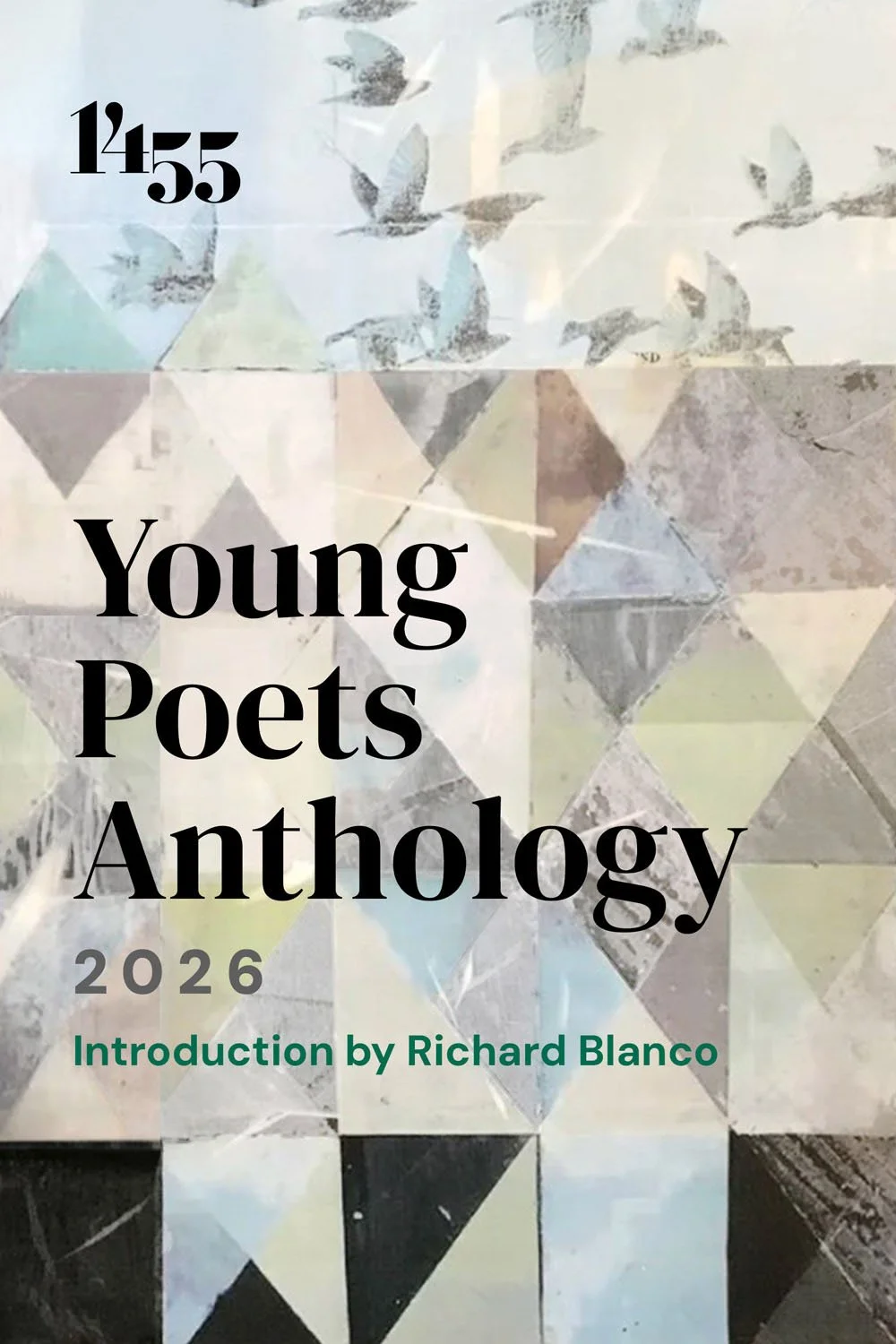
WU: I actually just received my copy of the Youth Anthology, which we're going to talk about very shortly. I haven't had a chance to read much of it yet, but it really looks fabulous. And I have read a few of the excerpts and seen a couple of the videos that you posted when it first came out. Are your books available in other formats besides print? Are there e-books or audio books?
SM: E-books for sure. Audio books I want to do. I'm trying to figure out the best way. For an anthology, the fantasy to me would be: Can we get every single poet to record and use their voices? Needless to say, that's extraordinarily logistically complicated. I still love the idea, and I think it's something we should aspire to. It's just a matter of figuring out how to make it happen.
WU: Maybe sort of a YouTube channel with selected readings from the contributors who have the ability to do that.
So tell us about this anthology. We probably already have a sense of what gave you the idea because it's part of that overall mission you have. But if you want to say anything more about it, please do.
SM: Truthfully, it was a very easy decision. Again, on one hand, anyone can do it, and I want to make that clear. I'm a big fan of how technology, despite AI, despite a myriad of things we need to be very vigilant about and cognizant of, the landscape is radically different than it was when you and I were younger. Someone can throw their hat in the ring, and it's not going to cost millions to start a press. So that's the democratic impulse that I celebrate. But that being said, to do it well is pretty audacious and is a lot of work. But for me to do it and combine doing it hopefully successfully, however you measure that. I certainly don't mean money, but to do it well and to do something that I personally feel invested in. I mentioned the lit fests and the programming we've done every year when we had the literary festivals. Again, both in person and online, my favorite part every year, not surprisingly, was that we'd always have a young poet contest, and so I would read hundreds of poems from around the world, from people ages ten to 21 and every year the quality of that was overwhelming, and it would always redeem my faith in the future. So when it came time to think, well, what kind of books are we going to publish? And the answer to that, full transparency, is everything and anything. I don't have any limitations, but what seemed to make sense was: What about an anthology so that you can get more bang for your buck, publish as many people as possible? But it was a no-brainer for me that the very first book out of the gate is going to be a young poets anthology. So, a lot of thought went into it in terms of what do I do? How do I do it? I was always aware that was where I wanted to spend a lot of my energy.
WU: You and I have a very good mutual friend, Holly Karapetkova, who, in her term as poet laureate of Arlington, put together a wonderful though much smaller anthology of high school poets. She went to each high school in the county, and they all had poetry clubs, and collected the best work she was able to get from all of them. And Day Eight, the organization I'm also affiliated with, did the actual publishing. So I didn't have a whole lot to do with actually gathering or putting it together, but I certainly helped with the marketing. And there were a couple of really great readings. And I already knew from other work that there's a lot of young voices out there that desperately need to be heard, and that we desperately need to hear. But it really hit home for me when that anthology came out. And so, of course, when I heard you were putting together this larger one that would be more worldwide, I thought we're long overdue for something like this.
We have both taught creative writing to kids at different points over the years, and I've seen just how impactful it is not just to work with young people, but to publish their work even in a small way. So, I've done things like helping a group of of kids who I worked with either in a summer camp or after school program put together their own literary magazine and just printing out a copy for all the kids and their friends and parents is so exciting, you know they love just seeing their words in print and seeing how special they are. It’s just a great feeling. Kudos.
SM: Amen to that. And I'll just add that I think you know we're certainly amongst ourselves preaching to the choir, and probably many of the people who will read this. But I feel obliged to point out also that yes, it is a wonderful use of time and resources to publish any young voice. Full stop. But what I hear a lot, and it's meant as a compliment, is oh that's so nice of you. And I want to point out that I am doing it because I love it and believe in it. These poems and these writers are extraordinary. Adults can and should support this. They can learn a lot, and I purposely picked a theme of hope because I had a feeling we should call for something that's both very easy to understand and also broad enough that it can be interpreted in many ways. What we got was not only fortunately a very diverse range of voices economically and geographically, but also these variations on what does hope mean in the abstract? What does it mean in 2026? What does it mean ten years from now? Yes, it's a noble endeavor to celebrate and teach and work with youth. But boy, I've learned a lot more from a lot of these young writers than from, say, our political pundits, so there's my little two cents for the wisdom that is behind these pages.
WU: Absolutely, I couldn't agree with you more. And the other thing, which I think is probably so obvious that maybe we wouldn't even think to say it, but I'm a better writer because of my exposure to the voices of young poets and and other kinds of writing, but especially since my thing's poetry, the more of it we can get, the better. It's good for us and for the world. So I think, oh yeah, well, it is a noble enterprise, but on the other hand, pure self-interest dictates that I do things like this because it is sheer joy at the same time. I gain professionally as well.
So now to get down to a little bit more about the actual process of putting together the book. How many submissions did you get? Or first of all, how did you put the call out? I know you said you encountered many young poets along the way in the lit fests, but how did you actually create the call for this particular book?
SM: As I said earlier, and I'll repeat: The barrier of entry for anyone out there trying to do something like this is low, it’s doable. That being said, I think if I had started 1455 in 2017 and said I'm going to publish a book, I think I could have and would have done it. But part of what the contemporary publishing world is having a brand, having some kind of network or mechanism where you know you're reaching some people. So I had the advantage of nine years of goodwill and programming, so that I at least knew if I put something out there, there was a modest but engaged audience I could count on. And I don't only mean to buy it. I mean literally to help spread the word and be aware. Like I would encourage anyone anywhere to try to create art, but I think to set yourself up for success, if you have a long term plan and you're cognizant of PR and marketing and sales and having a vision of how it goes from idea to execution.
We did have the advantage of me being in this game, and I think that gives me a competitive advantage because I've been in the academic art world for decades now. So again. I didn't count on support or participation, but I knew that it wasn't a total non sequitur to ask how am I going to do this. So the more succinct answer to your question is we used our social media, we used our presence, to make a call, and then we put some resources into really identifying sources. So one of my colleagues helped me track down the names and email addresses of deans around America, and we were really trying to discover how we could get this call for submissions into as many inboxes as possible. Making the submissions free obviously is good, as is having a system on the back end set up so the barriers to submit were very low. Essentially, people could log in and send us their stuff, and then we would edit it and do all the work.
But I still don't know if I've answered your question. The real basic answer is we put the call out and then worked at it, and hoped we got a response. And thankfully, the response was significant, and it was very humbling.
WU: Sohow many submissions did you end up receiving?
SM: We got almost, gosh, we were close to 300 submissions worldwide, and to invoke an editor cliché, the hardest part always is making decisions and having to turn some down. In this case, I'm happy to say a lot of the poems we didn't take either weren't on the theme or the people weren't in the age range. There were some pretty easy to disregard, but ultimately some impossible choices had to be made. And as you can see, it's not a small book, but in order not to turn it into a phone book, we did have to make some choices. But in hindsight, I'll say that it's much better as a publisher and an editor to have too many to work with than not enough. The ideal balance is to be successful enough that you take anyone who wants to get published who is on theme. The goal is to publish more voices. So I took this as not only a mission accomplished, but I think it bodes well for the future. With a little more PR, a little more goodwill, we can make an even stronger call in subsequent years.
WU: Besides yourself, did you have co-editors/curators who helped winnow and edit ?
SM: No, we were a very small team at 1455, but for this particular endeavor, I felt a responsibility to really roll up my sleeves and and be the guy, but also I will say it's a real labor of love, and I had done it before for Movable Type (the magazine) and the lit fests. It was a process I was familiar with, so it wasn't as daunting, but it was extremely time consuming. So I put the call out in November, knowing that we probably wouldn't be making decisions till late winter. So I gave myself a lot of time to be with these poems.
WU: It must have been a challenge though.
SM: It was, but rather than toot my own horn, I'd say I think that with any writer it comes down to decisions. So for me, it was, am I going to start this new Netflix series, or am I going to spend a few extra nights this winter spending a couple of hours each night going through the submissions, and for me, again, it was very selfish. Like it wasn't a difficult decision to make. But I think anyone doing this kind of work, as we all can attest to, whether it's teaching or writing or publishing, it has to be more important than other things in your life. And then you just make a priority out of it.
WU: Yes. As you probably know, we publish on a weekly basis, and so there's a constant flow of work to do. Norah and I do the bulk of it, although we do have some outside contributors conducting interviews and writing reviews. And you're right. I get up in the morning, and I know I'm not going to be bored that day because not only do I have my own work, and I do have to prioritize that, but there's almost always something to be done for Washington Unbound, or at least something to think about, to make a note of, to talk about with Norah, We walked into what we didn't even quite realize was a built-in network because we both know so many people in the community already; what we didn't anticipate was the enormous need for what we're doing.
That's one of the reasons why I wanted us to interview you because you're doing something similar with maybe a broader community. So anyway, to get back to the book itself, how's the reception been? It's been out for a couple of months now, or a month?
SM: It came out on June 21, so just over a month.
Before I answer that question, though, I do want to acknowledge both of you. The reality is, most people that do what we do would say it's a labor of love. You'd be insane if it wasn't. But litmags and nonprofits are folding every day. So the fact that you've seen growth and and you've seen engagement speaks volumes about the professionalism and the enthusiasm and the good work you're doing, So I want to acknowledge and celebrate that. In one breath, I'm saying everyone can and should be jumping into this fray to support art, but it's hard work. So cheers to both of you for that.
WU: Thank you!
It's hard when you're the person behind the person behind the scenes. I think again, as writers, we only see the mistakes, you only see the ways you didn't hit certain milestones. But that being said, I've had the grace to stop and say, first of all, we were able to do it, right? The book exists. Almost 200 young poets around the world are now published. Many of them for the first time. They're very excited. That alone was cause for real, real satisfaction. But I'm humbly delighted to say that we're doing well. It's been in the top 25 poetry anthologies on Amazon. It's been in the top 200. We are being read and we're moving some units. And it would be ridiculous to suggest that that's never a goal. I mean, you why do something if it isn't going to get read? But that was kind of secondary. So now I think the work becomes, and again we all can kind of attest to this, right?
There's the curation, there's the production, then there's the promotion, and so my only goal now is to continue to celebrate these writers, and just do my level best to make sure people that might want to find this book are able to find it.
WU: What’s next for Sean Murphy and 1455?
SM: Our next anthology comes out in the fall, and it's a women writers anthology. We had that call also go out last fall, and have been reading. We've made the selections. Similarly, it's going to be almost 200 women writers from around the world. I think it's 18 countries, which is extraordinary and so cool. We'll be producing and then releasing and promoting that through the fall.
And 1455 is just trying to continue to have a presence. I think it's germane. You know everything we've talked about, we've covered everything except for the fact that the work you guys are doing, the work that I'm doing, the work that our kindred spirits are doing…. Things aren't great in American culture right now. It's never been easy for the arts. It's never been worse in some senses in terms of funding. So part of my goal is to at least make myself available and visible as a partner or collaborator or recipient of largesse if it's out there. I mean, you've got to be in the game.
WU: I always like to end interviews by asking people, "What are you reading right now? What are you watching? What are you listening to?” You know, give us some recommendations.
SM: So I'm usually flummoxed by that, and I've talked to other writers. I think it's like a weird anti-OCD thing where when you're asked—and you read all the time—and I can't think of anything.
But I can actually name [something], and it was a very purposeful decision. I was just out of town, and I knew that I at least had the chance to be a little bit off the grid, so I'm revisiting Faulkner for the first time in a long time. So I reread As I Lay Dying for the first time this century, and I'm actually working on a piece talking about how , in the age of AI, reading Faulkner is like the perfect antidote because you have to be engaged. You can't do it quickly, and it's a complete throwback thematically, stylistically. You know you are not in the here and now. So I read As I Lay Dying, and now I'm deep into Light in August.
We went on to discuss music and other non-literary subjects. Sean is a Renaissance man in terms of cultural interests. For more of the interview, subscribe to our premium Substack, where it will be posted in the next few weeks. In the meantime, order 1455’s Young Poets Anthology 2026. To learn more about Sean Murphy and 1445, visit the website. And follow Sean’s Substack.
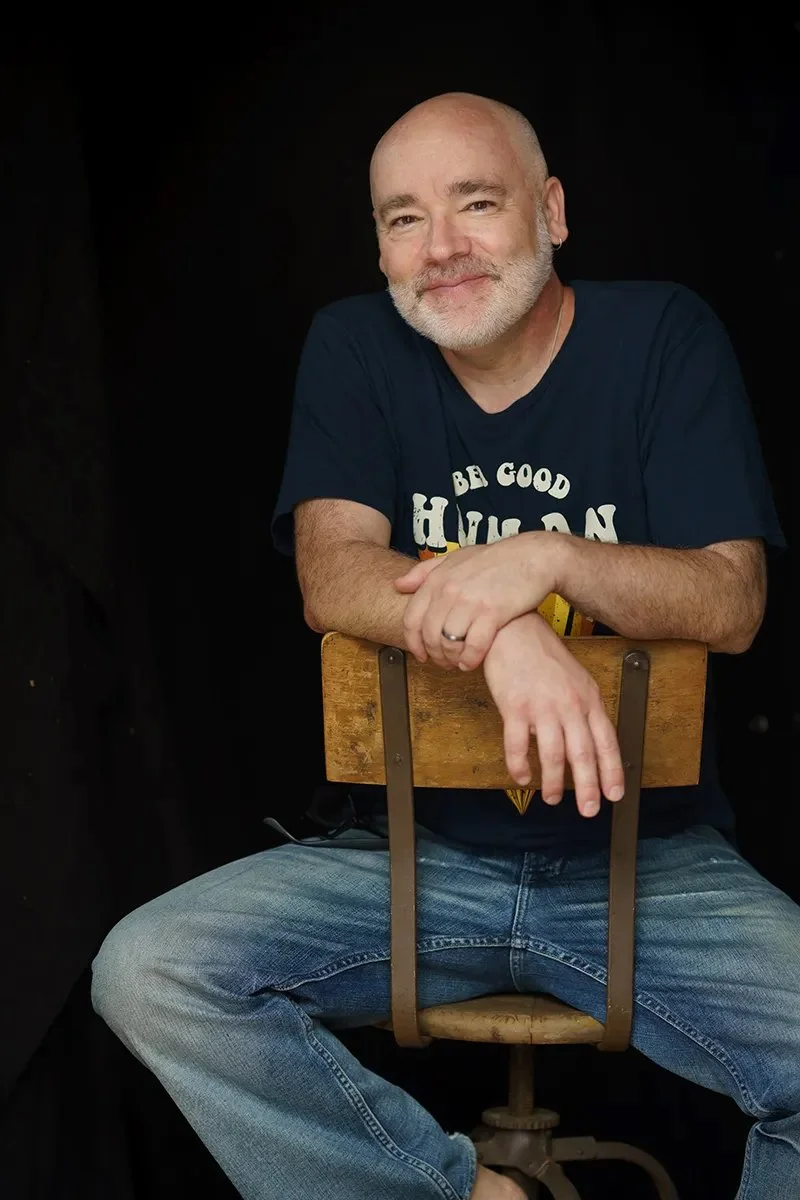
Sean Murphy is the founder of the non-profit 1455 Literary Arts and directs the Center for Story at Shenandoah University. He is the author of four poetry collections—The Blackened Blues (2021), Rhapsodies in Blue (2023), Kinds of Blue (2024), and Red, White, and Blues (2026). The short fiction collection This Kind of Man published in 2024, and his memoir, Please Talk About Me When I'm Gone, won Memoir Magazine’s 2022 Memoir Prize. He has been nominated four times for the Pushcart Prize and twice for Best of the Net. Murphy also hosts the podcast and Substack Some Things Considered, where he interviews best-selling authors, acclaimed critics, and celebrated musicians. For more writing—including essays, interviews, poetry, and cultural commentary—visit seanmurphy.net or follow him on Twitter/X @bullmurph.
Gregory Luce is the co-founder and poetry editor of Washington Unbound. He is the author of six chapbooks and resides in Arlington, Virginia. In addition to his work with Unbound, he serves as the Poetry Editor for The Mid-Atlantic Review and contributes a monthly column to the digital arts publication Scene4.