Escape hatches from the modern world
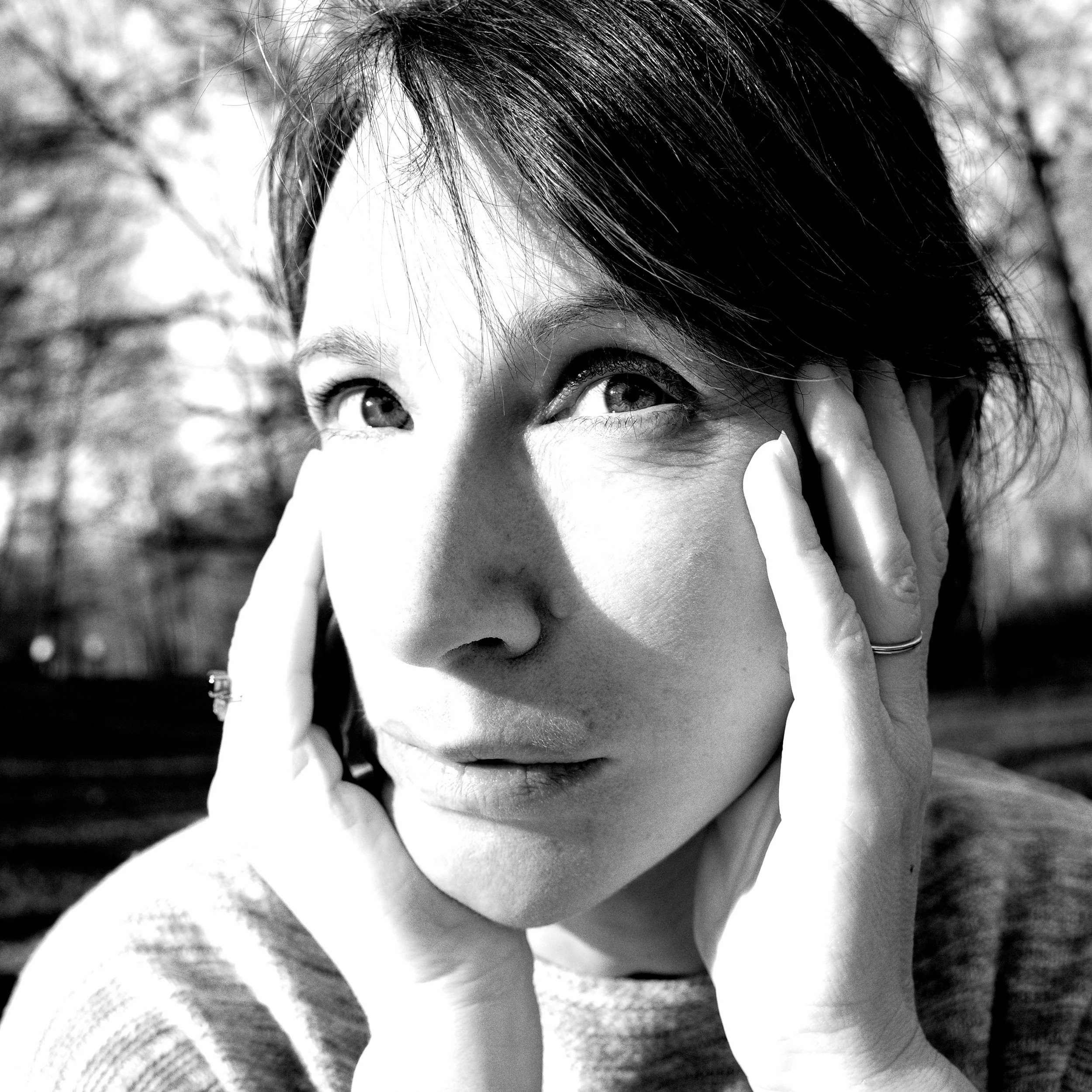
An interview with Emily Mitchell, author of The Church of Divine Electricity
by Tamar Shapiro
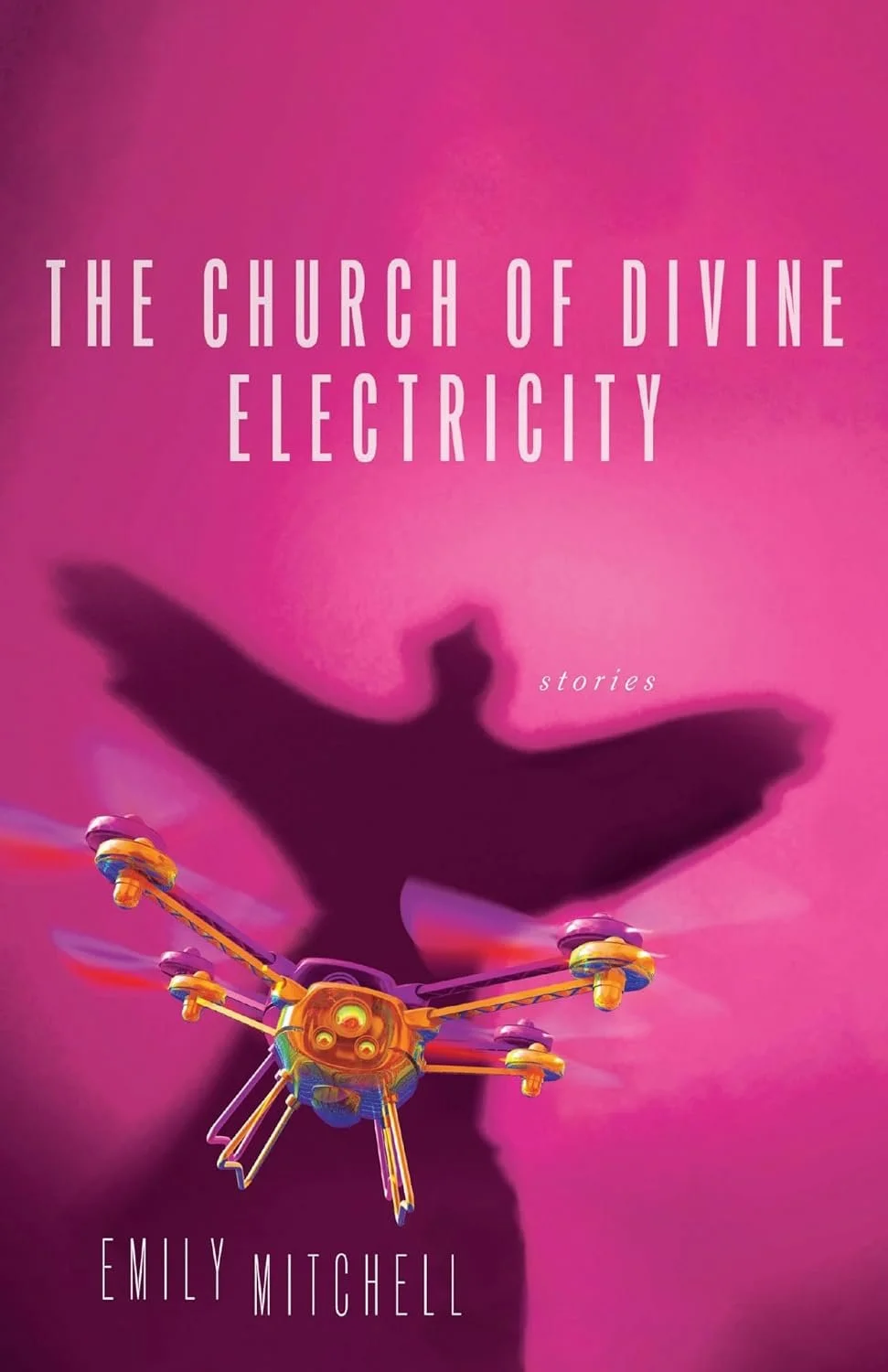
In her highly inventive story collection, The Church of Divine Electricity, Emily Mitchell explores the unsteady, shifting ground we stand on in a rapidly changing world. With keen insight, sharp-eyed humor, and a speculative bent, Mitchell takes life as we know it and gives it a twist, transforming it into something dark and destabilizing. Mitchell is particularly interested in exploring the way technology could reshape and wreak havoc on humanity, and yet each story is filled with the most human of emotions—the love of a mother for her child, the beauty of nature, the devastation of a parent’s death, and the longing for community and faith. In these thought-provoking, brilliantly unsettling stories, Mitchell asks us to contemplate the uneasy coexistence of darkness and humanity.
Mitchell is the author of one previous collection of short stories, Viral, as well as a novel, The Last Summer of the World. She teaches at the University of Maryland. She was kind enough to share some insights about her new book and about her writing in general.
WU: Every story in this collection is so inventive! How do you come up with the ideas for your stories? Where do you find your inspiration?
EM: I think over time all writers develop antennae for material or ideas that can become the kernel of a story for them, something which switches on their particular sensibility or worldview. For me, that's usually some combination of the absurd and the uncanny, a place where the tidy, glossy narratives we like to create about who we are break down and reveal something messier and more interesting underneath. In particular, for this book, I was interested in technology as a doorway to a different but not necessarily better reality. I was on the lookout for ways that our present situation could be stretched or augmented into something that seems almost plausible, if not now then maybe tomorrow or next year.
The stories might be usefully described as trolling, not of individual people, which is cruel and usually misguided, but of cultural phenomena or tendencies. The first story in the collection, for example, "Mothers," is trolling the rhetoric of self-help, positive psychology, and therapy-speak when it’s divorced from any recognition of the larger social and political forces we're all subject to. It's a thought experiment that asks whether there are maybe some people in the world who should feel terrible, guilty, haunted forever by their actions or failure to act. Of course, I'm also inspired by other writers, and for this book the patron saints would have to include J. G. Ballard, Stanislaw Lem, Boris and Arkady Strugatsky, Ursula LeGuin, Octavia Butler, and Ted Chiang along with many others.
WU: Many of these stories read like fables that showcase the dark sides of the world we live in and serve as warnings of worse to come. To what extent were these stories shaped by today’s divisive societal climate? And what do you hope your readers take away from this collection?
EM: They are absolutely shaped by our crummy, frightening present. It's not the divisive political atmosphere so much as what underlies it, which is the fact that climate change requires us urgently to find new and different ways to live, to think about things like freedom, solidarity, what a good life should look like. Most of us (myself included) haven't really confronted that deeply. The ferocity of the current political reaction, I maintain, is in part because even people who supposedly deny the reality of climate change know, on some level, what's happening. So these stories are trying to explore what it feels like to live at a moment when the most basic conditions of life are under threat and everything feels pretty precarious and strange as a result.
As for what I hope people get from them, quite a lot of the stories show people creating escape hatches for themselves and others. The characters commit acts of theft and sabotage, engage in passive resistance à la Bartleby the Scrivener, develop allegiances that take them out of the regular social and economic order, change how they see or think about things. All that seems useful to imagine and ponder, for me certainly, and I hope for readers as well.
WU: Even the darkest of these stories contain brilliantly sharp, laugh-out-loud moments. How do you keep your sense of humor as you explore troubling topics?
EM: Oh, thank you! I'm so glad to know that the intended humor in these pieces is coming through. I find that humor is pretty much the ONLY way I can explore troubling topics, the only way I can bear to keep company with certain questions or problems. I guess I also think that taking ourselves very freaking seriously, wishing to be taken very seriously by others, clinging to a heroic self-image deep into adulthood, when we should have long ago realized what utter dorks we truly are, might be part of the problem, maybe especially on the part of certain prominent public figures but also perhaps a little bit for the rest of us as well? So, goofing around a bit more in general would be good? I'm not sure about that but it seems possible. :)
WU: Your first novel was historical fiction, and you are currently at work on another historical novel. Although the stories in this collection are mostly future-facing and speculative, I still see many ties to your historical interests—most explicitly in Forgotten Pastimes of the Victorians, but also in other stories. How is speculative fiction shaped by your historical work and vice versa?
EM: I tend to say that speculative fiction and historical fiction are one another's mirror images. They both raise questions about how the world traveled from one historical moment to another, how we crossed the distance between the moment of the story and the present or vice versa, why things changed in the way they did. Also, when they're done well, both historical fiction and science fiction are like magic. As a reader, they leave you gasping in amazement: how did the writer come up with that? Or how could they possibly know that? I read Hilary Mantel and Samuel Delany with a similar feeling of constantly delighted astonishment.
WU: The title of one of your stories—In Which I Try to Save the World from Total Destruction Through the Power of Art—hints at one possible solution to the world’s woes, though the story itself includes a twist that throws the very premise into doubt. I wonder what role, if any, you think art can or should play in trying to save the world?
EM: This question has clarified beautifully that I just don't think it's art's job to save the world! Good art makes life bearable, meaningful, rich, worth living at all. And it can have significant political consequences, though not always those its creators intend. But I agree with the short story writer Donald Barthelme who says in his wonderful essay "Not Knowing" that the artist is a person who, by definition, doesn't know what they're doing. He also says that a work of art is something that both invites and resists interpretation.
In other words, it is art by virtue of not having a simple, easily decipherable message, much less a set of instructions for how to fix things. In my story, at the risk of giving away too much, the protagonist doesn't succeed in anything like the way that she imagines she will. I hope the story pushes people to think about some of its own terms differently by the end, including the word art and the word save, and maybe the word world as well.
Buy your copy of The Church of Divine Electricity directly from the independent publisher, or from Bookshop.
Learn more about the author on her website: www.emilymitchellwriter.com
Emily Mitchell is the author of one previous collection of short stories, Viral, as well as a novel, The Last Summer of the World. Her writing has also appeared in Harper’s, Ploughshares, Alaska Quarterly Review, Missouri Review, The Sun, American Short Fiction, Southern Review, Guernica, the New York Times and elsewhere. She serves as fiction editor for the New England Review and is associate professor of English at the University of Maryland. Her second novel, Far Ocean, about explorer and botanist Jeanne Baret is forthcoming from Black Lawrence Press in 2027.
Tamar Shapiro’s debut novel, Restitution, [reviewed recently in Washington Unbound] was published in September 2025. Her writing has also appeared in Literary Hub, Electric Literature, Poets & Writers, and the Washington Independent Review of Books. A former non-profit leader, she received her MFA from Randolph College in January 2026.