
Foundation of a community
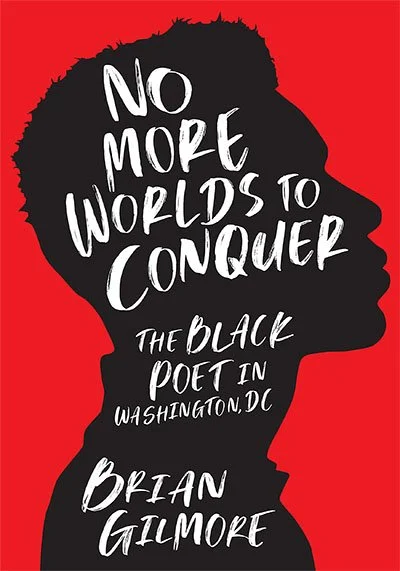
An interview with Brian Gilmore, author of No More Worlds to Conquer
by Gregory Luce
Those of us fortunate enough to live in the Washington, D.C. area are well aware of the wide scope and incredibly supportive nature of our literary community. Less well known is how deep the roots of this community go, all the way back to the late 19th century. Such significant figures as Paul Laurence Dunbar, Langston Hughes, Sterling Brown, and Jean Toomer lived and worked in D.C. at different times in their lives.
At last, with his remarkable book No More Worlds to Conquer: The Black Poet in Washington, D.C., Brian Gilmore brings this rich history to life. D.C. native, attorney, and, above all, poet, Brian Gilmore is one of the DMVs most important poets and literary activists. Author of three poetry collections, he is active in the D.C. poetry scene. In addition, he teaches law at Michigan State University. He was kind enough to pause from his busy schedule and answer a few questions about himself and his book.
WU: First, please tell us about your background. Birth, upbringing, education, etc.
BG: Native Washingtonian. Born and raised. I grew up in D.C. during the Chocolate City period. It was a special time to grow up in the city. My parents were civil servants in the local government. My mother worked in both local and Federal. Everyone I knew in fact was a civil servant. D.C. is a government town where that is respected and appreciated. Postal workers, school teachers, computer scientists, economists, government lawyers, clerks, recreation workers, all of that. My father was a personnel man, rose up high as a career manager and he was able to really help lots of people including his children and family members get work. That just added to my early life experience. He ran personnel for the city’s recreation department, so I always had a summer gig at a pool or a rec center or teaching tennis to kids or something. I went to public schools K-8, and it was a mixed bag, but I was considered a high achiever so it was not much to me, though the no-account bullies were jealous of my work ethic. It was a crazy time. I eventually went to Archbishop Carroll High School where I received a top flight education that prepared me for life and college. I loved it. The liberal arts and humanities and some really good teachers who cared about the world.
WU: When did you discover poetry and when and why did you start writing?
BG: Mostly, I discovered poetry in my home. My parents were intellectual types. They couldn’t really pursue all they wanted because they wanted to help us pursue our own educational directions. My father did graduate from Howard U, and my mother is a graduate of Dunbar High School in D.C., the best Black high school in the country at one time. My father had books all about the house full of literature and my mother read it to us. I had this attraction to it way back. By third grade, in elementary, I was intrigued with it. Later, at Archbishop Carroll, my literature teacher, gave us a healthy dose of many of the well-known western writers like Shakespeare. He was an Ezra Pound scholar. I loved being in that atmosphere, but literature was back on my mind by high school. I always turned to it for meaning and curiosity.
WU: What were your first encounters with other D.C. poets like? Who encouraged or mentored you?
BG: It was cool. I began getting connected in 1988. I went to see some of them read. Reuben Jackson. Darrell Stover. They were deeply into the art form. Eventually, by way of one of my father’s fraternity brothers, I met Ethelbert Miller, and we would talk off and on by phone. He gave me some advice such as what to read (magazines) and where to submit work. He also gave me an opportunity to read my poetry on his Ascension Poetry Reading Services. (Ascension #92 – October 1988.) At that reading, I met Kenneth Carroll, Darrell Stover, Peter J. Harris, and many others. I began to hang out with all of them after that reading. I had a lot of encouragement after that because D.C.’s Black poetry scene is very encouraging, and it is a community. Ethelbert Miller was always trying to suggest places for poets to read or to submit their work, as was Kenneth Carroll and others. It is a community, so people try to help one another all the time to advance their pursuit of the art. Ethelbert set the example of trying to give back to each other, and to support each other. For example, if Kenneth Carroll was reading somewhere, I would try to attend. Same with many other poets. I also met Marita Golden and she had formed the African American Writers Guild. She asked me to be the organization’s treasurer so then I met other writers, other poets, other cultural workers.
WU: How and when did you decide to write No More Worlds to Conquer?
BG: I don’t know if I ever decided to write it. I just was interested in the history I was living. I was doing research and writing about it so it kind of evolved. In 2002, thanks to Marcia Davis, an editor and reporter for the Washington Post, I published a feature article about Langston Hughes when he lived in D.C. from 1924-26, when he worked as a busboy here. That really got me thinking about the history as Hughes was hanging out with some pretty dynamic poets in D.C. and right after the Harlem Renaissance took off. But it also turns out that the Harlem Renaissance was a lot about the writers and poets right here in Washington D.C. That revelation got me digging deeper and then I learned that Paul Laurence Dunbar came to D.C. in the late 19th century and did a residency here that had a strong impact upon the city’s Black population. He was basically at the end of his life and his hot period as a writer, and he lived here. Once I wrote an essay about that in 2006, I knew a book was possible so I began to collect any piece of history I could. I did not know if it would ever work but I was committed to seeing where this would take me.
WU: What was your research process and how long did it take to complete the book?
BG: My process, as I alluded to earlier, was to just collect data. I would do searches online and via databases. I set up Google alerts with all sorts of names. If I found something in a library special collection, I would contact them and ask if I could get that document or that record. The librarians were always happy to help. I think I had half the text about seven or eight years ago but still had gaps. But, records, as you know, get better. Writers donate their papers. Poets donate their papers. Libraries amass digital records making them easier to see. It just kept building and building. Overall, it took 17 years to write the book to completion, but I wasn’t always writing it; I was looking for the stories. In 2006, I interviewed several key people. But there was still no book; there was just curiosity. Also, I wrote a few short pieces for a digital journal called Beltway, published by Kim Roberts. And she and I also were on a panel together once. All of that helped push things forward. Mostly, though, it was just watching the Google alerts. Such good stuff popped up day by day.
WU: Are you aware of any comparable history of Black poets in D.C.?
I am not. There are pieces of this story everywhere but no total treatment history.
WU: Why is this book important?
BG: I guess this is a difficult question to answer because the book is supposed to explain why it is important, so I will just say, read the book, and folks can email me and tell me why, or invite me for a talk and I can explain. It is important to me because I wrote it, and, in a plain sense because history has to be documented.
WU: What’s next for Brian Gilmore?
BG: I do not really know. I likely will have some poetry come out next. I have a few projects I am mulling over, but truly I don’t know. I write poetry, short fiction, nonfiction, and anything else my brain conjures but mostly, I am just thinking.
No More Worlds will be of great interest to poets and poetry lovers, as well as aficionados of Washington, D.C., history, Black history, and those interested in how our literary community came to be. The communitarian spirit among DMV writers clearly owes a great debt to these important poets. Order the book and learn more about Brian.
As a side note, Kevin Young’s magnificent anthology of Black poets would make an excellent companion to this book as it contains work by many of the poets Gilmore discusses.
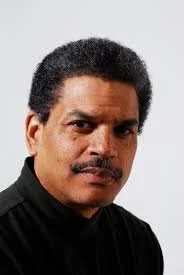
Brian Gilmore is a Washington D.C. native. Bard and barrister like Edgar Lee Masters and so many others. Author of four collections of poetry, including come see about me marvin (Wayne State University Press), a 2020 Michigan Notable Book selection.
Gregory Luce is the co-founder and poetry editor of Washington Unbound. He has published six chapbooks. He lives in Arlington, serves as Poetry Editor of The Mid-Atlantic Review and writes a monthly column for the online arts journal Scene4.