A reckoning of white allyship, authority, and accountability

An interview with educator and author Eric Goldstein
by Samantha Segal
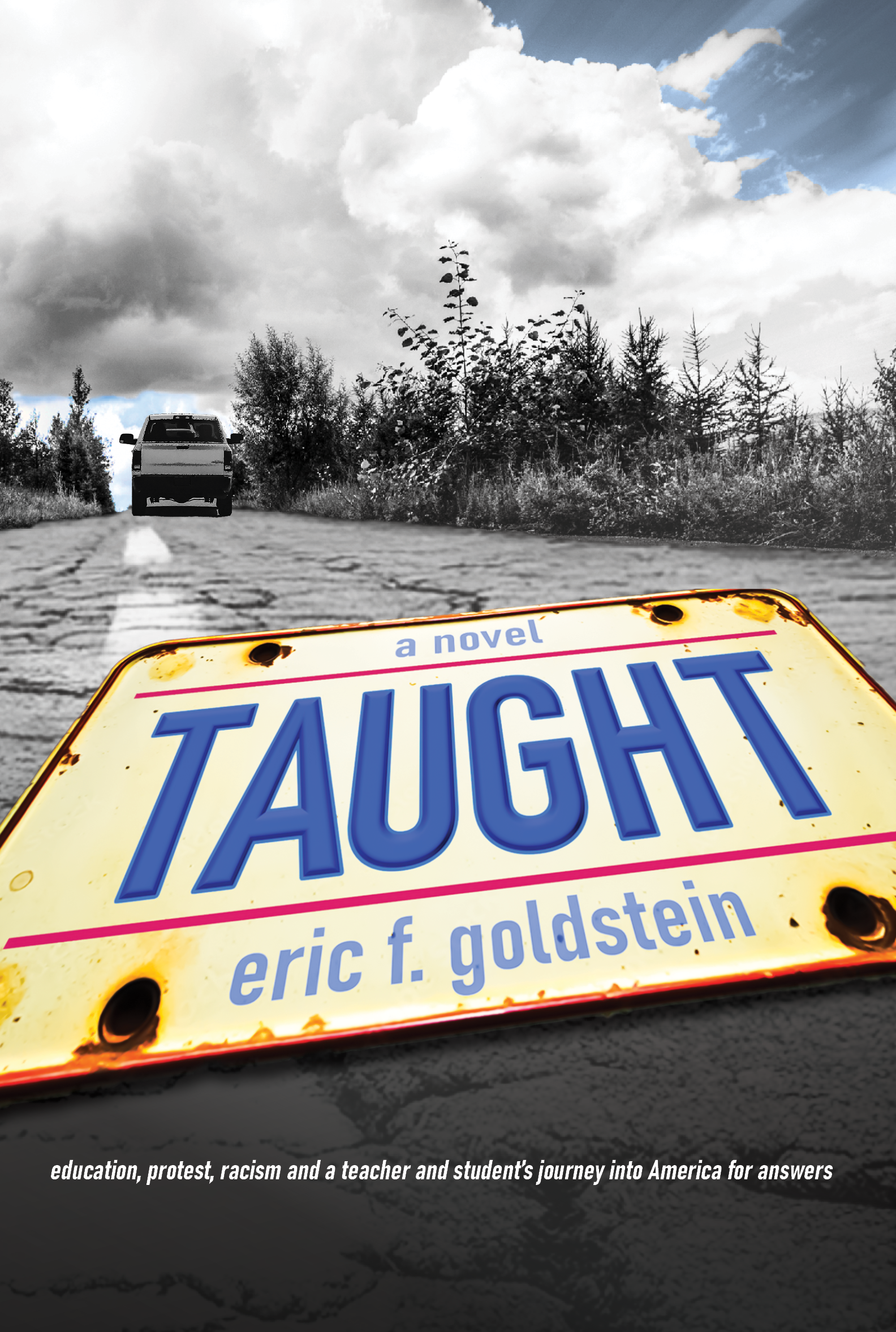
Set against the zeitgeist of the Black Lives Matter movement and Covid-19 pandemic in 2020, Eric F. Goldstein’s Taught serves as a raw account of an education system in crisis. The book follows a white educator through a reckoning with the lived experiences of his Black students and the pedagogical gaps in his teaching and curriculum. With deep humility, and through a cross-country trip with a former student, this narrator confronts the blind spots inherently built into whiteness and questions what genuine allyship looks like. This novel is a powerful tool for self-reflection, whether for a personal read or classroom discussion. It is a moving and provocative read that allows you to honestly, but gently, reconsider your own social positioning.
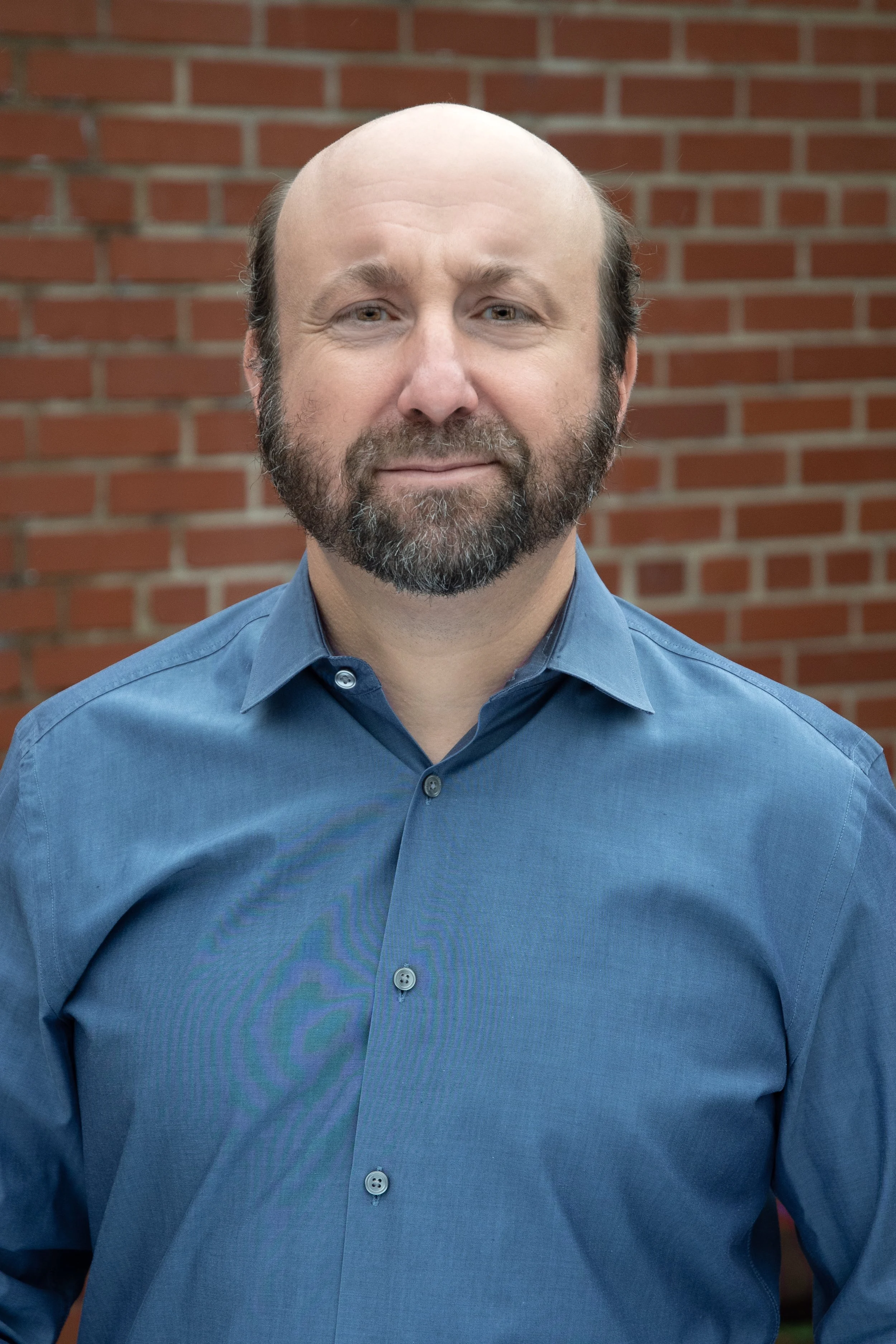
Goldstein is an author, educator, and founder of One World Education, a nonprofit that has taught over 65,000 D.C. students to use writing for “social justice advocacy.” His career in education started after a solo 5,000-mile bicycle trip across the United States, in which his primary goal was healing, but also as he told me in our interview, “better understanding the nation [he] hoped to teach.” Spending many years working in education, he noticed the need for students’ creative freedom to express their interests and lived experiences, prompting him to launch One World, which has been operating since 2007.
Eric Goldstein was kind enough to let me interview him about his new novel and his work as an educator.
WU: Can you tell us a little about yourself, what led you to teaching, and how you ended up teaching in D.C. I'd love to hear your early years teaching and how your early experiences (whether challenges or triumphs) shaped the educator you've become.
My earliest memory of teaching is rooted, somewhat ironically, in the boredom of my own high school experience. By most measures, I was an underwhelming student, and I didn’t perceive the adults around me as particularly inspiring either. Outside of school I was deeply curious, yet I cannot recall a single teacher suggesting that the classroom might be a place where that curiosity could flourish. Even then, I sensed a missed opportunity.
After college, I found myself at a crossroads. I was grieving a profound family loss and searching for direction. I felt drawn to teaching American history but had seen too little of the country to feel qualified. I never thought of myself as a serious cyclist, yet I had always felt like an explorer on my childhood bikes, so after saving money from a desk job in New York City, I set out the following summer on a solo cross-country bicycle journey. Over several months and more than 5,000 miles, I learned about our country, humanity, and the love and pain carried by so many people by listening to the stories of strangers. When I reached the Pacific Ocean in Oregon, I returned home with clarity about my purpose.
Following several years teaching in New York City and Vermont, I arrived in Washington, D.C. in 2005 to teach at the SEED Public Charter School. Those early years were messy, filled with good intentions, constant iteration, sleepless nights, and persistent self doubt. Gradually, I returned to the lessons of my cross-country ride, and I began speaking less and listening more. My students surprised and inspired me in ways I had never anticipated.
This focus led to a classroom project designed to both uplift students' voices and lived experiences while strengthening their writing skills. In 2007, that project grew into the nonprofit organization One World Education. As its programs expanded organically across the city, I transitioned out of the classroom to support the work full time. I believed deeply in the teaching and learning impact we created, yet the organization’s growth still surprises me, twenty years later.
WU: There seem to be parallels between you and the narrator, veteran teacher Jerry Brown. What led you to tell this story through fiction rather than memoir?
While TAUGHT inevitably reflects my familiarity with teaching, I’m careful not to frame the novel as autobiographical. The similarities between myself and the protagonist, Jerry Brown, are largely static: we’re both teachers, both white, and both navigating middle age. Beyond those shared traits, I see little direct overlap.
Like most writers I leaned on lived experience, but fiction allowed me to place characters inside moral and emotional situations I’ve not personally encountered. That freedom interested me. It allowed me to explore ambiguity and to follow consequences wherever they led. Writing TAUGHT was a powerful experience because it wasn’t a reflection of my own story, but an exploration of questions that compel me as an educator and writer. Fiction felt like the literary path to explore them.
WU: Were there specific classroom memories or stories that you’ve heard that have shaped scenes in TAUGHT?
Some of the stories I heard over two decades in the city’s education community made their way into the novel, though many more were removed during editing. Several scenes in TAUGHT were shaped by conversations that emerged in 2020, during the early months of the pandemic, Black Lives Matter movement, and racial justice protests. During that period, I was paying close attention to conversations with school principals, teacher friends, and reflections teachers were posting online. There was a collective grappling with questions of authority, responsibility, grief, and moral clarity within schools.
I started writing to process so much of the chaos being experienced in our city’s schools and really schools everywhere. As the writing evolved, many of those specific stories faded, but what remained were the larger questions: What obligations accompany authority? Where does accountability lie when harm occurs within systems? What is the role of a teacher? I used classroom moments in the novel to explore these questions, not to resolve them. That unresolved tension is what I wanted to capture.
WU: What tough conversations do you hope to inspire through this novel? Is there anything you wish more educators considered, particularly those teaching in D.C. schools?
I wasn’t writing TAUGHT with the goal of provoking difficult conversations for readers. If anything, I began writing to provoke difficult conversations with myself. The central question I kept returning to was: How do we care for one another, deeply and responsibly, in a world that so often pulls us apart? That question sits beneath nearly every relationship in the novel.
More broadly, I’m hearing that the conversations the novel has sparked are centering on its enduring themes: responsibility, power, and redemption. I’ve been deeply moved by the ways readers are engaging with these questions. For educators, I hope the novel invites reflection on how authority operates and who is responsible when harm occurs within classrooms and schools. More than any tough conversation, I hope the novel encourages space for listening and humility, because I think these qualities are undervalued in schools that feel shaped by urgency and accountability.
WU: What prompted you to launch One World Education, and can you tell our readers a little about this nonprofit?
Today, One World Education is the largest writing organization in Washington, D.C. schools with programs that connect writing to social justice advocacy. Over the past two decades its programs have reached more than 65,000 D.C. students. I’d say my two greatest accomplishments were the original idea and then surrounding myself with amazing educators.
In 2006, One World began in response to a series of frustrating moments in my own classroom. The turning point came when I overheard a conversation between a recent high school graduate and a colleague. The student described being “caught off guard” by a twenty-page writing assignment on the first day of a college course. What struck me was not the length of the assignment, but how unprepared he was to meet it.
It forced me to confront a hard truth: While nearly every teacher agreed that writing and the critical thinking it develops are essential for success beyond high school, we were spending remarkably little time actually teaching it. I realized I was part of the problem. I assigned writing to my middle and high school students, but I wasn’t explicitly teaching expository or argumentative writing skills. The few available curriculums I reviewed were far from inspiring, so I began experimenting.
A pivotal moment came when an eighth grade student failed to turn in her final essay. Knowing how diligently she had worked, I asked to look through her backpack. Inside were her notes, research, outlines, drafts, and revisions. All the evidence of learning was there, but my grading model recognized only the final product. She also admitted she had lost interest in the topic I had assigned. That moment revealed two fundamental problems: our emphasis on product over process, and the lack of student ownership in writing topics.
I began creating lessons that centered on the writing process rather than the final product, assessing skills and steps more than the finished essay. I also began giving students choice over what they wrote about. These shifts transformed engagement. Writing became less about completing an assignment and more about developing ideas they cared about.
A small group of teachers joined this work, and we began sharing student’s essays with their classmates, guided by a core belief that student writing should be read, not just graded. Students edited one another’s work and began to see their writing as a tool for influence and change. In many ways, this core model hasn’t changed much since then.
As teachers moved to other schools, the program spread. In 2012, D.C. Public Schools adopted One World as its first high school writing program. It later expanded to D.C. charter schools and schools in Baltimore, Richmond, and Pittsburgh. Today, One World serves approximately 3,500 learners each year in middle schools, high schools, and adult education programs.
WU: How did your experience as an educator and nonprofit founder intersect with your interest to become a novelist?
My path toward becoming a novelist didn’t begin with an ambition to write fiction but grew directly out of my work. A pivotal moment came in 2017, when One World Education expanded to serve adult students. We felt equipped to adapt our curriculum for older learners, but it was the stories these adult learners brought into the classroom that reshaped how I understood the power of writing.
One teacher described helping a student draft a letter to a landlord about inoperable appliances. Another shared the experience of a mother who was told that if she wanted to challenge the bullying of her daughter at school, she needed to submit her complaint in writing. Through circumstances largely beyond their control, many adult students lacked these skills.
I also began to see how hundreds of millions of dollars were effectively kept out of Washington, D.C. families, not because people lacked ability, but because the jobs they were qualified for required written applications they struggled to complete. I came to understand how writing wasn’t simply an academic skill, but a tool for students to make sense of their lived experiences in a city shaped by history, power, and constant change, and to confront injustice.
The final intersection between my work and the novel came in the summer of 2020, during the early months of the pandemic, the Black Lives Matter movement, and widespread racial justice protests. I began writing in response to conversations with former students and current teachers who were grappling with questions of authority, responsibility, grief, and moral clarity within their schools. At first, the writing was reflective and personal. A way to process what I was hearing. Later that year, I realized it was moving toward fiction and an exploration of the ethical and emotional questions I had encountered as an educator, but from an angle that offered distance and imagination.
WU: What’s in store for you next? Do you have anything else in the works?
There are significant changes ahead for me professionally. After twenty years leading One World Education, I’ll be transitioning out of my role as Executive Director in June. I am ready for new challenges and I’m confident in the organization’s future. An extraordinary colleague who has served as our Deputy Director for several years will be stepping into the role, and I see the transition as an organizational upgrade.
With TAUGHT, my work appears to be moving in two directions. The first is a collaboration with a team of educators to develop a three-week, high school humanities unit aligned with the novel. We plan to pilot the curriculum with approximately 200 D.C. high school students next school year.
The idea originated with former students and teachers who were among the novel’s earliest readers. Several of them shared that TAUGHT felt less like a finished story and more like the beginning of a conversation that belonged in classrooms. They saw the novel as an opportunity for students to examine power, mentorship, and institutional responsibility through a humanities lens grounded in their city and lived realities. I was initially hesitant, but the idea gained urgency following the 2024 election, and it’s a project I’m excited about.
Finally, I’m looking forward to breathing in this moment. I want to connect with readers through a series of conversations and events. Between my professional commitments and being deeply involved in the after school lives of my three sons, my time for the novel is limited. Still, one of my hopes is that TAUGHT can serve as a springboard for thoughtful dialogue about education, race, and authority beyond the classroom. I’m eager to hear readers’ impressions and to participate in book groups, school-based discussions, and community conversations when possible. I’ll start working on my next novel later this year.
Buy your copy of Taught from Bookshop or your favorite local independent bookstore. Learn more about the book and author at www.onelongroad.com. Learn more about Eric’s nonprofit, One World Education, here.
Eric has a number of upcoming author events. On Feb. 17 will be one of the readers at February’s Inner Loop Reading. On February 27, he has a book talk with the ART4US Community at GalleryB in Bethesda. On March 11, he will be in conversation at People’s Book in Park (RSVP Here). And on March 19, he will participate in the Mt. Pleasant Village Author Series at Mt. Pleasant Library in D.C.
For more information, updates, and additional upcoming events, check out the events page on his website, here.
As a middle and high school teacher, in 2007 Eric Goldstein founded and still directs the nonprofit organization, One World Education. Through programs that teach writing skills through social justice, the organization has transformed more than 65,000 urban students into writers with voice, knowledge, and purpose. Inspired by two decades of listening to students tell their stories, Eric's debut novel, TAUGHT, will be published in 2025. Eric lives with his family in Washington, DC.
Samantha Segal is an associate producer for The Young Turks and former editorial assistant for Washington Unbound.