
The nation’s river
An interview with Potomac Fever author Charlotte Taylor Fryer
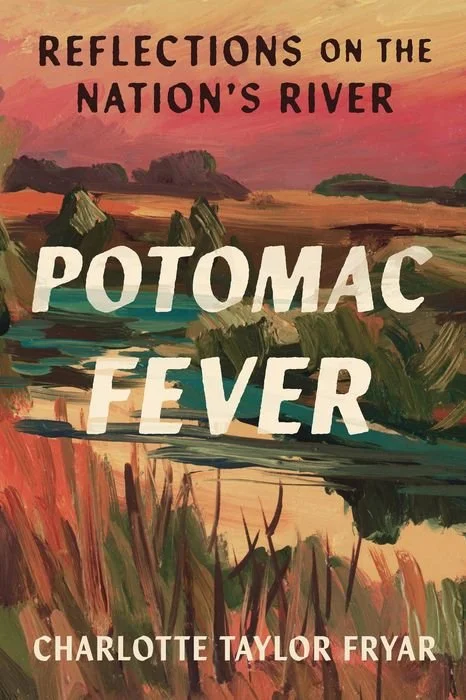
One of the best books of 2025, included in our list of holiday book recommendations, is Potomac Fever: Reflections on the Nation’s River, a compelling and sweeping history of the river that both connects and divides all of us in the DMV. Written by Maryland author and historian Charlotte Taylor Fryar, this volume delves into the natural and human history of the Potomac, exploring the plant and animal life in and around the river’s banks, as well as the story of racially unequal access to and white privilege in natural spaces.
I caught up with Fryar recently, and she graciously took time to answer some questions about herself and her work.
WU: First, please tell us about your background and how you came to write about the Potomac.
Charlotte Taylor Fryar: Well, I ended up in D.C. the way I suspect a lot of people do, which was a job, and it wasn't even my own job. I moved here, I think, for the first time in 2016, and I was still, at that point, in graduate school at the University of North Carolina at Chapel Hill. And my husband took a job up here. He had been in graduate school, I was working on my dissertation about something totally different. The topic was related to North Carolina, and yet, I had moved up here to DC, we lived for a little bit in Petworth. Then I started writing this book and thinking about this book and thinking about the Potomac after we moved to a very unusual Little House on the Potomac.
I have told this story before, but it never gets old. I started writing this book about the Potomac, which became Potomac Fever. Truly, I was avoiding writing my dissertation, so my one job was to write this one book. I did indeed finish my dissertation eventually, but during writing breaks, I would go on these walks along the Potomac, and I would be thinking about the geography and ecology of that place. And I just started asking questions about the Potomac. I think in one way, it was a way to distract myself from what I felt like was the big project I was supposed to be working on. But maybe this would discount how deeply impacted I was by learning this geography and ecology of a new city. Over the next]couple of years, I fell] in love with the Potomac. It was a great surprise.
My whole family's from North Carolina. My husband's family is from North Carolina. I was really setting myself up, I think, for a career in my home state. I always expected I would live there. I love my home state. But all of this is all to say that it was a great surprise to find myself so enraptured with this river. It's not that I’d never thought about it before, but it's not like I was sitting back home thinking on the Potomac. Then I lived here, and it was out my front door, and it was the first thing I saw every morning.
I like this place, I got to know everything. It had become a real object, I would probably say, of obsession. But as in any relationship or feeling, it began to deepen towards real love and care for the river and the place as time went on.
WU:As I understand it, you have explored, hiked along both sides of the river, through the three jurisdictions that it touches in our immediate area, and you've been around quite a bit of the watershed as well, such as along the Anacostia, both sides of that.
Charlotte Taylor Fryar: I am an outdoorsy kind of person. My idea of a good time is a long walk. I feel very lucky to live on the Potomac these days. I live in a town right along the river, and so that now feels like the place I know really well.
WU: Is it Glen Echo? That's a really charming area.
Charlotte Taylor Fryar: It is, and we love it because in 10 minutes we can go out the door, under the highway bridges, and we're out on an island in the river, and it feels very special. Or I'm on my bike and in fifteen minutes I'm nipping down into Georgetown and beyond. Over time, we've lived in different parts of the region. I live now in Maryland, but we've lived in several different neighborhoods in D.C. and also in Virginia. So at this point, I do feel that I know certain corners of the DMV well. But of course, when you write any book, you become highly aware of your blind spots and all the places that are not not written about in the detail that they so deserve. And I am always anxious to know what other people's relationships to certain corners of the Potomac are, if only because I want to know about what they are. And it's been a real pleasure of writing this book to hear and become sort of a receptacle for other people's Potomac stories.
Greg: One point you make more than once in the book is how the river both divides and joins all of us, in the region that you're writing about. It's certainly a divider, but also it's at the center for all of us. I live in Arlington now, which used to be part of D.C. It’s the missing southwest corner. Before any of the bridges it was very difficult to get fire and other emergency equipment from the main part of the city. Thus the river actually divided a part of D.C. from the rest. As a result, what’s now Arlington was retroceded to Virginia.
In any case, have you always been fascinated with rivers in general? Or did it really start with getting to know the Potomac?
Charlotte Taylor Fryar: That is a good question. I've always been a person drawn to the outdoors, and I grew up in western North Carolina, in the mountains, and there's something about the culture of the town where I grew up, Boone, North Carolina. It's just part of the culture of that kind of place to be outside.
Also relevant to this book is the attention to plants and the plant life of the Potomac. I am always careful to say that I grew up in a very plant-forward family who were always talking about plants. My husband jokes that when we first started dating, he would spend time with my family. He would complain that he would be bored often. And I would ask, what is there to be bored about? He said all you guys do is sit around and drink coffee and talk about the garden. I wondered, is that a problem? What's wrong with that? But I think it goes to show just how much this stuff is ingrained in my background.
The Potomac is not my first watershed love, but it's my first river love, and it is now, I think, the place I know the best. In Boone, I grew up in the Watauga River watershed. And the mountains are full of water. So I grew up playing in any number of creeks and streams. And that was a huge part of my growing up. I feel like I know what's under rocks, right? Because I was always over there turning them around and digging around in the mud and all of that.
When I was in high school, my family moved to the Yadkin River watershed in Winston, Salem, North Carolina, and this was a river I spent time swimming in, and learning more about the effects of pollution in the Yadkin River as it relates largely to tobacco farming and the history of tobacco farming there, so that was something I knew a little bit about. Those things shaped my understanding of what might be threats to watersheds in the South. I would have said, I know about them or love them in some way. But it wasn't a true love in the same way that it became later for the Potomac.
WU: So much of this book is devoted to your own direct experience with the Potomac. Did you bring the knowledge of the river's flora and fauna to your explorations, or did you learn as you went? You have a background where you know a lot about plants, and you may have had some awareness of that. For example, I thought the information in the book about the sycamore tree was really fascinating.
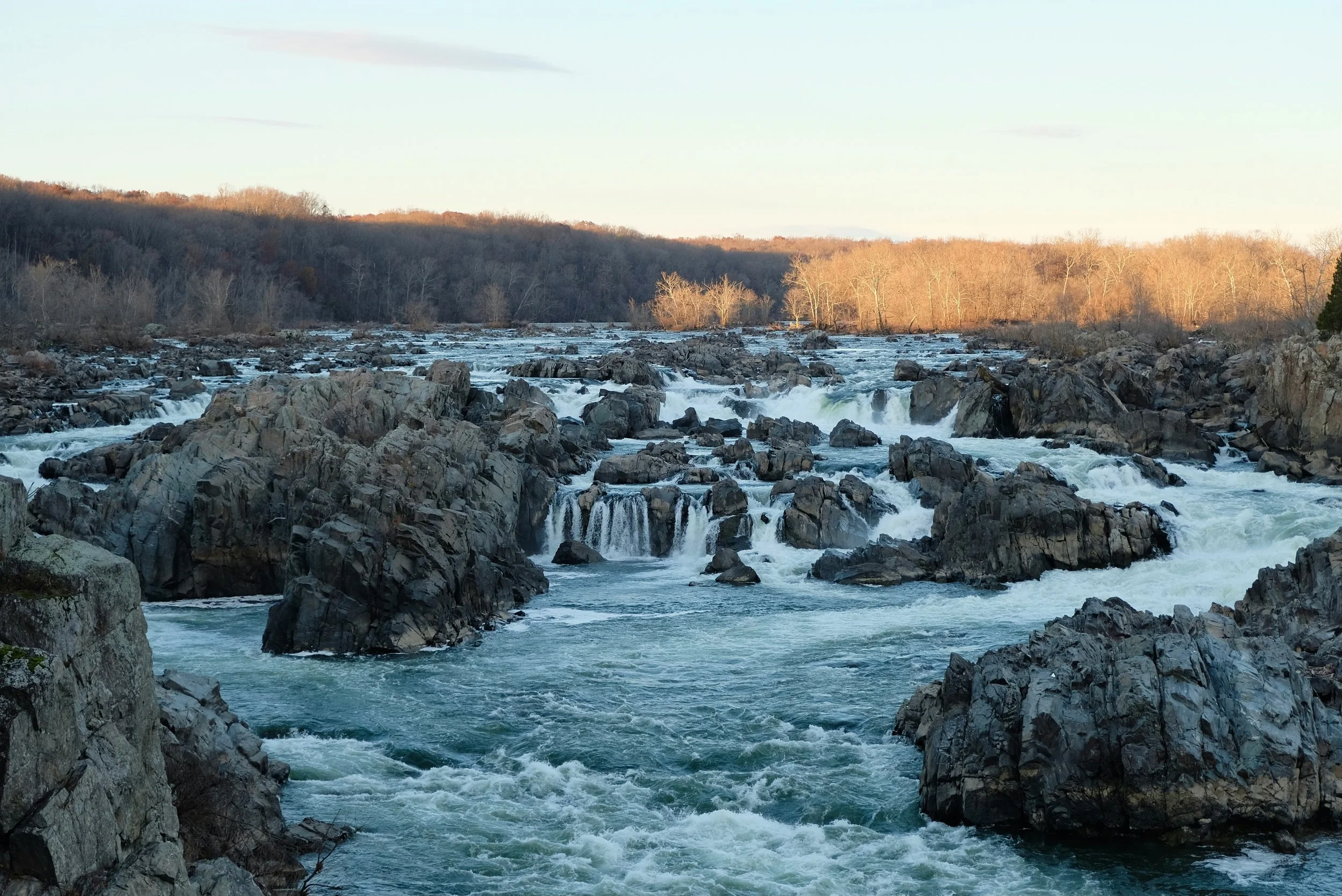
Charlotte Taylor Fryar: I think the succinct answer to your question is both. It's not like I came in as a novice and started from zero and then learned so much, but one thing that I think really drew me to the Potomac was learning more about its tremendous biodiversity. The Potomac River Gorge–from Great Falls down to Little Falls, that short little stretch of the Potomac–is one of the most biodiverse areas within six states. And when I say I've walked through these areas, I'm looking at every aster to double check the species of aster. I'm looking at the specific little river grasses. Because attention to what grows where became a really important part of my relationship to place, and helped me understand so much more about why certain neighborhoods are where they are. It's also related to the history of why certain plants are where they are, or why certain people are where they are, and relationships across the whole of the city. So this is all to say I knew a little bit of riparian ecology, which was not a totally new subject, but the specifics of the Potomac River's ecology was very new and animated.
I started writing this book on these early walks where I would be taking notes on what plants I saw, and it would often help me get jump started writing my dissertation on a totally different topic of history. I became so entranced with the plant life of the Potomac that I ended up, right after I finished my graduate program, going to school to study herbalism. Because I felt a pretty immediate need to build deeper relationships with these plants, not only to be able to say, I know where they are and what their names are and maybe what other plants they like to spend time with. I also want to know them more intimately. And herbalism and learning how to use edible and medicinal plants was a way for me to do that. That is knowledge that I don't write directly about in the book, but certainly informs my understanding of, again, why certain plants are where they are, and what's the relationship between these plants and the people of the Washington, D.C. area.
WU: Yes, that’s a good point. It’s a complex relation, even leaving out the human factor for a minute, the natural factors of geology, plant life, animal life, are completely interrelated. As a bird watcher, I have had to develop a secondary interest in trees and a few kinds of plants, because that helps dictate what you might want to be looking for. So I started off having this strong obsession with birds, and now wherever I have an idea of what birds I should look for.
Charlotte Taylor Fryar: It's definitely a rabbit hole, if you just keep your eyes open. I like long walks too. I like going out. I like long walks in the city, and I like long walks in the country. So just keep your eyes open. It's amazing. You learn so much just by absorbing.
WU: Your book really demonstrates that, which is one of the reasons I enjoyed reading it, because it mirrors, in some ways, a lot of my own thinking and experiences in similar settings. This would have been a really excellent book if it was only about you coming to the area, falling in love with the Potomac, going on trips up and down and all around in the watershed and things you saw. But you go so much deeper.
One of the really powerful things about the book is the complex racial and class history that's interwoven with the river itself. Something that is not immediately apparent if a person is only out there taking in the natural elements. And I was curious about what prompted you to think about it, and then how you went about acquiring more of that information. I know you're a historian, so that makes sense, but was there a big research process for that aspect of the book?
Charlotte Taylor Fryar: When I began to realize that the notes I had been taking on the geography and ecology of the river were starting to look a little like a book or some kind of long form project, I did start to think more long term about what a book project could look like. And I am a trained historian. My background is in the history of racial justice movements in the South. And so just as we were saying how in nature you can't really turn off the way that you look at things. When I walk around, I can't turn off my brain naming the plants and why they're in relation to certain plants, and why they're located in certain places, and therefore what the soil must be like. And therefore, if this tree is here, what kind of bird am I going to see? I can't not think about that kind of thing. The way my brain works is I can't not think a little bit more about how historical layers add up on a landscape. And so I don't want to say that this was natural in some way, but it is a way that I've been trained to think about any place, trying to understand the ways in which historical layers, the many eras of history, stack up on top of themselves in a place. And in D.C. I found that because I was already thinking about geography, geology, ecology, and many other factors that are shaped by the human history of the city,they became very intertwined. It would have been, for me at least, pretty impossible to write a book that was just celebrating the incredible biodiversity of the Potomac River region without delving into these histories of displacement and discrimination and resistance Also, it seems pretty impossible to write a history in any way of the Potomac River, or of Washington D.C., that does not address race. It is the defining story and aspect of our city.
WU: That's very true, and I'm not sure that even the human element of that alone has ever been as fully detailed and written about as it deserves. I would love to see a really comprehensive book, not a polemic or an ax to grind, but just a straightforward, honest history, beginning with the fact that, unlike many cities that grew up organically out of settlements, Washington, D.C. was planned from the beginning.
Charlotte Taylor Fryar: The book you want is called Chocolate City, A History of Race and Democracy in the Nation's Capital, by Chris Myers Asch and George Derek Musgrove. That book to my mind is about as good as it gets. A comprehensive history, and even then it often feels like there are places where you would still love to know more.
WU: And there was obviously not nothing here, because not only were many white people living in the states that ceded territory for the new capital, along with those enslaved, but before that, many indigenous people made their homes here. Potomac, Anacostia, and other names are derived from the language of Native peoples. But then when you think about how the city achieved the status that it has, it brings in that extra layer of literally importing human beings to do labor.
And you can't talk about a river running through that without accounting for that, the material came in, the humans came in. So I think that's one of the real strengths of the book. That's an uncomfortable truth for a lot of us who love nature.
As you said, there's a peculiar form of white privilege that attends to being comfortable in the outdoors, in certain spaces. I think going into that in the depth you did is one of the best things about the book. So, clearly, you did actually do some book research and primary source research.
Charlotte Taylor Fryar: This is an essay collection. I used research in some essays more than others. There are some that almost exclusively rely on secondary sources, histories that have already been written by others. But the ones I think I feel the most proud of are the ones where I did primary research. The one that seems to resonate often with people is “Swimming,” and it's about the history of segregation and swimming and recreational spaces around the city.
WU: There's a local poet named Kenneth Carroll, a mainstay of the literary scene here, and he has a poem about a cousin who climbed in at night to a segregated swimming pool somewhere in southeast D.C. and drowned.
Charlotte Taylor Fryar: That's part of the essay. I think it's the Rosedale pool.
WU: That's probably it. That sounds correct. The thing about that poem that is so powerful is that it isn't just some fictional person. This was an actual human being. Part of what your book does is bring those kinds of things out into the open. I'm often struck by how supposedly liberal, progressive white people still have so many blind spots about their privilege and their relationship to the city—D.C. is cool, we're going to move into Columbia Heights or Shaw, say—without any sense of the history, of what’s left of what makes it cool. And I think your book performs a real service in bringing light to that privilege and especially extending it into the natural world, which theoretically is race neutral, but in reality, it's not.
You really talk a lot about your own sense of privilege that you discovered.
Charlotte Taylor Fryar: I think the challenge for any white writer who chooses to write aboutrace in a way that's intimate or personal is the task of accountability. In some ways, I think it's close to impossible to be able to do it 100%. But it is still an important practice on the page to to write toward community accountability, and to speak honestly about your own emotions and actions in regard to race, whether a privilege, discrimination, or anything else,
WU: And now for the obligatory final question, which is, what are you working on now?
Charlotte Taylor Fryar: I'm at the very, very beginning of a new book project. But I'm in that beginning phase where I've begun to sketch it out, but not work in real depth on it, so everything feels possible, and so I feel very light and happy about it, instead of in the weeds on it. It's another essay collection. I'm a historian, though my degree is actually in American Studies, so it's really about literature, culture, and history. And I’m also an herbalist. So anytime I read literally anything, my eyes are looking for plants. And so even when I'm not reading books that are about gardening or about plants or about the outdoors. I'm still on sort of high, high alert for it. For years I've kept a list, a little Google Doc, with whatever book I had read and whatever plant got mentioned. It doesn't even have to be a full poem or a long essay or something. I really just mean a line. And I have thought over the years about how much I would like to write a phyto biography, like a sort of social and cultural history of certain plants that have meant something to me, but the project that I'm working on now takes for each essay the relationship between an American writer or artist and a plant that they wrote about, or, were troubled by, or reflected on in some way.
WU: I have a feeling Emily Dickinson might be good to consider in that she was something of an amateur botanist, in fact, herself. And of course she was very acute as an observer.
Charlotte Taylor Fryar: I'm trying to keep it relatively 20th century, although she's obviously such an inspiration, and so many poems to choose from. But the 19th century writer that I can't really give up is Walt Whitman, his wonderful Calamus poem. Calamus is a medicinal plant that had many different uses during his lifetime, and yet for him, the poem is this ode to athletic love and queer desire. And W.E.B. Du Bois and redwoods. The book is an essay collection exploring that relationship between writers and things.
WU: Thank you again for this interview! Very enlightening and much food for thought.
Buy Potomac Fever and learn more about Charlotte Taylor Fryar at her website.
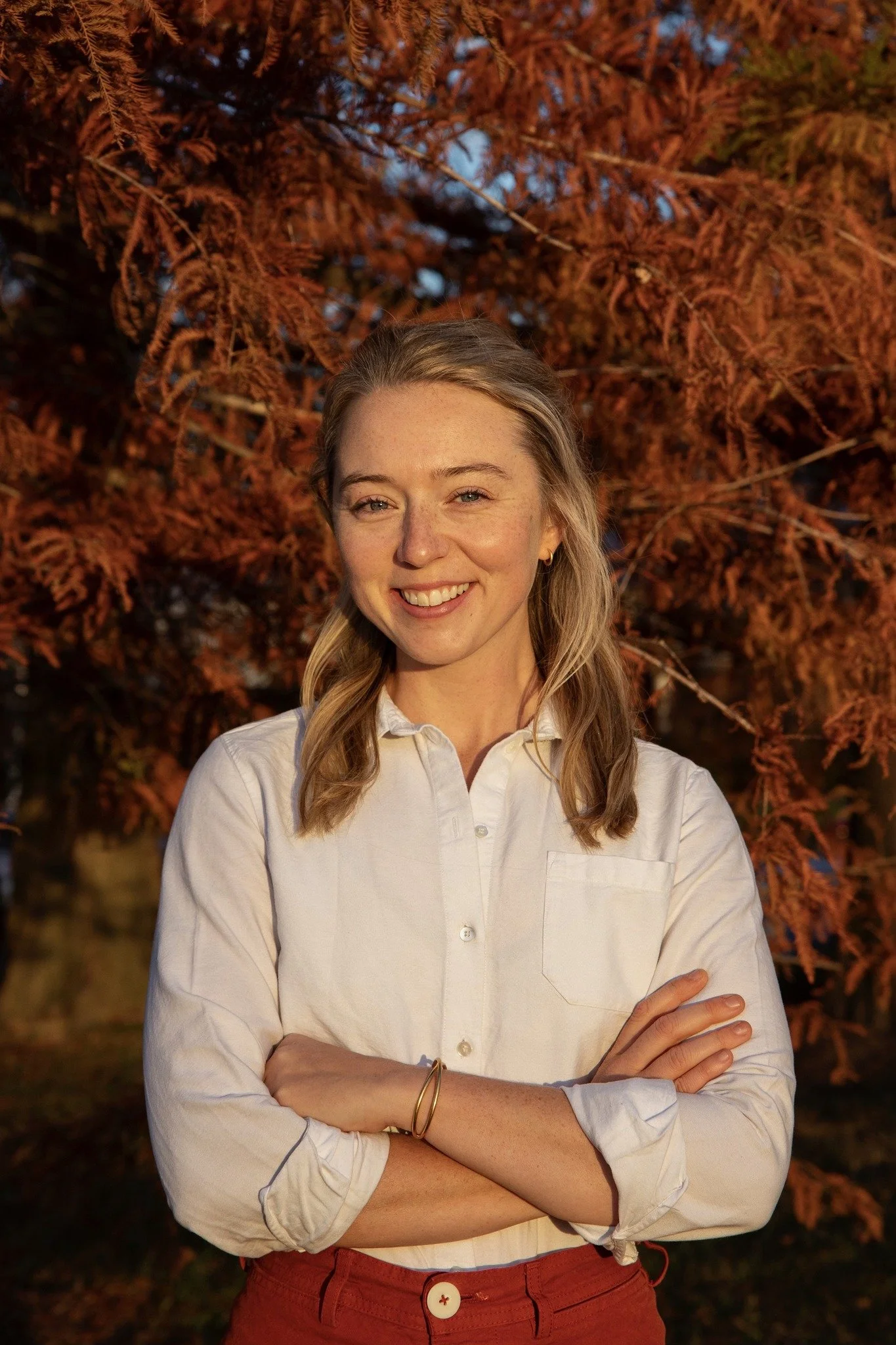
Charlotte Taylor Fryar is a writer, historian, educator, and herbalist. She holds a PhD in American Studies from the University of North Carolina at Chapel Hill and lives in Glen Echo, Maryland, less than seven hundred feet from the banks of the Potomac River. Potomac Fever: Reflections on the Nation’s River is her first book.
Gregory Luce is the co-founder and poetry editor of Washington Unbound. He has published six chapbooks. He lives in Arlington, serves as Poetry Editor of The Mid-Atlantic Review, and writes a monthly column for the online arts journal Scene4.