
An interview with D.C.’s newest worker-owned bookstore
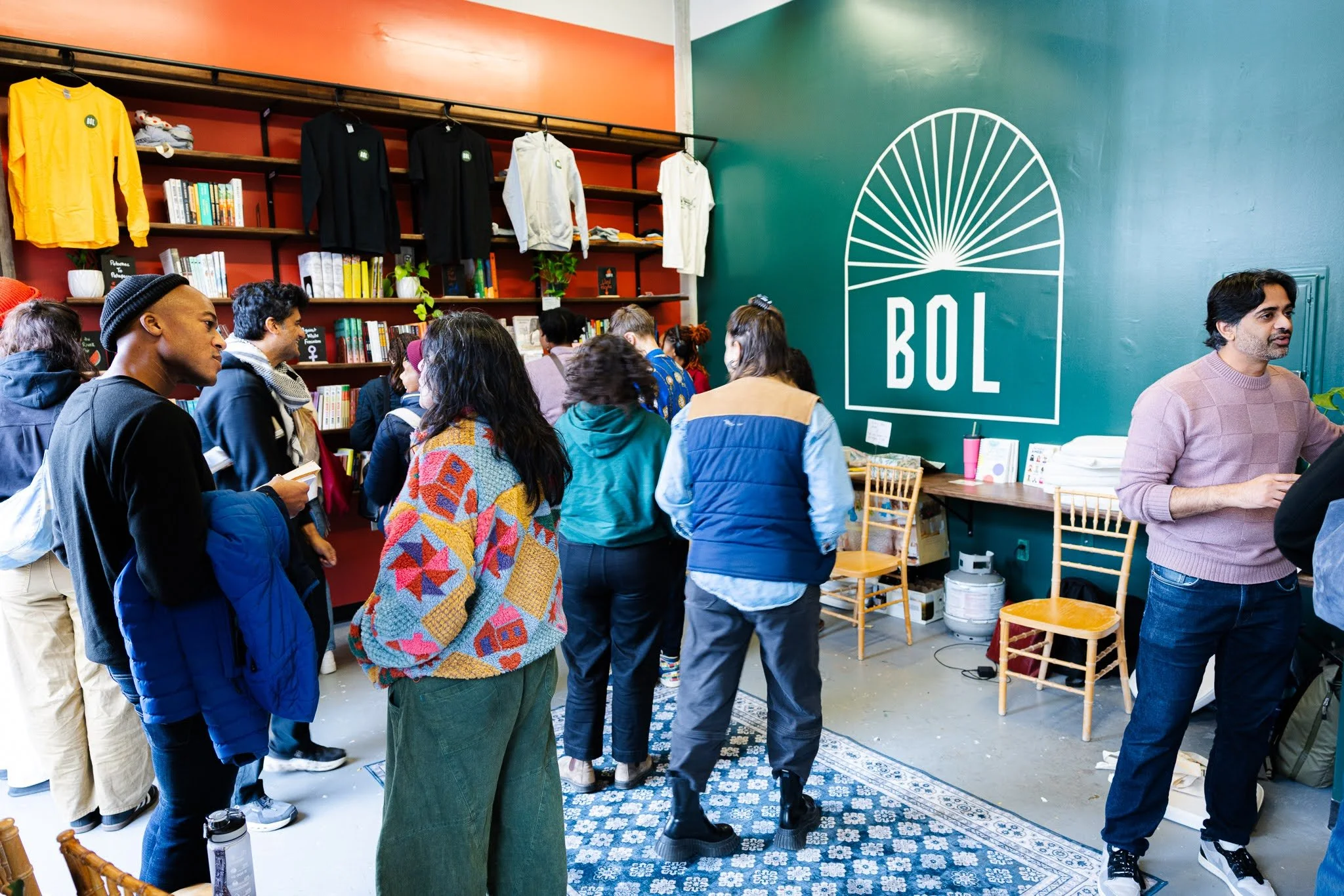
[Photo of a crowd of people inside Bol Co-op during the Launch Party. Photo by Mohammed Shahrukh, @mohammedshahrukh]
by Samantha Segal
Even in difficult, regressive times, there are glimpses of hope that indicate a better world is possible. Bol Co-op, D.C.’s newest worker-owned bookstore, reminds us of just that—that community empowerment can ease the sense of defeat we might find easy to succumb to right now. An incredible third space, Bol hosts book clubs, author talks, film screenings, public discussions, cultural events, and more in their newly-opened studio in the Brookland Arts Walk. Through rich cultural programming, community building, and the revolutionary curation of books on their shelves, Bol commits itself to the praxis required to make material change.
Change begins locally—through books, discourse, and a collective vision of an equitable future—and they are devoted to nurturing this vision. When I witnessed how the members voted to decide where to hang their holiday lights, which I was even included in, it was clear that their democratic convictions translate very practically. I first learned of Bol Co-op nearly a year ago during a visit to Creative Grounds, where, at their pop-up location, I perused their fantastic used book selection. I have been following them ever since. They moved into their own space a month ago and have swiftly continued to host extraordinary events, such as a book swap, an imaginative writing workshop, and of course, their iconic Cookbook Club.
Bol shows us that it is not only possible to foster a dignified working environment and a safe space for community organizers and residents, but it is gravely necessary to meet today’s moment. Providing sliding-scale pricing and a free space for authors and organizers are notable ways that they prioritize accessibility, encourage curiosity, and bring community together. In our conversation, members of Bol Co-op provide a refreshing perspective on building community and solidarity in D.C. and beyond, their experience starting a cooperative, how they personally pick the books on their shelves, and much more.
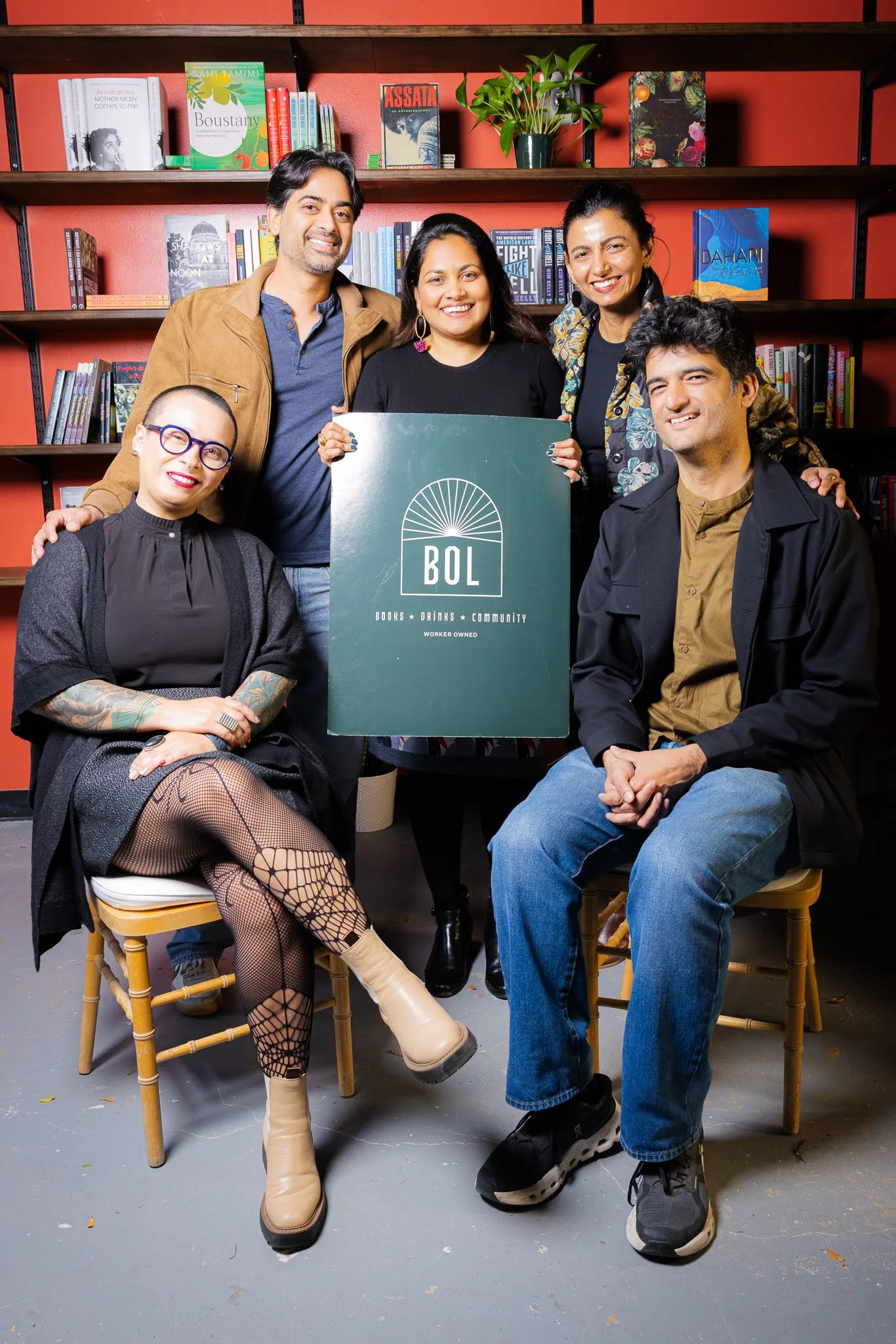
[Photo of members of Bol Co-op. Photo by Tim Clay, @timclay007]
WU: Would you be able to tell us what “Bol” means?
Zaineb: The word “Bol” is from Urdu and Hindi, and it means speak up. But the inspiration is from this revolutionary poem that's also titled Bol, from Pakistan. Poet Faiz Ahmed Faiz was a leftist radical poet who spent a major part of his life in exile. His poem is a call to action. He's asking people to speak up because our words are free. The entire poem gives different instances of how we can use our words. It encourages people to stand up against fascism and injustice. So that's the inspiration.
WU: That's beautiful. It's unfortunately evergreen, and very fitting to your mission as a co-op. What led to the creation of Bol Co-op, and how did this idea take shape?
Zaineb: Bol Co-op started out as a political project. It was our belief in economic democracy, that workers should be able to have a stake and collective ownership of that place. The relationship of subordination between employer and employee should not exist. People who work and contribute to the production of whatever we are producing should have access to those profits. At the same time, there was a lack of spaces in D.C. This is about our business model. But we are also establishing a community space and there is a lack of such spaces in DC. I used to organize a lot with the Pakistani community in D.C., and I would always struggle with finding spaces to host events, screenings, or book talks because everything is so expensive. We wanted to have a space where we can work with the community and organizers, and then open our space to them.
Our pricing is on a scale because we want our space and events to be accessible. We don't do paid events, generally, other than one or two events here or there. Even when we charge for a ticket, we always make sure to put it out there that if that's a barrier, to come anyway with no questions asked. We want to have the space accessible to everyone – people who believe in the mission, people who believe in change, people who believe in standing up against tyranny anywhere in the world. That was also something that we thought a lot about, how [local] issues connect to global issues. These issues don't exist in a vacuum. Most of the events that we do connect those issues to the global issues that are happening. Our first event at Bol was right after the U.S. withdrew from Afghanistan, and we had two speakers who talked about Afghanistan and what was going on there. It was not from the American perspective. But of course, all of us were in D.C. at that time, so we have this [American] perspective. We wanted to bring the other perspective to the conversation, and we have kept that alive throughout the past four or five years that we have been here.
WU: Yeah, that's really admirable. All of our plights are interconnected in some way, and it’s important to acknowledge that.
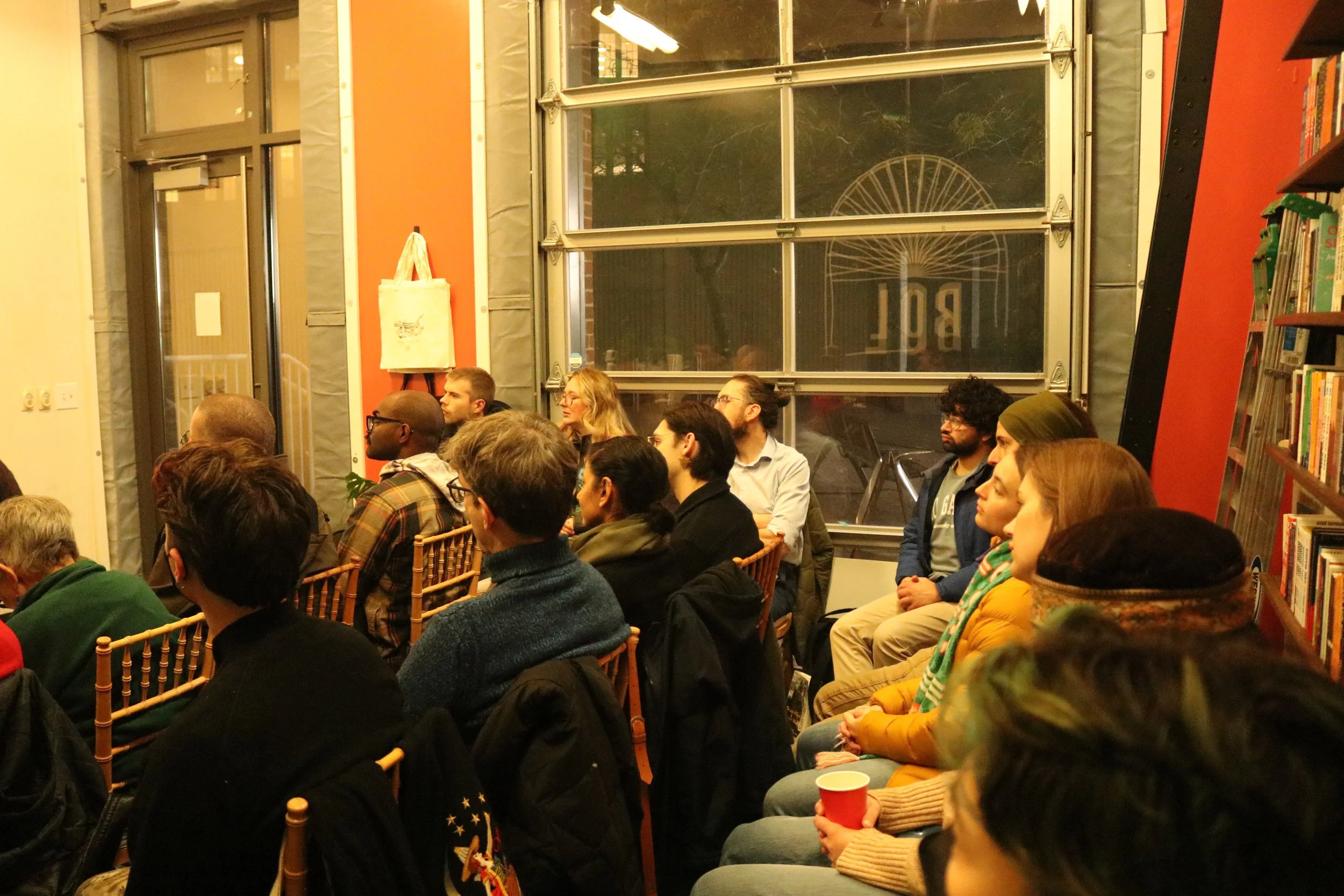
[Photo of event attendees at Bol Co-op’s new space. Photo by Harsh]
“This space is not just for us, it's for all of us … It emerged because someone took a chance on us. We hope to do that for others too.”
Arjun: Projects like this can't happen without lots of community input and community help. Clearly, the most important first step for us was finding a space for a pop-up, and we couldn't have done that without Asmara at Creative Grounds. She allowed us to have our own curated book collection there for us to really get our political ethos to where we wanted it to be, and to run a ton of events. We were able to run events after 5 pm without fail, and that allowed us to build our community in D.C., working with organizations as different as Claudia Jones School and Muslims for Just Futures. That is what allowed us to have the capacity for our new space, where we're now able to bring communities who need that space and just say yes every time. This space is not just for us, it's for all of usIt emerged because someone took a chance on us. We hope to do that for others, too.
Zaineb: As soon as we thought about this [building a co-op], we took a course. There's a Baltimore-based organization that gives free courses to people who are trying to start cooperatives.Then, we worked with legal clinics here in D.C. that are part of this larger ecosystem of solidarity economy, and they provide pro bono legal assistance to worker cooperatives, like our operating agreement. It took us six to eight months to put that together. We worked with two different teams of young lawyers who helped us do that. It was a very gradual process. As Arjun was saying, there were many, many people who gave us their time, shared their resources and knowledge with us, and put a lot of trust in us that made this possible.
Natasha: Our community hasn't just helped us set up Bol by assisting with our operating agreement and providing us spaces. Our community keeps the space open. They help us decide which books to get. They run events. A big part of what makes Bol so special is it's by the community, for the community. A lot of the events that you see or the books you see in our collection, it's not just us who decide that. It's our community that provides their input and makes the space their own.
“A big part of what makes Bol so special is it's by the community, for the community.”
WU: It makes me really happy to see how many community members have a stake in what you're building, especially in such a crucial time… What are your backgrounds and what brought you to Bol Co-op?
Natasha: I am an educator, writer, and lifelong lover of books. What brought me to Bol was just wanting a really intimate book club where I could come to discuss books—the books I loved, books from all over the world, books in translation. I think I reached out to Zaineb, and I was like, “I really want to start a global book club.” And she said, ”Sure, let's do it.” The first meeting, it was just us. The next book club, more people came, and then more people came. Now, we have a really beloved community of people who really enjoy reading the books that we have in our book club, but also just really enjoy being part of that community. It's just really valuable to have a like-minded community that's passionate about the same things as you are in these really trying times in this city. Coming to book club is like a warm hug every time. So that was my entrance into Bol, and then I just started spending all my time here.
Zaineb: I think a running theme throughout the past two decades, ever since I started college, was really organizing with the community on different issues. Organizing gives me hope. After organizing for a few years in D.C., my ideas began to change; it was initially more like a reactive kind of politics where there was always something to respond to or stand up against. I wanted to take a step back and think more about how we can build something more proactive. I channeled the background I had with working with people in D.C., mostly of Pakistani origin, because I used to focus on Pakistani political and economic issues, into Bol. I also love to read books. One thing that holds all of us together is our love for reading.
Arjun: The two things that resonate across is we love books and we keep showing up. I think when I started with Bol, I knew Mubbashir a little bit, but I didn't know Zaineb yet. But what I did know is that the project sounded incredible. When I saw that there was somebody who was thinking about the same kind of political ideas that I was thinking about in a community space, I wanted to be involved. My background is as a professor at Georgetown. Of course, I love to write, I love to teach. The thing about the university is it can be a very stale place because the kinds of books you're forced to read and the kinds of ways you're forced to think can be very specialized and very boxed in. For somebody like me who comes from a much broader background of reading fiction, nonfiction, making films, watching films, playing music, listening to music, that kind of way of being doesn't make a lot of sense. I was looking for a community of people who could see a broader way of thinking together about art, scholarship, literature, film, photography, all in the same space, and not seeing those things as distinct and antithetical to a political vision for the future. A lot of artists can be apolitical or hide their politics, and this is not a space for that. I was so excited when I saw that this is a possibility, especially coming from a place of loving to build community.
“A lot of artists can be apolitical or hide their politics, and this is not a space for that.”
WU: What are each of your preferred creative outlets?
Zaineb: I always struggle between two things. One is that I spend a lot of time organizing very little details around this. I think that's my creative outlet, how we can organize the books here and everything. The other thing is, I do some writing, but it's about issues that are very close to me, like labor issues. I feel very closely about what's happening in Pakistan. That's what I write about in magazines. This is how I express my political frustrations and my ideas about the world.
Natasha: I've always loved to write, that's been something that's always been my preferred way of expressing myself. I love the essay form. I think it can be political. I think it can be personal. I think it can bring the two together in a really beautiful and powerful way. I love writing fiction, particularly the short story form. I think that it is a very elegant form and also easier than novels. I have a Substack called Wayfinding that I try to update quite regularly, but it's hard when you're also doing this.
Arjun: I also love to write. I think that's a common theme here. When I finished college, I really wanted to be a novelist. That's what I wanted to do, and I wrote a really, really bad novel, and then that was the end of that for that time. I hope to come back to that at some point in future. But these days, I mostly write nonfiction on labor, caste and race, really thinking about what it would mean to have anti-caste and anti-racist futures. And I love writing. I'm also just a dabbler —a dabbler in film, music
“What makes [the bookshelves] Bol is that all the books are chosen because they envision a world worth striving for, or they explain a world worth leaving behind.”
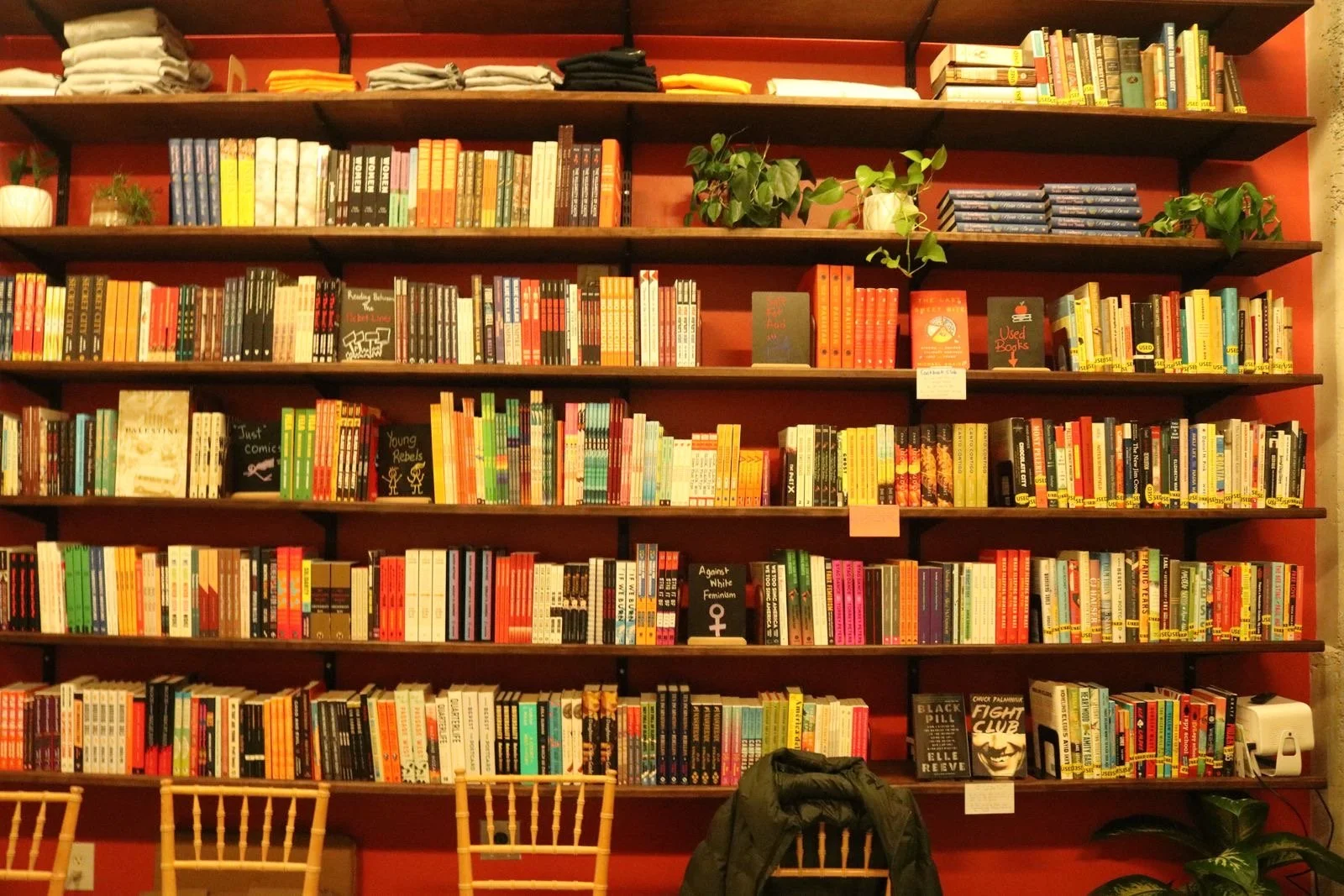
[Photo of bookshelves at Bol. Photo by Harsh]
WU: You carry a mix of used and new books. I was wondering how you go about curating your bookshelves.
Natasha: What's really wonderful about our bookshelves is it's an explosion of our interests – whether it's fiction, nonfiction, poetry, cookbooks – you'll really see everything there. What makes it Bol is that all the books are chosen because they envision a world worth striving for, or they explain a world worth leaving behind. We have literature, whether fiction or nonfiction, on labor rights, on Palestine, on intersectional feminism. I don't know where else you're going to find a collection quite like this one.
Zaineb: I think we also like to take a risk in terms of when we get books here. All of these books are the books that I would also like to read. I'm not thinking about, “Oh, would I just order New York Times bestsellers, because they are an easy sell.” We are also willing to take that risk; we are going to order titles which show us the world, and as Natasha put it very well, that either take an analytical lens, or they show us the future. There are definitely titles here that you will find in other bookstores, but I think the majority of these titles are very specific to our bookstore; and just going back to your point of curation, we do rely on our friends and our community members to send us recommendations. Sometimes a speaker would come and they have a certain background, and then we reach out and ask, “Oh, do you have any recommendations on this topic?” Like we do a film series. Usually, in that film series, it's a Third World Cinema series. It's a lot about anti-imperialism, internationalism, and third worldism so we built a collection around that as well. We are always thinking about the events we are having and what books complement them.
Arjun: At Bol, someone a couple days ago asked me, "Can you get all the books that are here online as well?" I said no, and the reason is because a lot of the books we have in our collection are from very small presses. They're in translations. They're coming from Pakistan or India. They're coming from locations, and people, who don't always get picked up very easily by big presses or don't have that much access to online purchasing or selling platforms. Sometimes you actually just have to come to Bol and see our curated collection to find some of these books. My motto with this collection is, "you're going to come looking for a book you want, but you're going to find the book you need every single time,” and you're not going to know what that is. You'll also notice there is no alphabetization or separation between nonfiction and fiction in our collection. When you're coming to look at the books, you have to peruse the collection. You have to pick up books to explore what's there, because it's not going to be easy for you to find the book that you came looking for.
Natasha: That's something that we are resisting in the way that we've set up the collection, and the fact that it's not online brings back the power and beauty of browsing. In the age of the algorithm, where you order things online, the accident of discovery is lost. That's something that we want to give to people in our community. We want to hold space for people to have that experience, to come to a bookstore, look at the shelves and say, "Oh my goodness. What is this about? This is a book I want to read." And then you turn around and someone else is there, and they're like, "Oh, I read that book. Let me tell you about it." That is the kind of experience that we want people to have when they come here.
Curation is a very serious responsibility, especially in a time where there's a lot of censorship and in a time where books that are really necessary sometimes slip the radar. We talk a lot about the kinds of books we want to put under our spotlight, the kinds of books we want to champion and buy. Sometimes we get it wrong. When you have a big collection, sometimes a book slips in there, and it can be hurtful to somebody. We have conversations where it's like, okay, this is not a book that aligns with our politics. It's a book we should take away because it's harmful to people. So it's an evolving work in progress. We're always adding new books. We're always talking about books we discover, and it’s just a lot of fun.
Zaineb: While also being hard work.
“You're going to come looking for a book you want, but you're going to find the book you need every single time.”
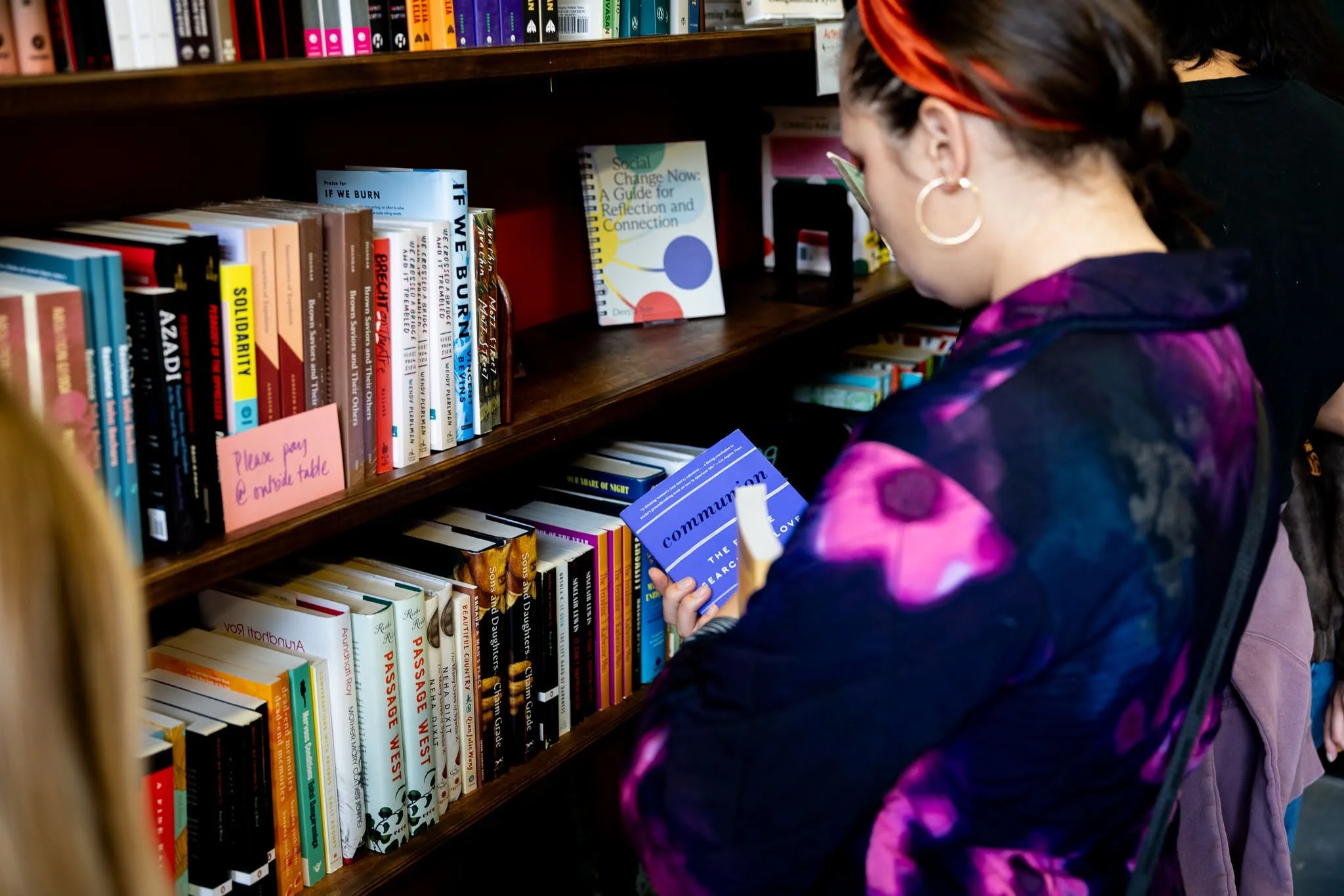
[Photo of a woman browsing Bol’s bookshelves. Photo by Tim Clay, @timclay007]
WU: Is promoting local authors part of your mission?
Zaineb: We are trying to build a collection with local authors. The other thing that we are trying to do is have book clubs on books that are written by local authors. We had one on Chocolate Chip City, and in that one, the author joined us at our last meeting. It's a work in progress. We do have a collection [of books by local authors.] Right now, most of the books that we have in that collection are written by DMV writers who are also writing about the DMV. But this is work in progress. We are considering creating a section with local authors who may or may not write only about the DMV.
Natasha: Something that we really want to do is not just build our collection of local writers, but also build this as a space for local writers, both to share their work and do writing workshops, a space that can host emerging writers. We want to do more write-ins and things like that. We want this to be a literary space. Compared to New York, D.C. doesn't quite have a reputation for being as much of a literary or artistic city, but I think it's a very intimate city, which is always beneficial to art and art-making. That's definitely something we want to build in terms of our programming as well as curation.
Zaineb: We did some programming with the local magazine After The Storm that encourages locally-based writers to write short stories that are mostly speculative fiction, but really imagining a world that's a different type of world. Going back to Natasha's point, [it’s] also a way to encourage new writers. There has been some programming that we have done, but now that we have the space, we want to continue working on that.
Arjun: In terms of featuring local writers, we did a series of writing workshops with Zein El-Amine on writing with whimsy, who is a local scholar, artist, writer. We also have featured so many books from folks in the area, Bill Fletcher, Amanda Huron, folks from ONE DC who have been making films and writing books about local D.C. politics. From an events perspective, we've always tried to make sure that we connect with the communities of artists, filmmakers, and activists here who have been doing it for 45, 60 plus years. Not just in terms of organizing, but creating together.
We've been talking about ourselves as one of the first worker-owned bookstores in D.C. As we've been saying that more and more, we've discovered that there's a history of worker-owned bookstores in D.C. that we ought to tap into more. Ones that started in the 1950s, others that started the 1980s; that's a legacy that we want to make sure that we're not erasing, but contributing to in a really fundamental way. I think that's something that we'll continue to do. Even our first couple events at Creative Grounds as a pop-up were D.C.-focused events on reclaiming parks, fighting gentrification, and what that means, not just for D.C., but for those looking from elsewhere in the world too.
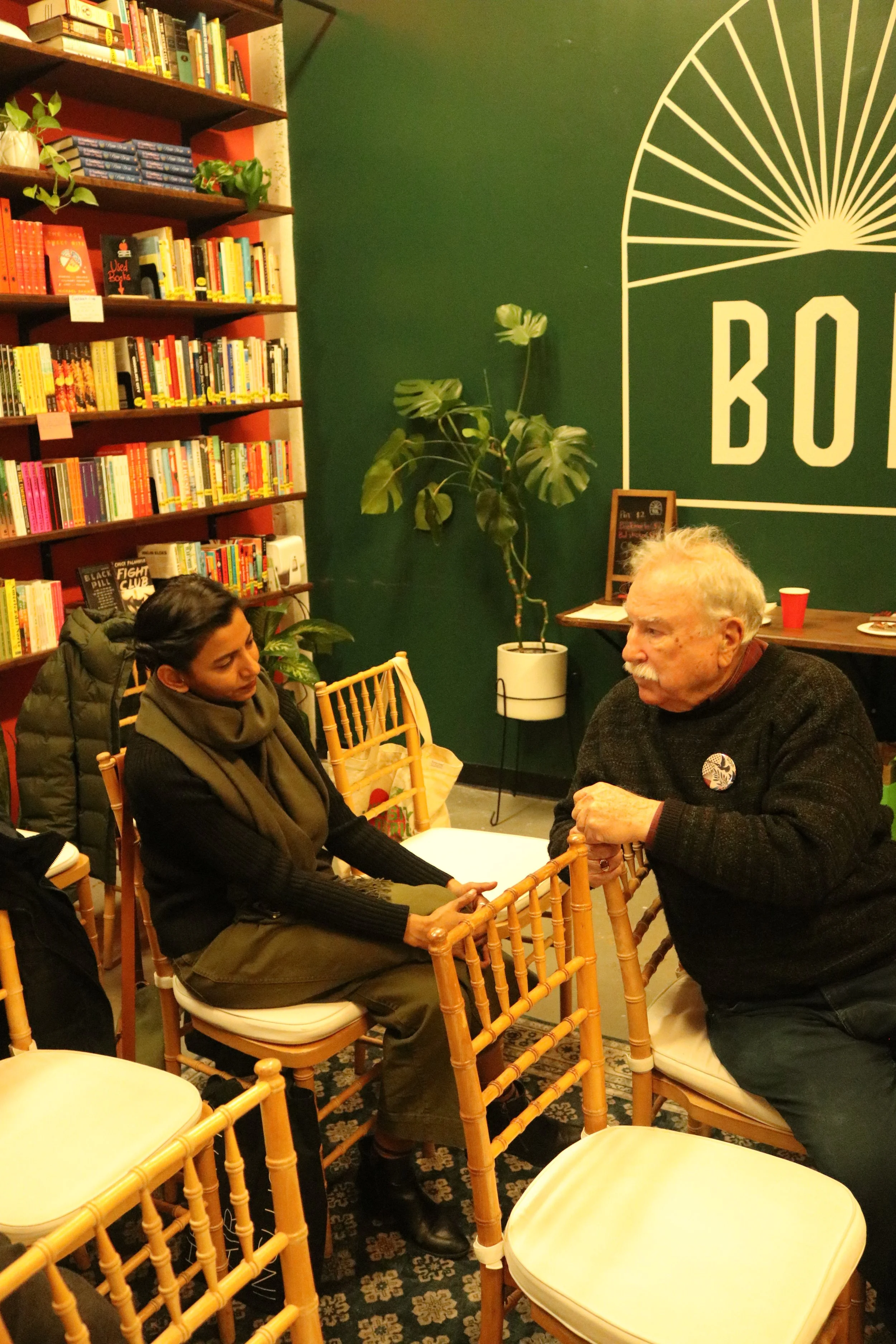
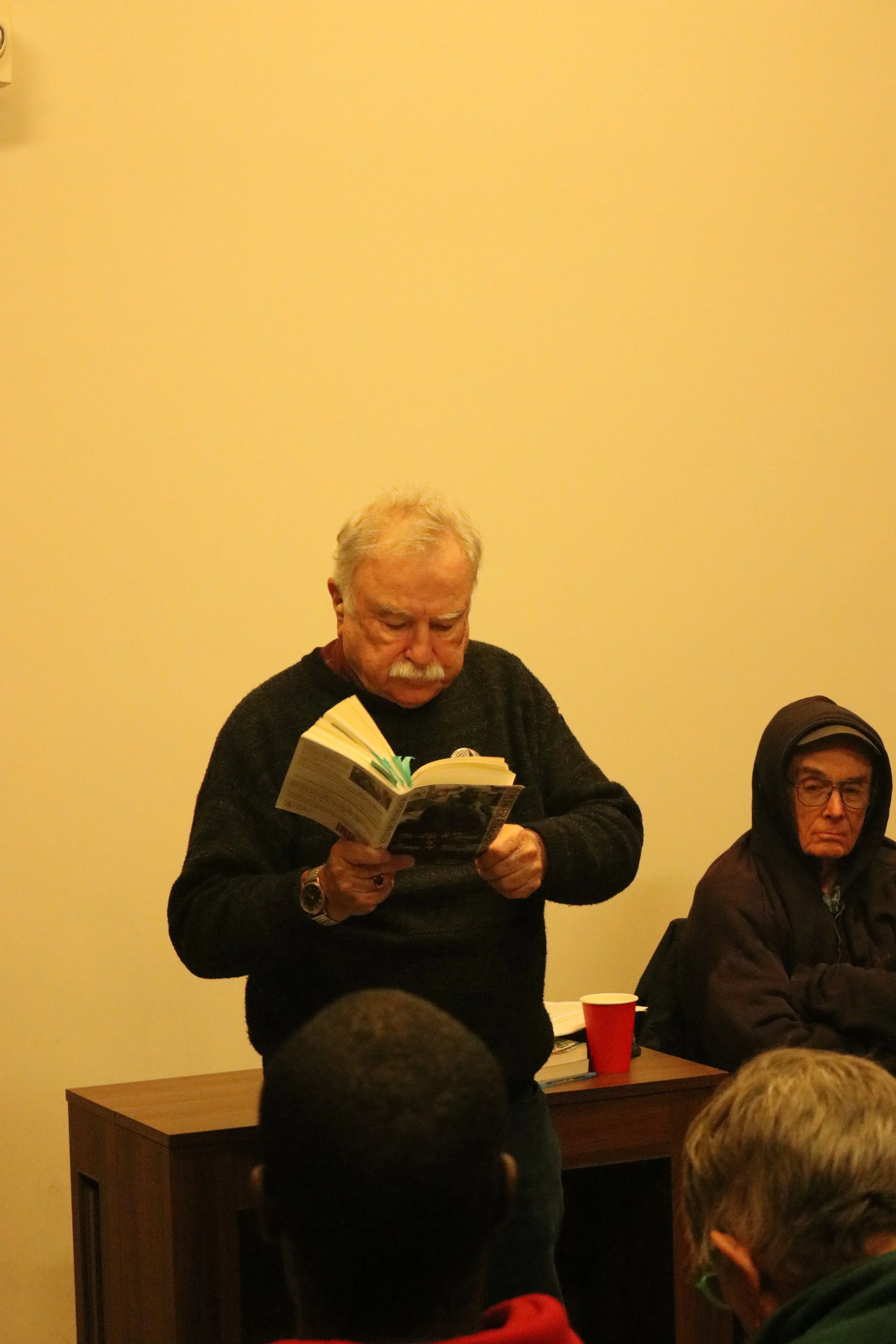
[Photos of Zaineb and author/organizer Tim Wheeler at his book talk - The Life & Times of George A. Meyers. Photos by Harsh]
WU: I know we've mentioned a few events that Bol has hosted, but are there any that have really stuck with you? And any events you’d like to plug?
Natasha: One of our events that's a lot of fun is our Cookbook Club, which we launched in July. Since then, we have been cooking from books like Maryam Jillani’s Pakistan, Sami Tamimi's Boustany, Dina Macki's Bahari, all beautiful books that have lots of interesting recipes, but that also tell stories of the places where those recipes are from. The way the Cookbook Club works is everybody signs up to bring a recipe, and then everyone comes together. We explain what we made and why we chose it. We eat together, and then we discuss. We have a really intimate discussion hosted by our co-collaborator, who runs our cookbook clubs with us, and we talk about what that cookbook brought up for us. Every cookbook is about a region, so we talk about the politics of that region. We talk about the policies that led to certain recipes being popular, to other recipes being erased; we talk about ingredients, the way they travel, and the way that history shapes how we eat. One thing that I think is really powerful about our cookbook clubs is they are mostly attended by people who are immigrants to this country, or whose parents were immigrants to this country or grandparents and so on. It is largely a group of people who really have a powerful relationship with food through a lens of longing and identity. It's always a very emotional event in a good way.
Arjun: The cookbook clubs that Natasha hosts are some of the best events that Bol does. It's part of Bol's ethos to bridge the embodied, the artistic, and the political in a way we often don't think about. Food is every day, but food is also extremely political. When you cook and eat together and then talk about the politics of a region, of a food, of a migration pattern, it changes the way you think about that politics. And you embody it differently. I love it. It's emotionally very deep when people come together that way, and they're also very well attended.
The only other event I'm going to plug here is our launch event from two weeks ago. It was just an incredible party. It was a party not in the sense of just fun, but a party in the sense of gathering community together. We started at 10 am with political readings for kids, kept going with activities like writing letters to the incarcerated in D.C., having book tastings, where people could actually read from our collection and think about what kind of books they might like to see in our collection, ending with comedy, music, and an awesome DJ with good food. Tons of people showed up, which means that there's a longing for more of that kind of sociality. We're hoping to, at least once every three to four months, have a Bol party, and a Bol party will be a real good time. That's what you can expect from those kinds of events. Always show up for those.
Zaineb: I would just plug an event that we are planning for next year. It's Working Class Literature Festival. We want community support. If there are writers or poets out there who write about labor, working conditions, please send us a message. We want to feature local writers, especially writers who write about working conditions. It is inspired by this Working Class Literature Festival that happens in Italy every year. We want to follow the same example where we are not just about people who are published only. We want that to be accessible, but also a call to action. Why do we write and why do we write fiction? It's a strong tradition of protest literature, and we want to continue building on that.
“It's part of Bol's ethos to bridge the embodied, the artistic, and the political in a way we often don't think about.”
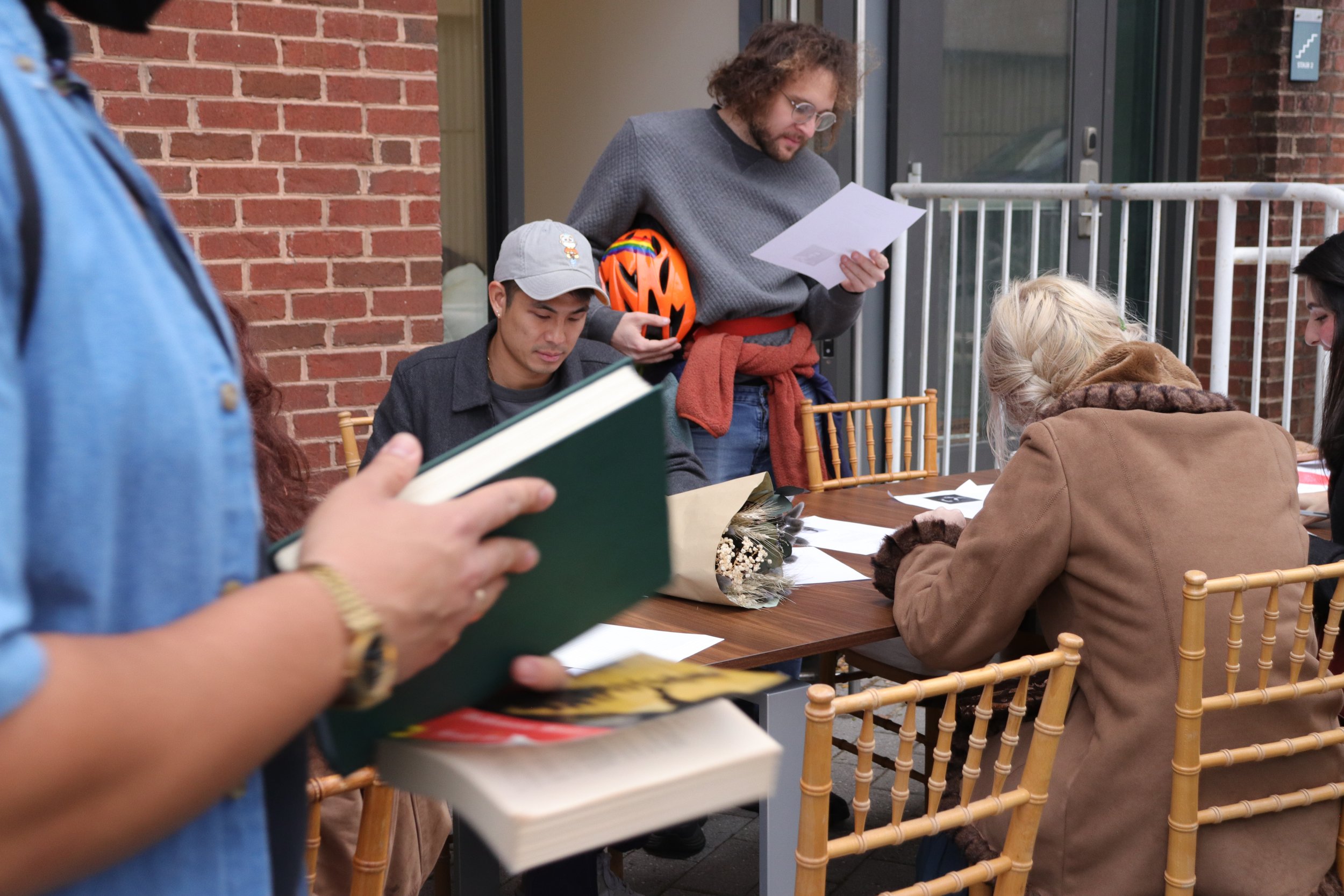
[Photo of people reading at a table at the Bol Launch Party. Photo by Mohammed Shahrukh, @mohammedshahrukh]
WU: Are there any books you find yourselves recommending again and again?
Zaineb: If someone comes to me and they ask me, "What should I read?" Right now from our collection, I would recommend If We Burn by Vincent Bevins. I think that's a really great book. It summarizes the mass movements of the past decade all over the world, like what's in common between them, how they became so big, what the lessons learned from that are. It also shows us a future where such movements will keep happening, and how we can actually make them more successful.
Natasha: I'll talk about three books that are just surfacing to the top of my mind that we've read as part of our Global Stories Book Club. The first is this beautiful novel in translation called Still Born by Guadalupe Nettel. It's about two friends in Mexico City, one of whom is having a child. It's about the different forms of motherhood, and the different ways you can mother. A book not in translation but by a translator, is Blue Light Hours by Bruna Dantas Lobato. She came to the book club where we were discussing her book, a beautiful novel about a young Brazilian student who comes to America. It's about her relationship with her mother and how it evolves over Skype. It’s a really heartbreaking book that will be very relatable to anyone who has come to this country and been away from their parents. The last book I'll mention is Brotherless Night by V. V. Ganeshananthan. Beautiful, heartbreaking novel about the Sri Lankan Civil War. The sweep and ambition of that novel is tremendous. How it manages to depict this moment in history through really rich characters that you feel like you get to know. It's a very difficult book to read, but incredibly propulsive. So I really recommend those three.
Arjun: Rohinton Mistry's A Fine Balance is, in my opinion, one of the greatest novels from the subcontinent. Every time someone comes in, I can't stop recommending it, and the reason is because there's never been a single person who has ever read it, who I've talked to about it, who doesn't say it's one of the greatest books they've ever read, and has not both laughed and cried when reading the book. The second book that comes up and was really influential in my life, previous to Bol, is Robin D. G. Kelley's Freedom Dreams. It's a spectacular look at the history of Black surrealist artists, intellectuals who are imagining a different future, not just through activism, but through their art itself. Oftentimes, when we think about surrealism, we think about white surrealists. What Robin D.G. Kelley is trying to make us think about is the way that Blackness, political change, and art all go together. It's really about imagining different futures. The third book, and this is one of my favorites right now to recommend, is The Maroons by Louis Timagène Houat and it's the first abolitionist novel that was written in Reunion and Mauritius Islands. It's really interesting for a couple of reasons. One is, oftentimes when we think about enslavement, we think about the transatlantic slave trade. We center that story on the Atlantic Ocean. This is an Indian Ocean story of slavery. He's writing this imaginary [story] of what a future will look like on this island during times of slavery. It's powerful both about what he's imagining, [and] also what happens after this book… This book gets lost in history. It's rediscovered 100 years after it was written in an archive in France.
Bol Co-op, D.C.’s newest worker-owned bookstore, is a gem tucked away in Studio #11 in the Brookland Arts Walk. Be sure to browse through their online book store. To stay aware of events and happenings, join their mailing list on their website and follow them on Instagram.
If you are a local writer or poet who is passionate about labor and working conditions, please do reach out to info@bol.coop to be part of their Working Class Literature Festival they are organizing next year.
Samantha Segal is a graduate of Rutgers University with a degree in political science. She served as an associate producer at a progressive news outlet, but is increasingly leaning toward the literary realm. In her free time, you can find her volunteering at the Immigrant & Refugee Center, reading absurdist novels, or discovering a new niche topic to research.
