Celebrating our first year

54 weeks covering the DMV literary community (and counting)
by Norah Vawter and Gregory Luce
Happy Birthday to us! It has truly been a whirlwind year. When we first met to consider launching a publication devoted to all things literary in the DMV, we believed we would attract at least a modest size audience. After all, no other outlet existed that focused exclusively on Washington-area writers and literary institutions, nor was anyone offering a comprehensive listing of literary events.
What we didn’t anticipate was the overwhelming response to our first few issues. Apparently, we were filling a need felt by many in our community for reviews, interviews, and events coverage.
So one year and 17,000 views later, we are pausing to celebrate by interviewing each other. We are not generally given to pat ourselves on the back, but after a year of never missing a Tuesday publication and supporting so many writers, we feel we deserve it.
In order to give you all a look inside the workings of Washington Unbound, we interviewed each other about how we each got started writing, the founding of the magazine, what we’ve learned over the past year, and our hopes for the future. The interview is too long to publish here in full, so we offer some choice extracts. For the audio of the complete interview, become a paid subscriber to our Substack. We got very chatty, so we’ve divided the audio into two parts, with the first half available tomorrow, Wednesday April 29, and the second coming in May.
We also wanted to share some highlights of the year’s offerings. We reviewed books of fiction and poetry, theater, and art exhibits, and interviewed several local writers and literary entrepreneurs. We provided book recommendation lists on several occasions and maintained our monthly literary calendar on the website. We are highlighting a few of our favorite pieces but we modestly believe all of our coverage is valuable, so please bookmark WashingtonUnbound.com, subscribe to our Substack newsletter, and follow us on social media.
A peek into the WU interview
Greg: Besides being the editors and publishers of this newsletter, we are also writers ourselves. So I'm going to kick this over to you, Norah, when and how did you start writing? Was there any specific trigger, or did you just feel drawn to write?
Norah: I was a constant, voracious reader, from the time I was a small child. And I do remember writing these little books when I was very young. But the real trigger was when I was in ninth grade. I was, at that time, a real math and science geek. I was actually on the math team in middle school. And then an English teacher recommended me for the summer creative writing camp, and I didn't want to go because it sounded like school, but my mother insisted that I go. I just loved it. And it just completely—it honestly changed my life, because after that, I wanted to write short stories every chance I got. When I went to college, I studied English, and I worked for the college literary journal, and then I became an editor.
Greg: In some ways, our trajectories are similar, even though in different genres. The trigger for me—to not only read poetry and read in general—was having A Child's Garden of Verses by Robert Louis Stevenson read to me. One poem in particular that really hit me was “The Land of Counterpane.” The speaker was sick in bed, but he had his toy soldiers, and he made a sort of landscape for them, and they would fight battles. And that was exactly the same thing I would do, when I was sick. I would sit in or lie in bed. I'd put my legs up so that there would be mountains, and then I would get my little plastic soldiers out and have battles. All of a sudden I realized that the author and I had this thing in common, and he had written about it. So from that point on, I always enjoyed all the assignments in school, starting in grade school, to write something creatively.
Our favorite poetry reviews
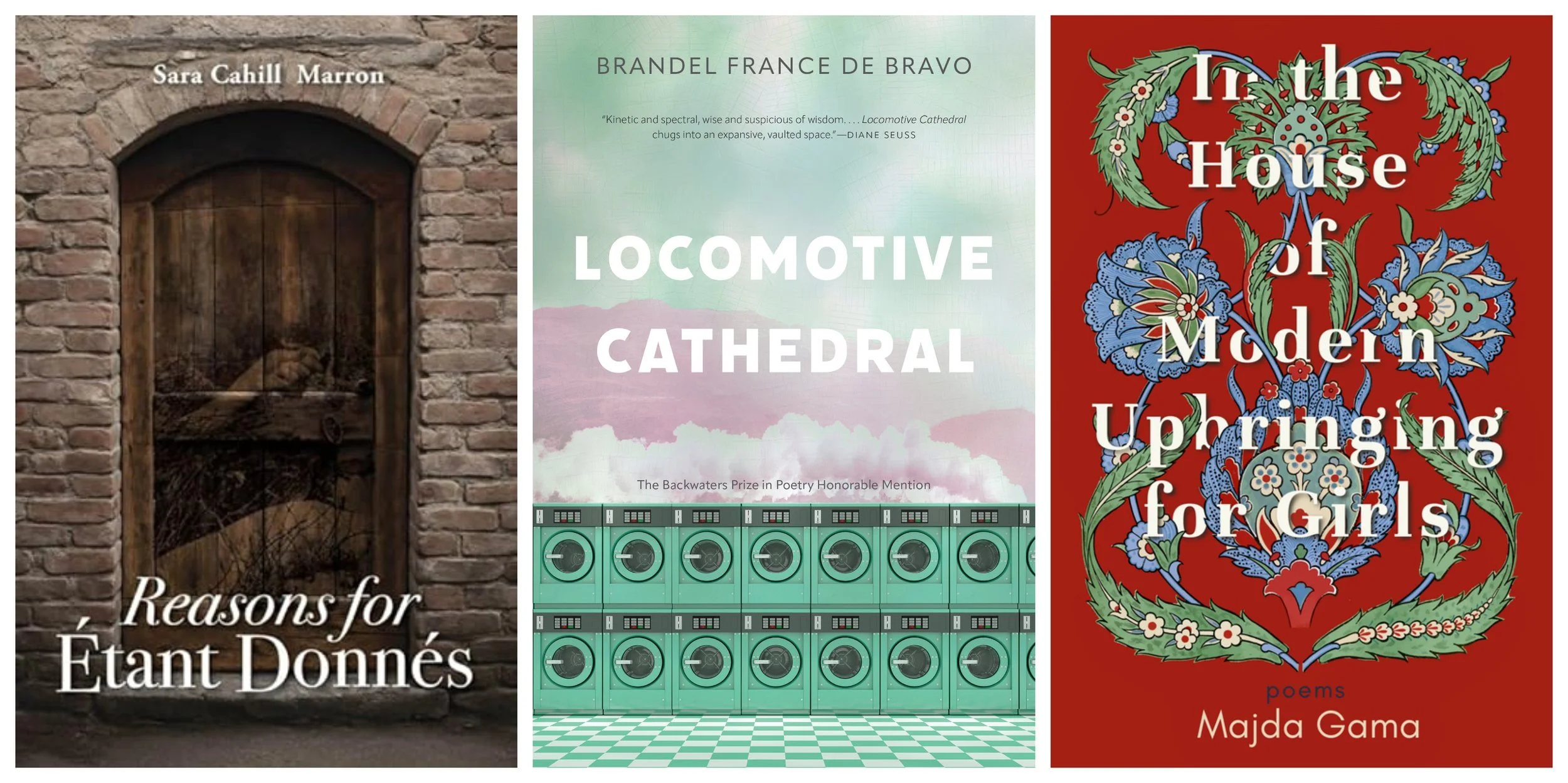
In July, Greg, our Poetry Editor, reviewed Majda Talal Gama’s brilliant collection In the House of Modern Upbringing for Girls. According to Greg, “Rarely has a collection of poems so perfectly embodied the experiences of the poet. … This book, her first full-length collection and published appropriately by Wandering Aengus Press, is the best volume of poetry I’ve read so far this year and likely for a long time to come.”
Contributor Serena Agusto-Cox wrote in January about Sara Cahill Marron’s intriguing collection, Reasons for Étant Donnés. Serena says the book “is more than a poetry collection, it is art in movement through reader action, reaction, and with space and time. Once you enter the doorway into the world of mysteries, readers will be unfettered in a world where they must contemplate connections in new ways to reimagine their own existence and their impact on the systems and people around them.”
And in April of this year, Brandel France de Bravo was the subject of contributor (and new member of our staff) Naomi Thiers’ review of her book Locomotive Cathedral. “[A] reader feels pulled into grappling with [the words and images],” says Naomi. “These muscular, unexpected poems show the reader ways we might look at something like a crow—or a familiar person—more closely and find new ways to connect.”
Our favorite fiction reviews
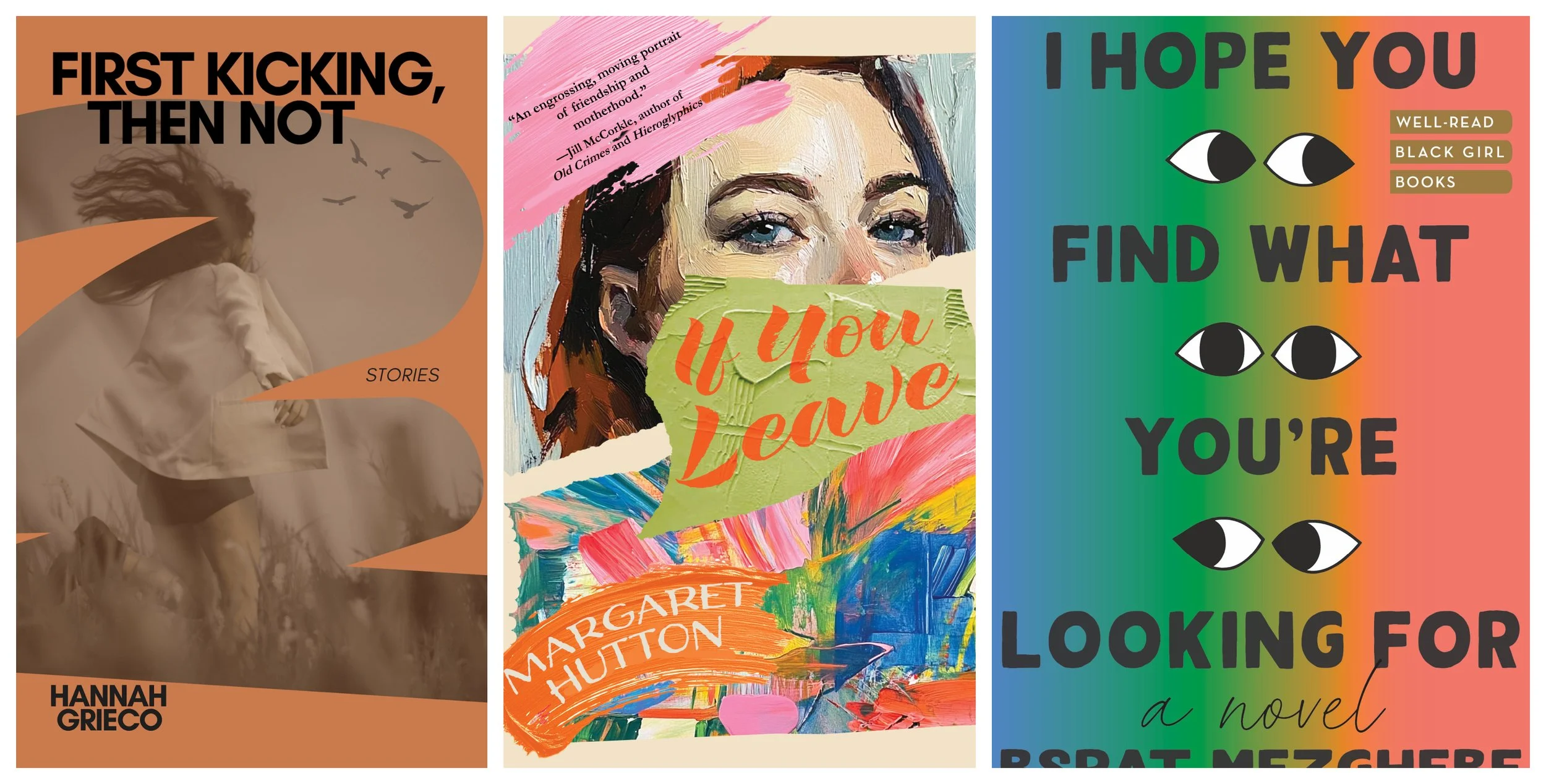
Norah reviewed Hannah Grieco’s Hannah Grieco’s short story collection First Kicking, Then Not. “Examining motherhood, caretaking, and mid-life—particularly the gritty, imperfect parts of womanhood that we often don’t talk about or acknowledge in our society—Grieco refuses to shy away from her characters’ authenticity, awkwardness, embarrassing moments, and certainly not their imperfections.”
In November, contributor Katy Gathright wrote a stellar review of Margaret Hutton’s If You Leave, saying: “the richly-drawn debut novel is the story of two women who are unlikely friends. But whereas the trope of unlikely friends usually signals a well-trod exploration of those aforementioned opposites, protagonists Lucille and Audrey offer something fresher and more relatable because they resist those neat, contrasting boxes.”
And more recently, this March our other new staff member, contributing writer Tom Navratil, reviewed Bsrat Mezghebe’s novel, I Hope You Find What You’re Looking For “The book paints, with confident verisimilitude, a fascinating portrait of the Eritrean diaspora community. It also provides a unique lens on Washington, D.C. The story does not come across as trying to teach the reader anything, but we learn a lot. It is, above all, an invitation to curiosity, to open our minds and extend our empathy.”
[The cast of Folger Theatre’s production of As You Like It. Photography by Brittany Diliberto.]
Our favorite theater reviews
In June Norah reviewed Frankenstein at The Shakespeare Theatre, a new adaptation of Mary Shelley’s classic novel. “This new play is a tense, suspenseful piece of theater with sound and lighting components that keep us on edge—physically and psychologically alert. … Blending comedy with tragedy, horror, mystery, and suspense, the play dances between light and dark, both visually and emotionally.”
Norah also reviewed the Folger Theatre’s Julius X: A Reinvisioning of the Tragedy of Julius Caesar by William Shakespeare in October, calling it ”a bold experiment: Shakespeare’s classic is not adapted here but rather reimagined and transformed … What emerges is a restless, energetic, rhythmic, and provocative work.”
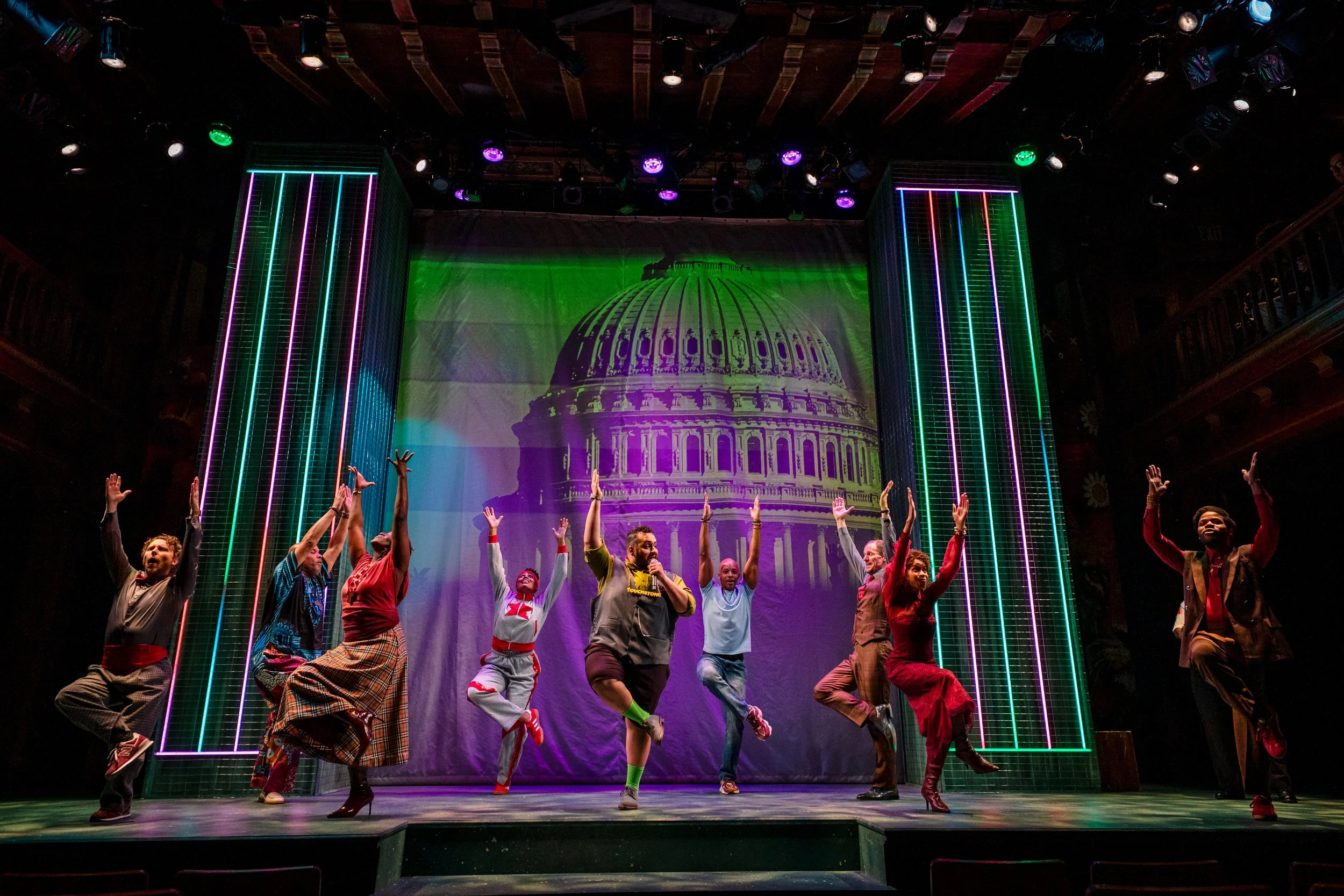
And in March contributing writer Tom Navratil reviewed the Folger Theatre’s production of As You Like It, calling it “a subtle parable for the multifaceted realities of life in Washington, D.C. The creative team is positing that vibrant cultural and community life has long flourished here, apart from, and often overshadowed by, the focus on federal government matters, and that we should appreciate and celebrate the qualities of this realm.” (At Washington Unbound, we agree.)
From left to right: Regie Cabico; Members of Bol Co-op (Photo by Tim Clay); jonetta rose barras (Photo by Kate Pczypok).]
Our favorite interviews
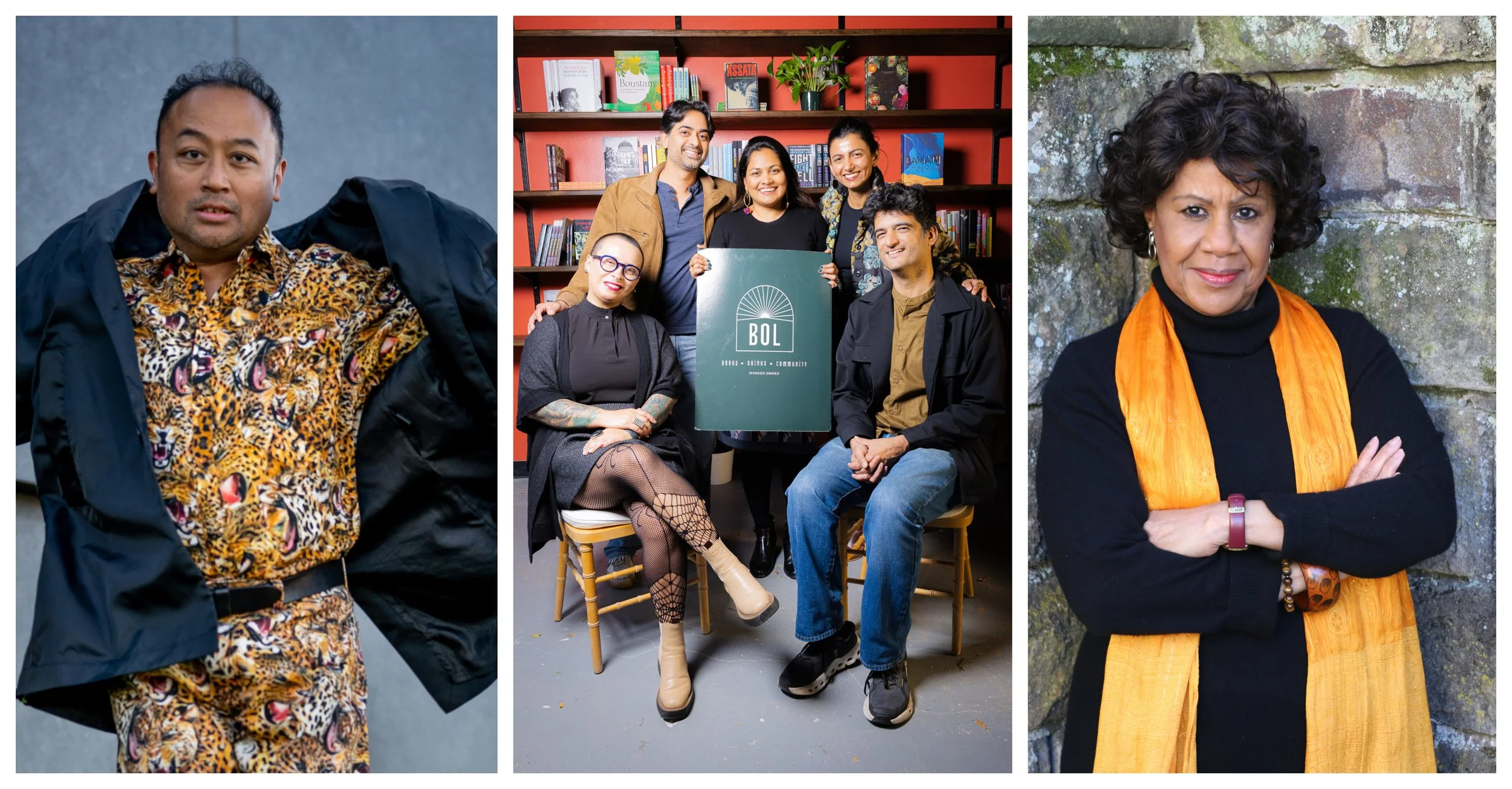
Some of the most fun—and revealing—articles we’ve presented have been our interviews. In June, Norah and Greg conducted a wide-ranging interview with beloved poet, teacher, activist, and leading DMV literary citizen Regie Cabico. Regie told us “We have to keep fighting. We have to keep gathering. We have to keep supporting each other…. If we stop writing, then we have lost.”
In December, Editorial Assistant Emerita Samantha Segal spoke with the staff of Bol Coop, a unique cooperative bookstore that advocates for and supports socially aware literature and action. As Bol staffer Zainab puts it, “Bol Co-op started out as a political project. It was our belief in economic democracy, that workers should be able to have a stake and collective ownership of that place.”
And most recently, in March, Norah had a conversation with poet, journalist, and community organizer Jonetta Rose Barras about her reading series MidnightRose and her many other activities in support of DMV writers, especially young writers and other underserved creators. Jonetta points out that "you're not just trying to grow the community of writers. You want to grow the community of readers, people who are buying books and who are celebrating poetry, because those are the people who will keep us stimulated as writers. Keep us growing. And keep our environment nurturing.”
Greg: I think that we've come to the future. What do we see as the future? What's happening over the next year?
Norah: We've talked about offering a print publication, for example, a compilation of reviews or interviews.
Greg: And maybe a little history of the publication, sort of a summary of what we've talked about today.
Norah: I also would like to bring on some more contributors. As for being able to pay contributors and pay ourselves a little something, we are still trying to find time to do more paid Substack posts and add on more value for people who are paid subscribers.
Norah Vawter is the co-founder and fiction/nonfiction editor of Washington Unbound. She’s a freelance writer, editor, and novelist. Her debut novel will be published by Regal House Publishing in 2028.
Gregory Luce is the co-founder and poetry editor of Washington Unbound. He has published six chapbooks. He lives in Arlington, serves as Poetry Editor of The Mid-Atlantic Review and writes a monthly column for the online arts journal Scene4.