
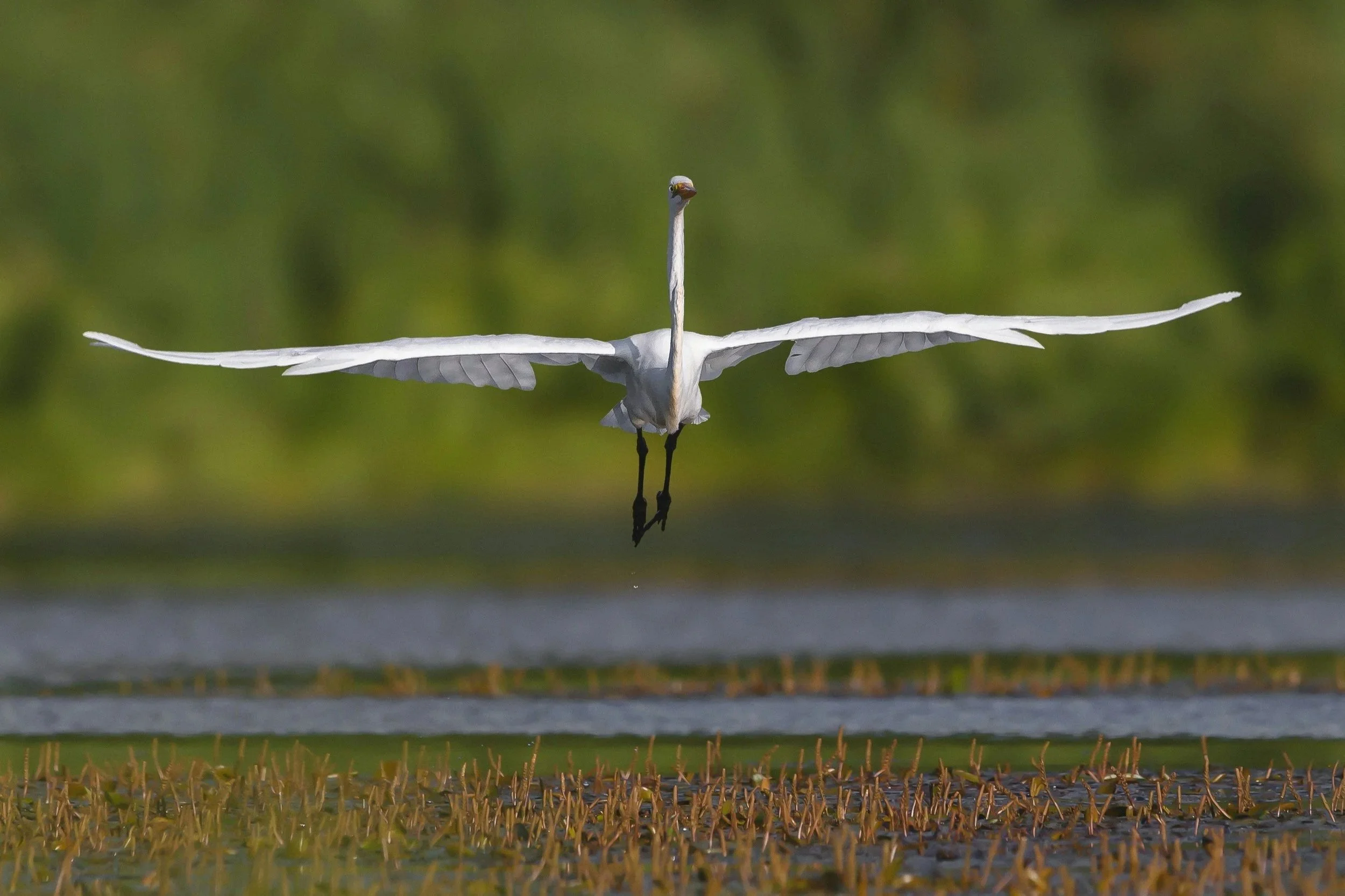
Poems are like herons
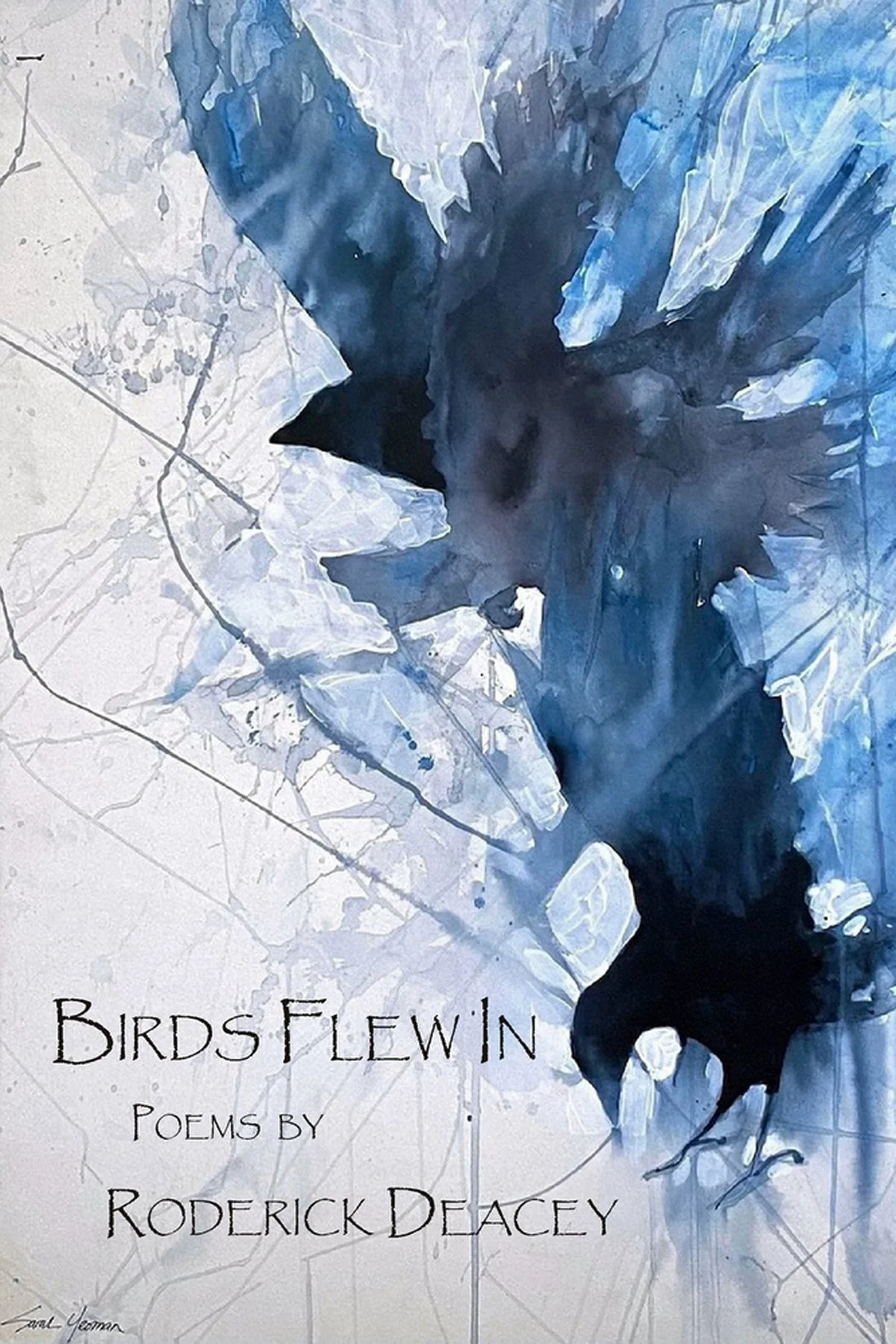
A review of Birds Flew In by Roderick Deacey
by Gregory Luce
Roderick Deacey’s debut book is aptly titled. As the poet says in an introductory note, “Birds flew into these poems, sometimes merely as a mention, sometimes just a feather or two, sometimes swirling and tumbling across the sky for the pure joy of it.” Deacey beautifully communicates this joy to readers in these poems.
Rod Deacey is a contemporary Beat poet. As the front man and lyricist for The DC Beats, he performs his work with accompanying jazz-inflected music. He also hosts multi-genre events at Sky Stage in Frederick, Maryland, where he resides.
The opening poem, “Herons Await,” depicts a bird that should be familiar to even the most casual observer of nature:
“Poems are like herons
standing like statues in the reeds
as you float down life’s river.
If you are lucky, they fly up for you….”
The not uncommon frustration of glimpsing a bird without seeing quite enough to identify is well described:
“It flew by too fast!
It definitely wasn’t an eagle or an owl.
It wasn’t an osprey—not black & white,
& no fish, they’re always holding a fish.
Perhaps it was a peregrine falcon
but maybe it wasn’t quite that fast,
so it had to be one of the hawks….
It flew too fast—I was just taking an allergy pill
& I couldn’t focus the binoculars in time,
so in reality, it was a hooked-beak brownish blur
zooming past. But I am almost certain
it was a raptor.”
(“Birdwatching 101—a Raptor? “)
“Ripples Receding & a Small Green God” is a lovely extended meditation on nature and memory, moving between present observation and distant reminiscence.
“it keeps retreating behind me
that rich golden sunlight
on riverbank grass
on the vivid blue petals of periwinkles
under the hawthorn bushes
on the same ever-changing river ripples
on my skin
tanning quietly….
the people here have all moved on
sliding away across the years
their faces fade
I can’t remember them
I can’t miss them
but I sense absence
a fleeting feeling of indefinable loss
soon this too will fall back
too far to recall not a concern
I will simply bring to mind
somewhere else
some other treasured locale
like that vast southwestern desert
humming quietly to itself
with no people to lose
except myself….”
This poem mirrors the titular ripples, each stanza using cascading indents too difficult to reproduce here. Another reason to acquire the book.
Further along, in “Geese Retro,” the poet ponders his relationship with Canada Geese:
“Today, I replaced the small vase
of wildflowers normally on my desk
with a jam jar jammed full
of discarded Canada goose feathers,
collected daily through the summer
from the avian grooming ground by the creek.
Instead of focusing on local wildlife
in well-loved woods & along streams
often visited, season by season,
I felt the need to write of wildness, wilderness,
of strange mountains & the jeweled lakes
of the far north, crystalline in the dawn,
or to laud the lush streams of the Delta
in the deep South winter destination
of our resident flock….
At least one bird was surprised in mid-groom
by the flock’s hasty departure—
a single quill feather spiraled down
from way up high in the empty sky,
an addition for my jam jar feather bouquet.
I think it might have been an omen
alerting me to something or other—
but just what, for the moment,
escapes me.”
A very moving tribute to a fellow poet (missed by many of us), enumerates some of Young’s characteristic subjects and quietly both mourns and celebrates his life:
“We had really hoped your second heart
would carry you much further, yet
it ceased to beat, abruptly ending your torrent of words,
which contained daffodils &, well, everything—herds
of buffalo, moths, an albatross, swarms of bees, a fleet
of tall ships, swans, owl hoots, plus shiny faucets
of hot & cold lust….
…but then you slipped quietly away, into darkness.
No, darkness won’t hurt you. You told me
darkness never hurt anyone.
Everything may seem empty now, but maybe not—
just listen. Distant waves ring like bells
& sometimes there are stars.”
“Elegy for Dean Young”
The book closes with a celebration of a bird of a very different feather, Charlie “Bird” Parker, the great jazz saxophonist and pioneer of bebop:
“The city has a long memory—
& honors its shifting alliances,
wearing its tattoos proudly….
Then, if you slide past Keith Haring’s
faded dancing men & barking dogs,
past Jean-Michel Basquiat’s colorful scrawls
& enigmatic epigraphs,
down where the mortal denizens
of the city night come out to play,
you might just discover
over the top of an old brick archway,
boldly painted in black letters
on a white background—BIRD LIVES!”
It’s good to have some of Rod Deacey’s work available in print. Though he has been writing and publishing for many years, and self-published a book in 2020, this is his first collection from an established publisher. If you are unable to witness one of his performances, open this book and savor his music and keen observations. Order Birds Flew In from Sligo Creek Publishing.
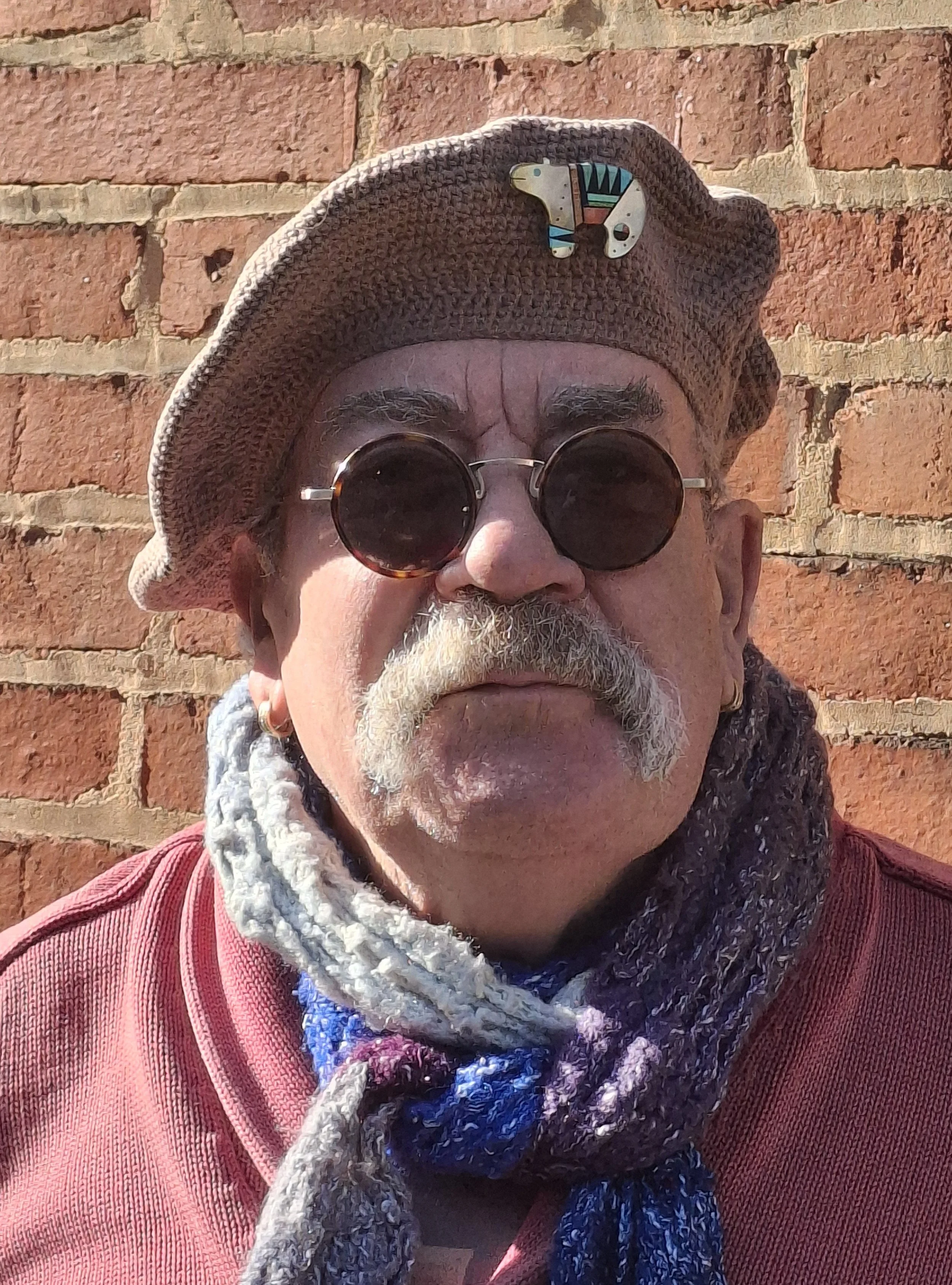
Roderick Deacey is a performing poet whose work blends poetry with bass, percussion, and jazz piano influences. His writing reflects the improvisational energy of mid-century Beat poets while remaining distinctly contemporary. His work has received multiple awards and appears regularly in literary journals. He lives in Frederick, Maryland.
Gregory Luce is the co-founder and poetry editor of Washington Unbound. He has published six chapbooks. He lives in Arlington, serves as Poetry Editor of The Mid-Atlantic Review and writes a monthly column for the online arts journal Scene4.