
Learning Where We Tread

A review of Tread Upon by Christopher Kondrich
By Serena Agusto-Cox
Christopher Kondrich’s third collection, Tread Upon (2026, Copper Canyon Press), invites readers to reconsider the boundaries we create between ourselves and the world around us. Through a sequence of poems that moves across landscapes, generations, and perspectives, Kondrich examines the environments we inhabit, alter, and sometimes destroy. The collection sustains its momentum through surprising shifts in scale and attention: a blade of grass becomes a consciousness to consider; a mine becomes evidence of human desire and consequence; and ordinary acts become opportunities for ethical reflection.
Throughout Tread Upon, Kondrich shifts perspective — between human and nonhuman, present and future, self and society — to suggest that meaningful change begins with learning to see differently. The title itself carries this tension. To tread is simply to walk, but it also suggests pressure, impact, and consequence. Every step becomes a relationship with what lies beneath us.
Kondrich’s poems examine landscapes marked by both natural forces and human intervention, whether in the grasslands burning in the poem beginning “There is nowhere for the wind to blow through the grass” or the lithium-rich mines of Atacama’s salt flats, where “Even Narcissus couldn’t stare at the sight of himself forever / in the surface of an evaporation pond” . Kondrich does not simply present these landscapes as symbols of environmental damage; instead, he reveals them as records of human choices. The poems ask readers to consider what those choices have made visible and what they have obscured.
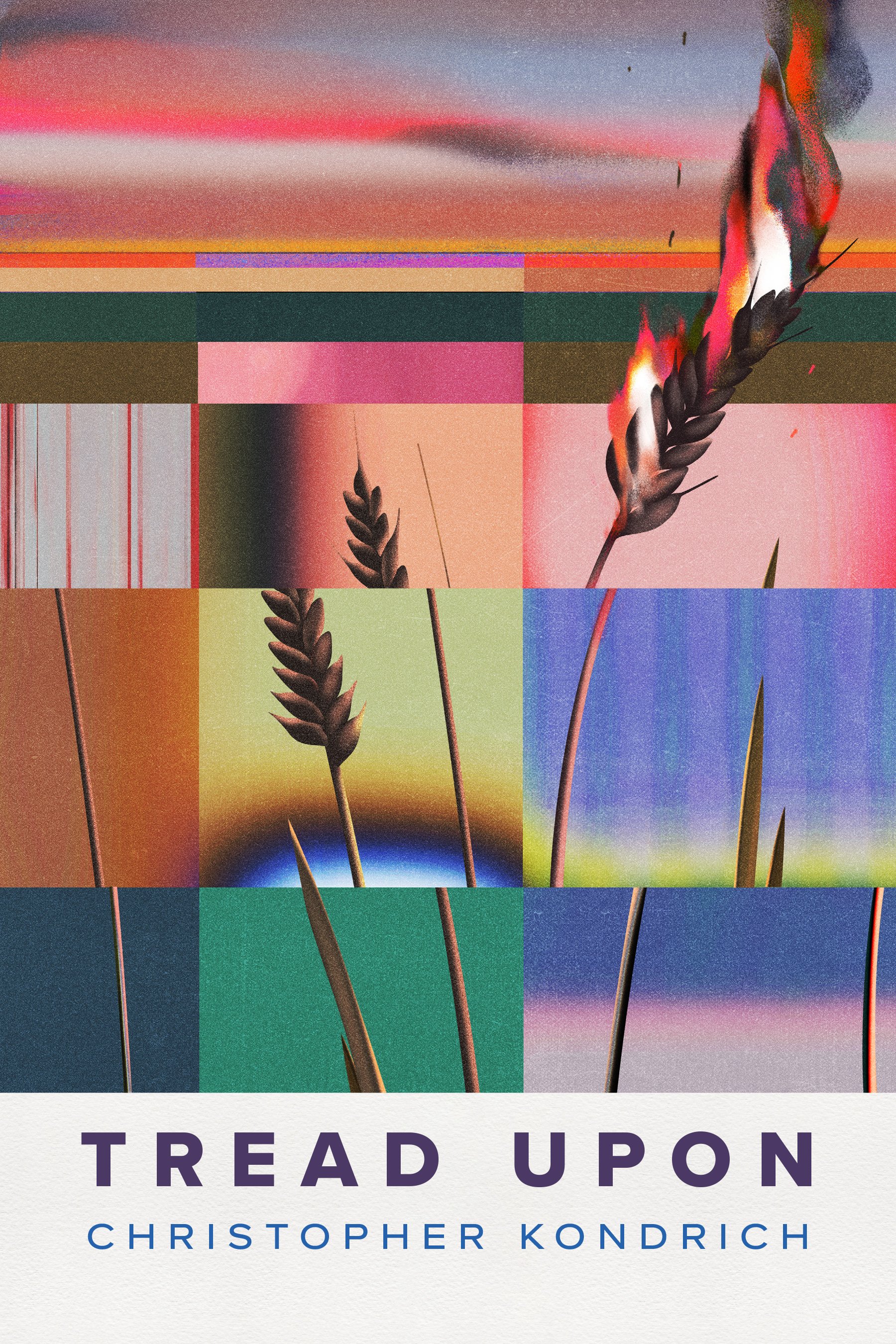
The cover art by Ibrahim Rayintakath, with its image of grass aflame and severed blades arranged like geometric fragments, captures the collection’s central concern: the relationship between human perspective and the world we alter. Kondrich repeatedly returns to the question of what happens when we look beyond ourselves, imagining the experiences of the things we affect, whether a landscape, a plant, or another person.
The opening poem establishes this approach:
“If neither side of a blade of grass faces you
and both sides are its back,
does it hear the wind coming,
does it know it is about to be tread upon
without warning, without a trial,
does it feel the weight of your own body
pressing it to the ground.”
By asking readers to imagine the consciousness of grass, Kondrich disrupts the familiar hierarchy that places human experience at the center of perception. The language of “back” is especially striking: a blade of grass does not have a privileged side turned toward the observer. The poem removes the human expectation of being seen and replaces it with the possibility of an existence that continues without us. Even the word “trial” introduces a language of justice into a seemingly ordinary act, suggesting that our smallest actions carry consequences we rarely consider.
These questions of perception gradually turn inward. Kondrich’s attention moves from the nonhuman world to the ways people understand themselves and their own responsibilities. In one poem, the speaker reflects:
“I am no real agitator, have sabotaged nothing,
but why this is, what reason there could be, I’ve hidden
from myself, redacted like classified information
within the document from which I glean a life.”
The metaphor of redaction transforms self-knowledge into a partially hidden record. The speaker recognizes a gap between awareness and action: knowing something is wrong does not automatically produce change. Kondrich explores the uncomfortable space between understanding and response, between what people see and what they are willing to confront.
This tension extends beyond environmental awareness into questions of empathy and human connection. Throughout the collection, Kondrich examines the ways fear, assumption, and incomplete understanding shape how people move through the world:
“…A mask
you do not know you are wearing is a mask that disguises
the world. Tosses a sheet over it. Now
it could be anything under there. I will tell you
this: fear is taught. You are taught what to be
fearful of, as much as you can carry.”
The image of the unseen mask suggests that perception itself can become a barrier. What we fail to recognize in ourselves can distort what we see in others. The poem’s assertion that fear is taught challenges the idea that our responses are inevitable; instead, it suggests that ways of seeing and ways of responding can be learned and unlearned.
Kondrich’s free verse reinforces these ideas through its meditative movement. His poems often unfold through extended sentences, accumulating questions and observations rather than arriving at easy conclusions. Recurring images of grass, wind, fire, masks, and altered landscapes create connections across the collection, mirroring the interconnected systems the poems examine. The sequence does not offer simple solutions; instead, it asks readers to remain attentive to the relationships between action and consequence.
Rather than prescribing a single path forward, Tread Upon demonstrates that attention itself can be transformative. Once knowledge changes how we perceive the world, it changes how we move through it. Kondrich reminds readers that every step leaves an impression and that learning where we tread may be the beginning of learning how to care for what surrounds us.
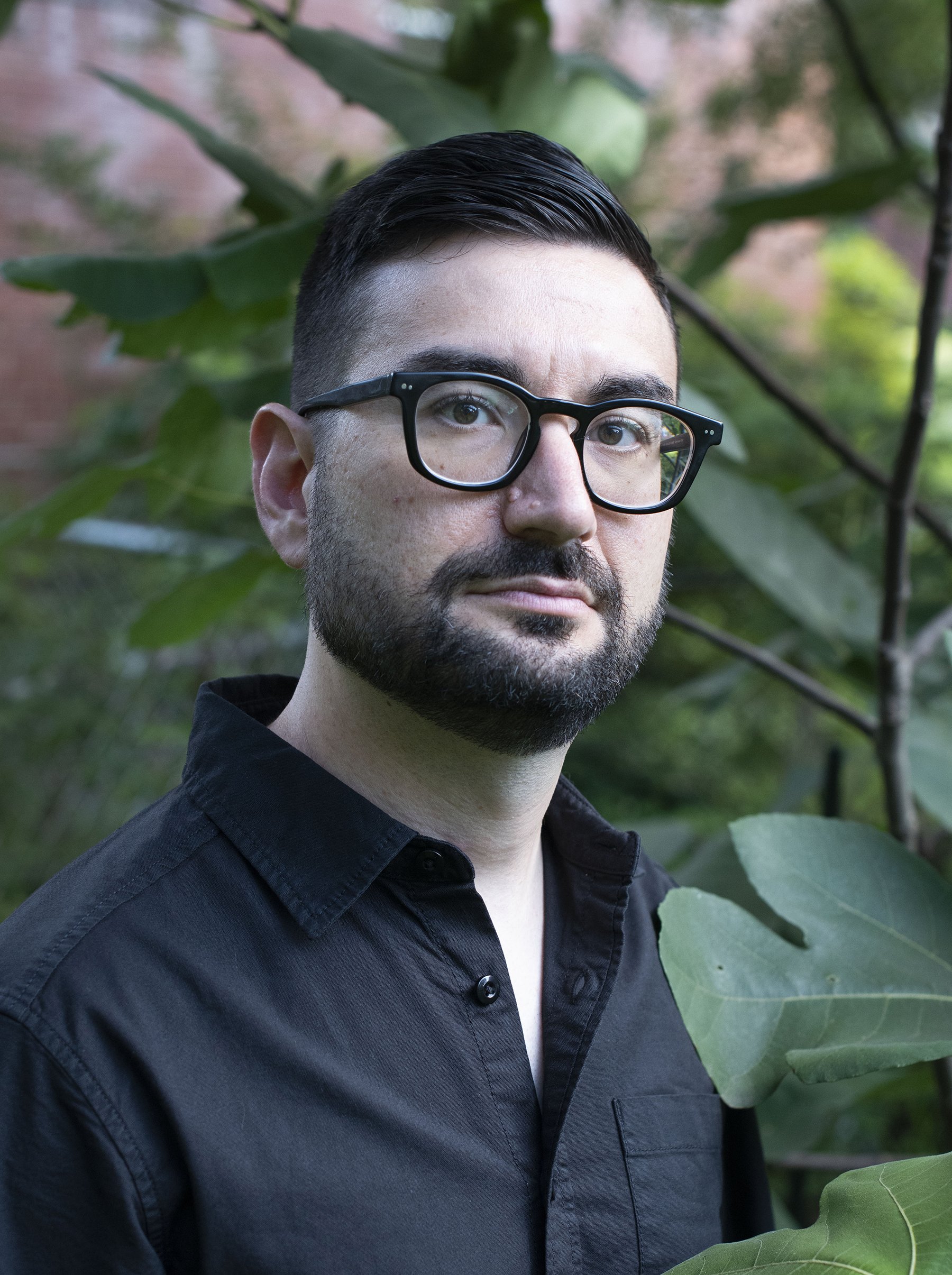
Author photo by Louie Palu
Learn more about Christopher and order Tread Upon.
Christopher Kondrich is the author of three books of poetry, including Tread Upon (Copper Canyon Press, 2026), and Valuing (University of Georgia Press, 2019), which won the National Poetry Series and was selected by Library Journal as a Best Poetry Book of 2019. A recipient of fellowships from MacDowell and Yaddo, his poems appear widely in such venues as The Atlantic, The Nation, The New York Review of Books, The Paris Review, Ploughshares, and The Yale Review. Co-editor of Creature Needs: Writers Respond to the Science of Animal Conservation (University of Minnesota Press, 2025), he is currently Poet-in-Residence for the MFA Program in Creative Writing at the University of Maryland.
Serena Agusto-Cox is a Pushcart Prize nominee, editor at The Mid-Atlantic Review published by Day Eight. She coordinates poetry programming for the Gaithersburg Book Festival. Her poems appear in multiple magazines and anthologies. To help poets, she reviews and markets collections through Savvy Verse & Wit and Poetry Book Tours respectively. Echoes Carry (2026, Beltway Editions) is her debut poetry collection.