A very Washington comedy of manners, which delights with wacky hijinks and surprising earnestness
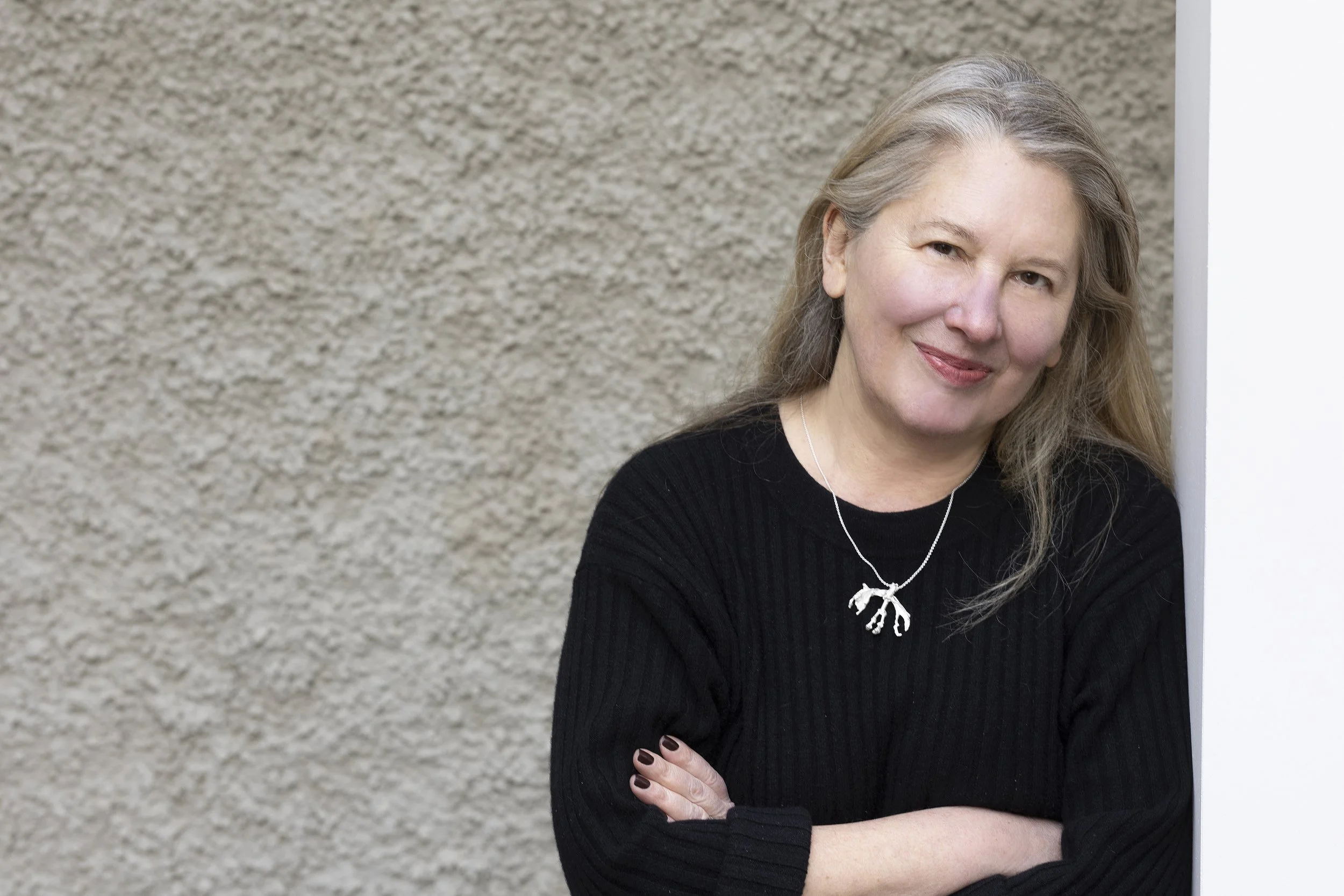
[Author Susan Coll. Photo by Marvin Joseph.]
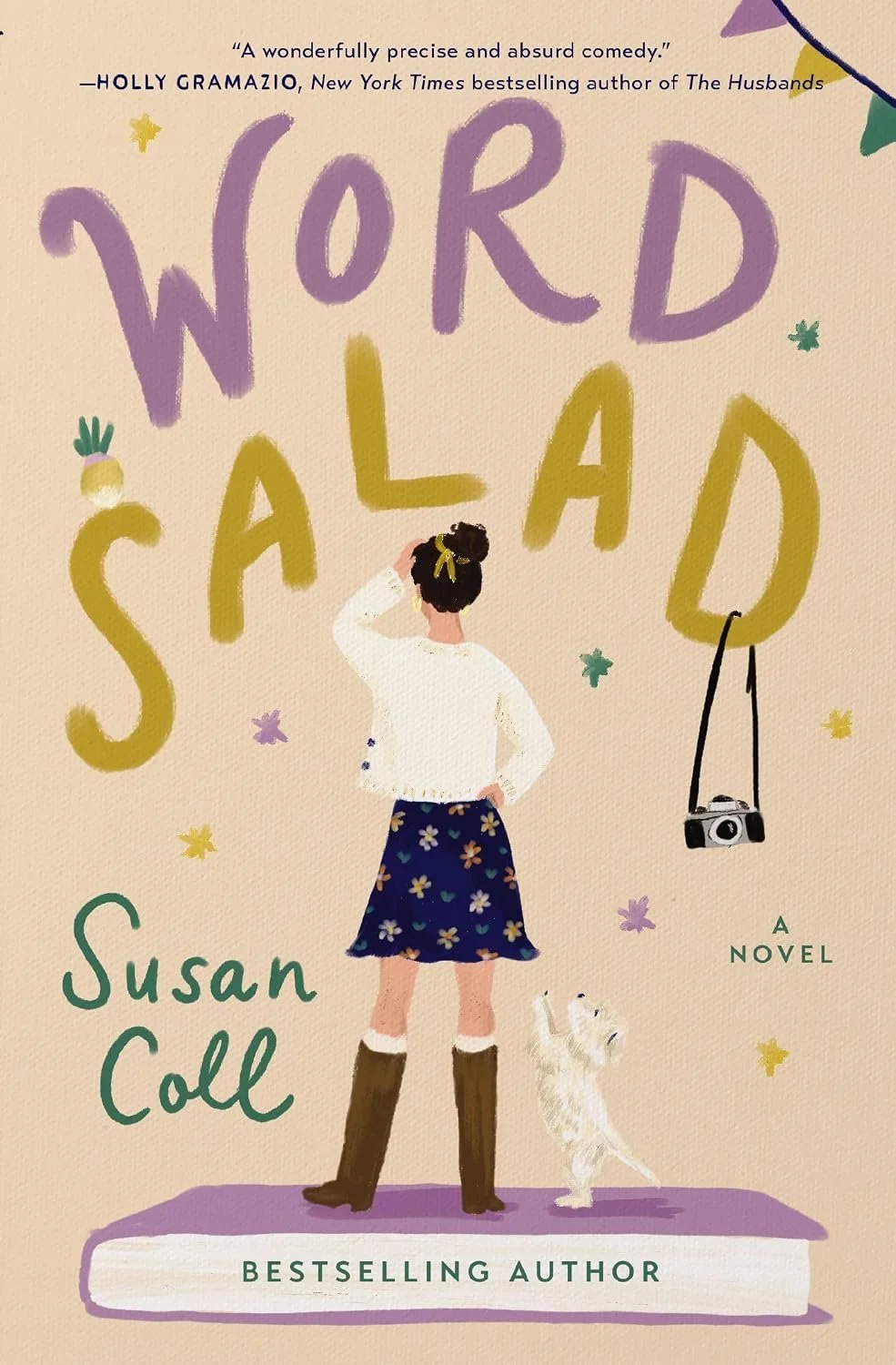
A review of Susan Coll’s Word Salad
By Norah Vawter
I didn’t realize how much I needed Susan Coll’s latest novel until I was halfway through the book and found myself laughing out loud on the train. In the increasingly weird, frightening, and confusing times we are living through, we need stories that give us a chance to laugh, and to breathe. Word Salad (Harper Muse, 2026) delivers that. But I found myself getting something more from this comic novel. Something life-affirming. Something that makes me feel in community with the author, the fictional characters, maybe even other readers.
Because we also need stories that remind us that we’re not alone in the world. That the world isn’t as cold and brittle as it often feels. Coll is a keen observer of people, and in her ninth novel she’s chosen a protagonist who is almost an anthropologist of the Washingtonians she meets. Set in the same fictional independent D.C. bookstore as Coll’s Bookish People, Word Salad is a completely standalone novel with mostly new characters, including the events manager and protagonist, Matilda. Competent, socially awkward, and intensely curious, Matilda seems older than her 29 years. Labelled “bossy” and “grouchy” by her peers, who don’t bother to invite her to social gatherings even when they warmly welcome the new employee Sage into their tight-knit fold, Matilda often seems like a persnickety old woman. And because of her blunt manner and habit of asking odd questions, she comes across as rude. She is also extremely good at her job, has a strong sense of duty, and is focused on having events go off without problems. A person who others surely view as “no fun.” But the type of employee who is essential to running the bookstore, and the type of person we all need to have around to get things done.
Matilda doesn’t know what she really wants to be doing with her life, but before the novel began she had moved back home when her mother fell ill with cancer, got this job, and continued in it even after her mother died. It’s a testament to how private a person she is, and how difficult she finds discussing her own life, that many of her coworkers don’t know that her mother died, or was even sick. Now she’s tasked with training Sage, a soon-to-be divorced woman in her 40s who is supposed to be assisting Matilda but is mainly wrapped up with personal drama and a book that she is maybe going to write about said personal drama. Sage does manage to get Matilda entangled in planning a giant event at Lincoln Theatre for the launch of Peeling the Onion by public intellectual and vegetable enthusiast Dr. Jordan Rutabaga, an event that has so many moving parts, it’s bound to go off the rails. Meanwhile, Matilda is trying to figure out how to respond to the chaos that happened at a previous event, during which a photographer, Roksana, gave the featured author a bloody nose, but now inexplicably claims that Matilda, or perhaps the author, or both, assaulted her.
“You won’t be surprised to hear that despite all the encouraging things Rueben was saying, grouchy was the word that stuck. Grouchy. Bossy. Never Learned to Drive. I could already see the words chiseled onto my tombstone, now with an addition: Assaulted a Photographer. I needed to change this narrative, stat.”
But beneath her persnickety exterior, Matilda has the heart of a child who’s just trying to make sense of the world. Coll writes from Matilda’s first-person perspective, giving us a delightful amount of Matilda’s grouchy, judgy commentary about the absurd events she is living through. But we also get something beautifully human, naïve, and open in this character. Matilda is truly curious. As Coll navigates the story through hilarious shenanigans—including far more vegetables than expected, anti-vegetable protestors who call themselves Uprooters, a kidnapped dog, and the vengeful photographer showing up in a wheelchair and with another dog—it would be enough to let us laugh at the craziness. But Susan Coll elevates her material by infusing the story, and particularly Matilda’s narration, with a deep layer of earnestness, sincerity, and profound inquisitiveness.
A staple of the Washington literary scene for years, Coll is the author of eight previous novels, including The Literati, Real Life & Other Fictions, the aforementioned Bookish People, and Acceptance, which was made into a movie for television starring Joan Cusack. She has written for The Washington Post, The New York Times, The Atlantic, and NPR, and is the past president of PEN/Faulkner. But most relevant to Word Salad is her longtime experience working for Politics and Prose Bookstore, where she is currently an events consultant. It’s important to note that the fictional bookstore in Word Salad is not meant to be Politics and Prose, but there are of course similarities, especially in the store’s deep-rooted localness and devotion to book events, and to authors. The novel brims with specific details, giving readers an inside look into how a bookstore is run, and how events are pulled off. Like many readers, I’ve always dreamed of working in a bookstore, and as I was reading, I appreciated both the attention to detail and the sense that I was being dropped into a world I’m eager to know more about.
Because the story relies so heavily on the mundane, the small, the momentary, and the many associations and tangents that come to mind when a topic is introduced, it’s natural for the book to move slowly at times.. I don’t have much criticism for Word Salad, but I will say that there is a meandering quality to the narrative, particularly in the first half of the book, that stopped me from being fully immersed in certain scenes. However, by the end of the novel, not only was I won over, but I felt like I could see the reason for the sense of wandering. Coll is interested in exploring what happens between points A and B, and how many other points we might land on before getting to our destination. This is a book that you can easily speed through, but you may find more enjoyment in a slower, more decadent read.
There is a wide-ranging and colorful cast of characters that we meet throughout the novel, but the story revolves around the odd-couple relationship of Matilda and Sage. I have met many a Sage in my day, and I am not a fan of this type of person. You know the type—the entitled white woman who does not understand the privilege she possesses. She’s like a bull in a china shop, knocking things over and breaking things left and right. But she’s also warm, and personable, and funny. People love her. They let her get away with an extraordinary amount of chaos and thoughtlessness. But those same people do not give the same grace to others, especially Matilda. When Matilda says one awkward thing (and she says many) her peers jump all over her. It would be easy to hate Sage and have her character be one-note. But instead Coll has fully fleshed out Sage, giving Matilda a foil who is not only multi-dimensional but also forces Matilda to learn, to grow, to move out of her comfort zone.
“It wasn’t as if I wanted to be Sage—she certainly had her share of troubles—and yet the way she seemed to ride atop the wavers, to put her baggage on display, to let it all hang out, to go with the flow, to change herself on a dime—choose your mismatched metaphor—was something to be admired. Well, to a point.”
The title of the novel will probably make many of us think of Donald Trump, whose peculiar way of jumping from topic to topic and meandering his way through language is often labeled “word salad.” I’m happy to report that this book does not feature Trump or politics, at least not any overt political actors. However, it does make me think about the socio-political world we are living in, and the way we communicate. Especially the way we use language to process our thoughts. Throughout the novel, Coll’s characters find it extraordinarily difficult to stay on topic, tending to jump from tangent to tangent, often inspired to think of something new because someone else’s tangent. It makes for some wonderful, word-play-heavy comedy. But it also brings me back to the theme of curiosity. Ultimately, Coll is showing us that humans have a limitless capacity to learn from each other, to be inspired by each other, and to come up with new ideas and new perspectives. So, as we meander through the rest of 2026, let’s stay curious, open-minded, and ready to engage with the next tangent that springs up.
Buy your copy of Word Salad from Politics and Prose, Bookshop, or your favorite local independent bookstore.
Learn more about the author on her website: https://susancoll.com/
Upcoming events:
TODAY, Tuesday 9/15. Politics and Prose on Connecticut in Washington, DC. In conversation with Tope Folarin. Details here.
Saturday 9/19. Baltimore Book Festival (Funny Ladies of Comedy). CityLit/Ivy Stage. Details here.
Tuesday 9/29. Curious Iguana presents in conversation with Holly Smith. C. Burr Artz Public Library, Frederick, MD. Details here.
Thursday 10/1. Wonderland Books in Bethesda, Maryland. In conversation with Nora Krug. Details here.
And find even more events on Susan’s website.
USA Today and bestselling writer Susan Coll is the author of eight previous novels, including The Literati, Real Life & Other Fictions, and Bookish People. Her other books include The Stager, Acceptance, Rockville Pike, and Karlmarx.com. Her work has appeared in The Washington Post, The New York Times, NPR.org, The Atlantic.com, The Millions, and other publications. Her novel, Acceptance, was made into a television movie starring Joan Cusack. Susan is the recipient of multiple grants from the DC Commission on the Arts and Humanities. She works as an event consultant at Politics and Prose Bookstore and was the president of the PEN/Faulkner Foundation for five years. Coll teaches workshops at The Writer's Center in Bethesda, Maryland.
Norah Vawter is the co-founder and fiction/nonfiction editor of Washington Unbound. Her debut novel will be published by Regal House Publishing in 2028. Follow her on Instagram @norahvawter and check out her Substack, Survival by Words.