For every flare that faded out, another one lit up

A review of The Sky Will Hold by Elizabeth Hazen
By Gregory Luce
The Sky will Hold (Riot in Your Throat, 2026)is a book of survival, of second chances, of recovery and new beginnings. In this, her third full-length collection, Elizabeth Hazen explores loss and renewal, addiction and sobriety, the joys and difficulties of marriage and mothering. Many of these poems embody the mixed—even contradictory—emotions inevitably experienced in growing through life and navigating its changes.
Though Hazen lives in Baltimore, she is very active in the DMV poetry community, through readings, interviews, and teaching. She recently presented the book at the Gaithersburg Book Festival, in addition to other local venues.
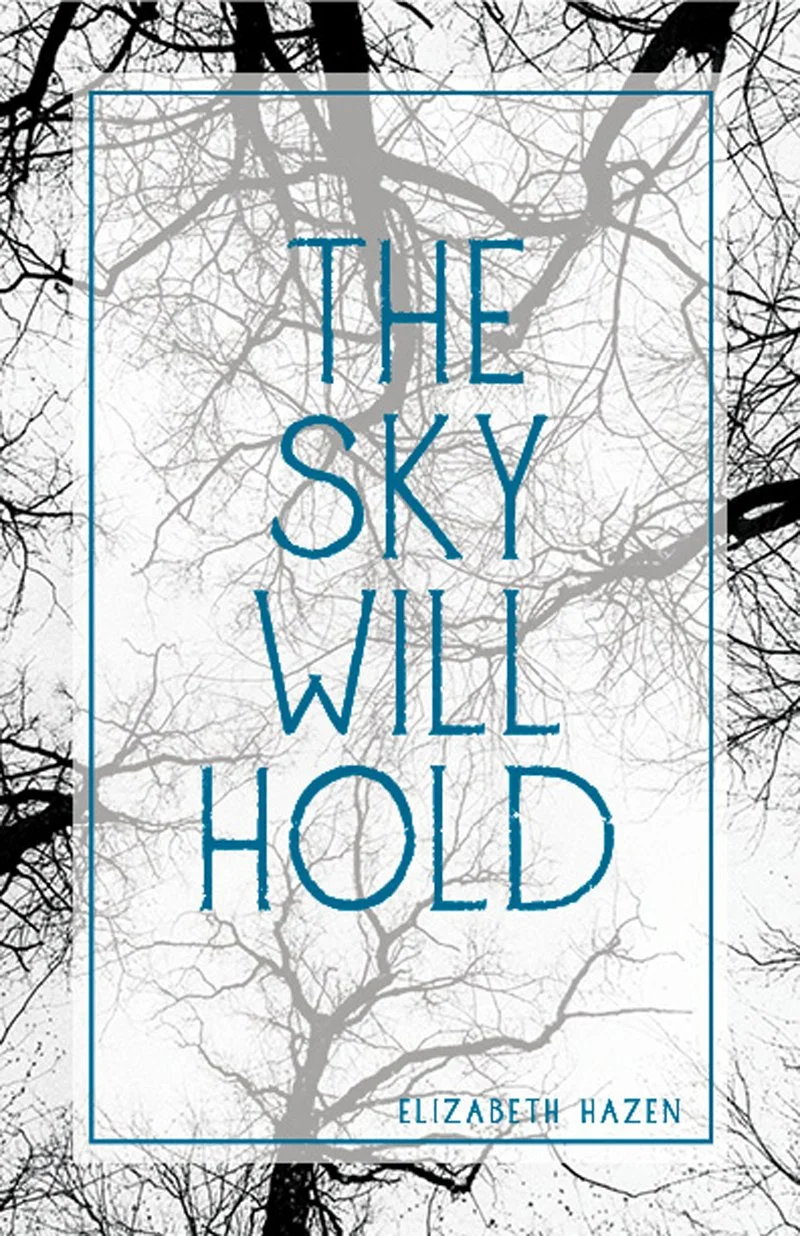
The collection’s opening poem, “Approximations,” begins with a description tinged with the ambivalent emotions that are frequently on view in these poems:
The sun is not on fire after all;
nothing burns. Protons smash to make a gaseous
mass of heat, but without flame.
All these years I’ve had it wrong, like when my anger wasn’t anger,
rather fear mixed up with loneliness….
This sun that burns us isn’t fire,
but look at us: our cheeks flush just the same.
As one might expect from the book’s title, the sky is a recurring motif:
The sky is neither wound nor bruise nor gash.
It is not fabric tearing open. Light
does not move with violence; it radiates.
It is we who are brazen or uncanny,
sublime or broken….
I keep looking to the sky to tell me how
I feel. Not even five o’clock and a vague
darkness closes in….
Daylight always comes again unprompted,
promising another chance. How I long to
emulate this faithfully spinning planet,
its endless graceful falling toward the sun.
(“Pathetic Fallacy”)
In “Horses,” the poet depicts a bottle of liquor as a substitute for an absent lover:
Tonight, your side of the bed is empty.
I drink when you’re away, cradling the bottle,
my tenuous secret….
It was then I knew your kindness would undo me,
but in the darkness of our bedroom now,
I am alone. I know you will return,
but somehow those sweet days of early love
don’t feel like mine to keep….
I want to warn you: get out while you can.
I want to keep you forever in my burning.
One very interesting element in this book is the poet’s use of an uncommon form, the glose (sometimes called a glosa): “a poetic form with Spanish origins from the 15th century. A glosa typically consists of four ten-line stanzas each with ten syllables per line. The form also contains a borrowed excerpt from another writer. The borrowed quatrain, known as the cabeza, or “head,” is presented at the beginning of the poem. Following this, each stanza expands upon one line of the cabeza….”
For example, “Margin of Error: A Glose after ‘Mon Semblable’ by Stephen Dunn”
“. . . but those words unsaid
poison every next moment.
I will try to disappoint you
better than anyone ever has…”
Is there any way around the failure
of language? I say, I can’t live without you,
but most days I exist for hours alone….
You are everything to me is also
not quite right, naïve words of a romantic or newlywed—
but those words unsaid.”
Each of the three subsequent stanzas end with a line from the epigraph.
The beauty and power of Hazen’s language is evident in every poem; had I time and space, I would quote dozens more passages. I’ll close with the conclusion of the book’s final poem, “Such Wonders”:
2 a.m., Coming home from the emergency room
On the boat, before your accident, we killed
the motor and waited for a green flare:
when the sun hits the tip of a mountain’s highest peak,
emerald bursting like a science fiction time warp….
Time expands like hot metal we’re too afraid
to touch. I’ve cradled the corpses of butterflies,
wings intricate as cathedral windows,
delicate as old parchment. I’ve opened stones
to find trilobites, the tidiness of their hiding
a miraculous magic trick….
So much disaster looms on the peripheries,
but back at the lake fireflies pulsed,
their slowly growing lights a comfort: for every
flare that faded out, another one lit up.
This book is one of the finest collections of poetry to cross my desk this year. I urge you to acquire your copy from your favorite independent bookstore or from the publisher. (Riot in Your Throat is based in Arlington, so buying the book there will support a local press as well as an author.) And visit Hazen’s website for more information and to learn of upcoming events.

Elizabeth Hazen is a poet and essayist whose work has appeared in The Best American Poetry, Epoch, Fourth Genre, Southwest Review, the Threepenny Review, the Normal School, and other journals. She’s the author of the full-length collections Chaos Theories, Girls Like Us, and The Sky Will Hold. She lives in Baltimore with her family.
Gregory Luce is the co-founder and poetry editor of Washington Unbound. He has published six chapbooks. He lives in Arlington, serves as Poetry Editor of The Mid-Atlantic Review and writes a monthly column for the online arts journal Scene4.