Blending the search for identity with the search for home
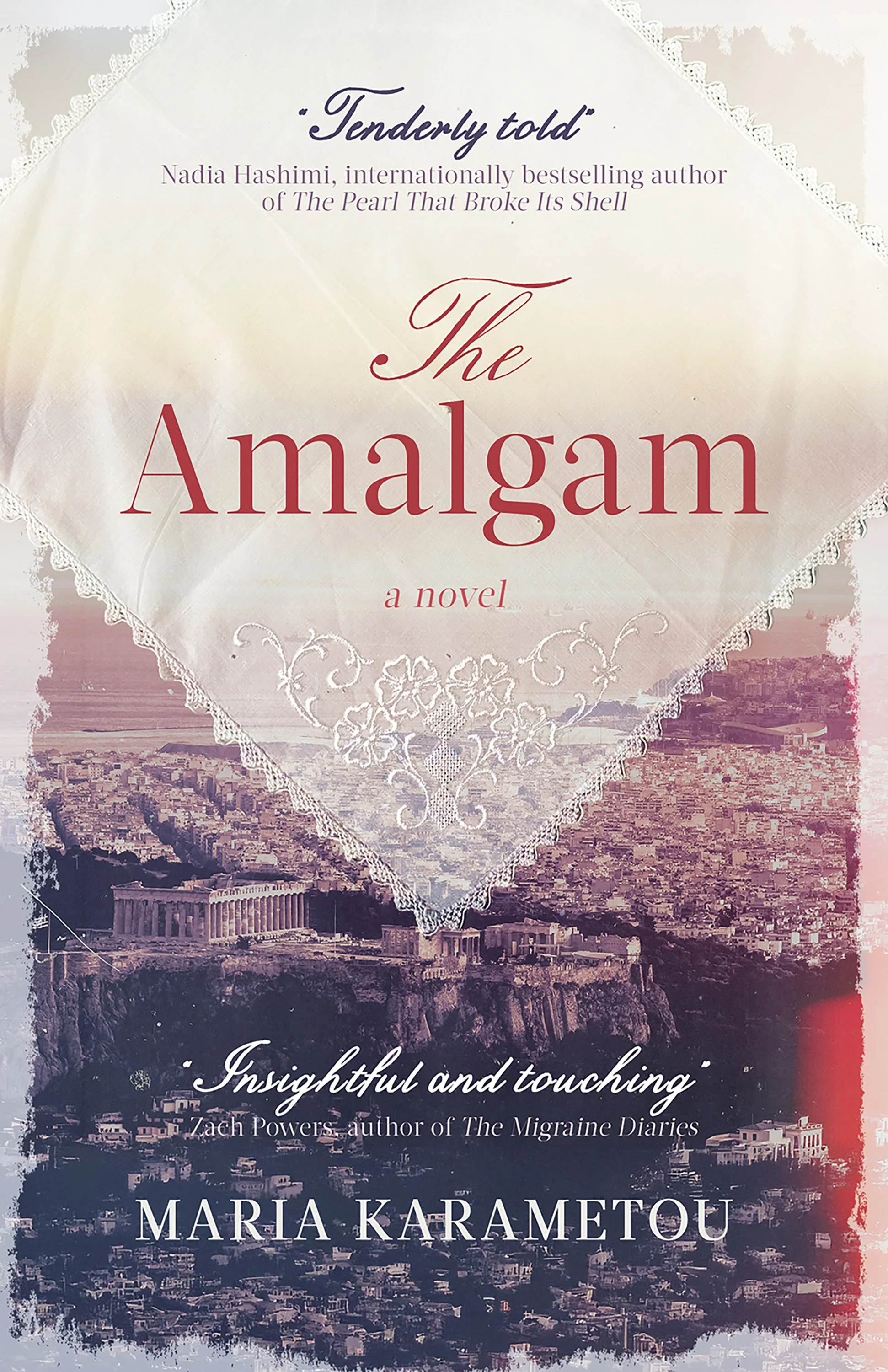
A review of Maria Karametou’s The Amalgam
by Norah Vawter
An amalgam is a mixture or blending of disparate elements to create something new. It’s fitting that Maria Karametou’s debut novel The Amalgam (Vine Leaves, 2026) is a book that is many things at once. It’s an immigrant story, a story of place and belonging, and a family story. It’s a book that uncovers long-buried family secrets and stretches over three generations. And yet acknowledges that we will never truly understand the past. It’s a book about Greece, and America, and it even dips its toes into other lands. But at its core, The Amalgam is a story of a woman searching for herself. For her identity.
The book opens in Athens in 1984 when Meta is a teenager living under her father’s strict rules, and in the shadow of his abusive temper. Though she wants to be an artist, her father dismisses this dream as impractical, insisting that she study to be a doctor. This life is softened by her caring and kind mother, her little brother, and her warm, colorful, noisy extended family. And yet Meta sees her mother withering, becoming a shell of her true self. She concocts a plan to flee to the United States, where a supportive cousin lives. But even as she’s dreaming of a different future, she’s talking to her mother and grandmother about the past, about the family’s thorny history during the first and second world wars, and especially her grandmother and grandfather’s history as refugees from Asia Minor. Before her grandmother, and namesake, Metaxia dies, she asks Meta to return a mysterious object wrapped in a handkerchief to her original homeland, to return this piece of the past to where it came from. Meta agrees, taking the handkerchief with her to America, never opening it, never knowing when she’ll be able to fulfill this promise, but sure that she will, somehow, sometime.
“Tell me your stories, Yaya,” Meta would plead at those times, so she could hear Yaya Metaxia’s tales about her mysterious, sea-kissed hometown: the schoolhouse, the fields, the miraculous icon of the Virgin Mary, the raising of silkworms, the feasts, and the goblins coming out from under the earth to steal sweets on Christmas and frighten the children.
I won’t give much more away, except to say that throughout The Amalgam we see into three distinct eras: Meta’s coming of age in the 1980s and early 1990s; Metaxia’s own turbulent youth during the early years of World War I; and Meta again in the 21st century, now approaching middle age, an artist and professor who has fulfilled many of her youthful dreams but still needs to fulfill her promise to her grandmother, and to reconcile the past with the present and future. Instead of skipping back and forth between these timelines, Karametou divides the book into three distinct sections, allowing the reader to soak in the time, the place, the characters. Parts one and two are particularly strong, focused, emotionally compelling and engaging stories. Each could be expanded to a novel of its own, but Karametou wisely creates this amalgam of stories that feed off each other, inform each other, and are ultimately in conversation with each other. As the past, present, and future of our own lives always are.
In the following days, Meta continues to find America’s face different from the one she has seen in the movies or on the trusting smiles of easygoing tourists who are overcharged for goods back home.… She struggles to adjust to a lifestyle in which everything is preplanned, to a place where the environment is clean and well-shaped like a postcard, still as a postcard.
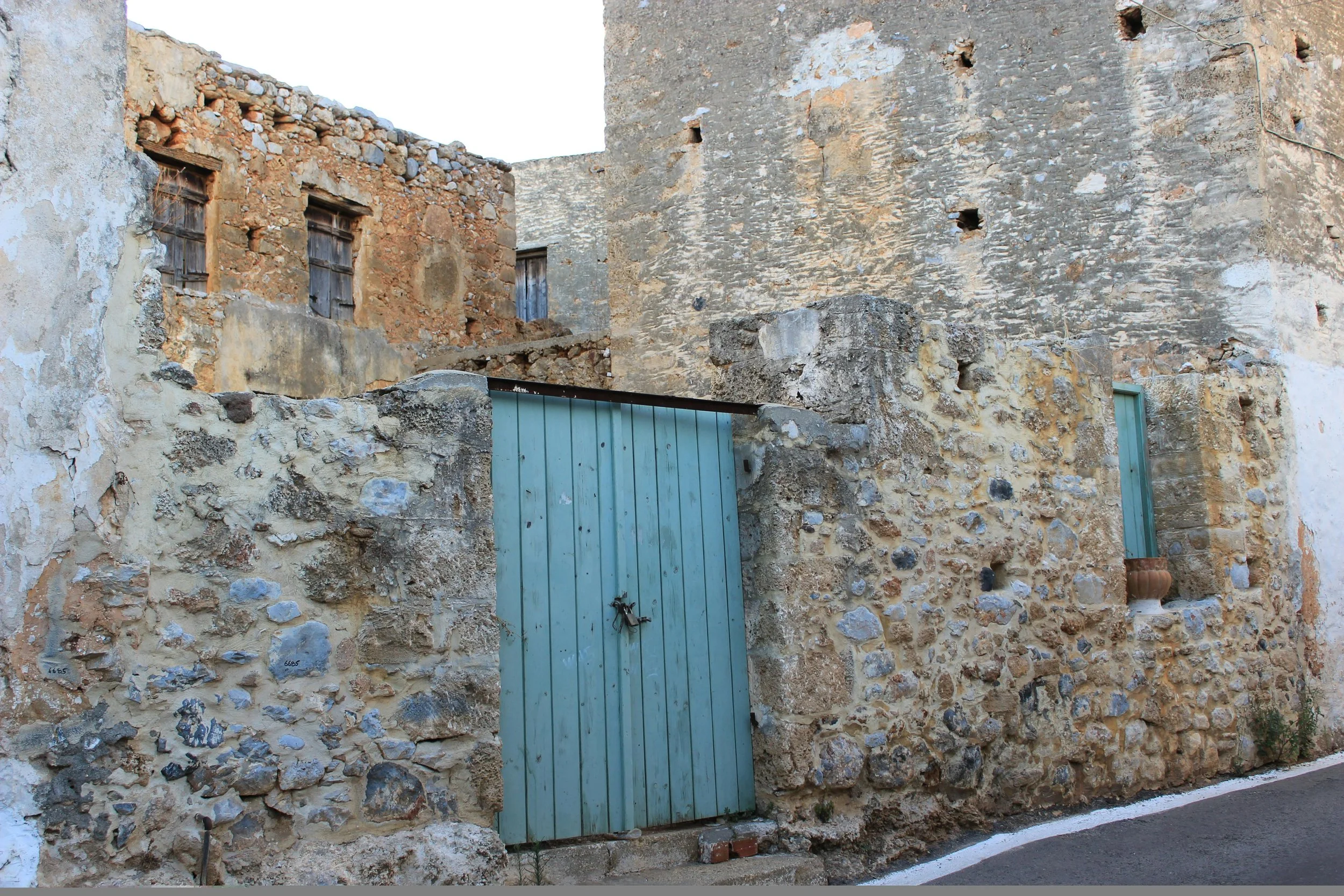
A native of Greece, Maria Karametou is now based in the Washington, D.C.. area. She holds an MFA from the Hoffberger School of Painting, Maryland Institute of Art, Baltimore, and is a professor Emerita of George Mason University’s School of Art. She is also a mixed media artist with a truly impressive list of exhibitions all over the world, along with local institutions such as the National Museum of Women in the Arts and The Corcoran Gallery. While The Amalgam is a work of fiction, there are clearly elements rooted in the author’s real life: notably Metaxia’s hometown in Asia Minor (in what is now Turkey) was the real place that Karametou’s own grandmother was born and then forced to flee during World War I. Like her character, the author was able to travel to Turkey to perform visual art research (in real life on a Fullbright grant), and to visit the place her grandmother had called home. As she explains in the acknowledgements section of the book, “that is where the seeds of this story were born.”
Karametou is especially adept at visual and other sensory description (which makes a lot of sense, given her career as a visual artist). Thus her book gives us a strong, evocative sense of place, so that wherever we find ourselves in time or location, we are rooted to the ground, and we can almost smell the air and feel the elements around the characters. She also makes us care quickly about the primary characters, and manages to introduce a large cast of secondary characters (mainly the extended families) without overwhelming the reader or confusing us. Though I love stories of large, messy families, I’ve seen many authors fall into the trap of weighing the reader down with too many names or details early on. You know those books where you keep flipping back to try to figure out who this individual is? The Amalgam avoids that problem by keeping the reader focused on the core story, and making clear what is in the foreground and what is in the background. This makes for an immersive, satisfying read, particularly as we follow young Meta, and then young Metaxia. In fact, I was so invested in Meta’s coming of age story that when the book initially flashed back to Metaxia in 1914, I found myself wanting to go back to the 1990s. Even though it was already clear, from early conversations between Meta and family members, that this was an era of intense drama, I was already invested in Meta’s present. I didn’t think I needed to actually go into the past to see her grandmother as a young woman. Oh, was I wrong. Soon, I became sucked into Metaxia’s story, and the immense stakes.
The first few evenings, Meta does not venture out, preferring to roost by the open window. From there, she observes everything and often leans this way or that to get a better look. As a pale-yellow streetlight comes on at the corner, she peers inside the apartment facing hers, a vase of fresh flowers always on the piano among a forest of photographs in glistening silver frames. Mostly though, during these times of utter solitude, as she once again has plunged into the unknown, she lights one cigarette after another, takes a few puffs, forgets it on the ashtray, and thinks until her head starts to spin.
I found it a little trickier to stay immersed in the narrative when the book takes us into the future. I don’t want to give too much away, but I will say that I found this part of the story more scattered and less singularly focused. This makes for a less immersive read, which did feel less satisfying at times, but also felt more emotionally and philosophically complex. This doesn’t feel like a misstep because I think the change in narrative focus and goals is deliberate here. We’ve lost the singular focus of youth and found the messiness and murkiness of middle age, where clarity can elude us, big movie moments rarely happen, and questions are more likely than obvious answers. So while I initially felt frustrated with the final chapters of the book, the more I thought about them, the more complexity, beauty, and realism I saw.
One other element that pulled me out of the immersive read, particularly in the third section, was some dialogue, which at times felt stilted—not conversational enough—or exposition-heavy. This is really a nitpick, because the prose otherwise is so strong that I could easily jump back into the story. There is also a lot of exposition necessary, as so much of the present action depends on the reader’s understanding, or the complicated family relationships. But this is an area of growth I see for this debut author from whom I’m hoping we will see more novels.
I’m still thinking about this novel that welds the past, present, and future together so well into a story of place, belonging, and most importantly identity. Though there were scenes that brought me to tears, and others that made me think about thorny and complex issues, I’m left with an overall sense of deep enjoyment. I loved sitting with this book, letting it wash over me, and relishing the simple act of reading a good book.
You can get your copy of The Amalgam on Bookshop or directly through the publisher, independent press Vine Leaves.
You can also check out Maria Karametou’s upcoming author events including:
April 14, 2-4 pm: George Mason University, Gillespie Gallery, Fairfax, VA.
April 23, 12:30 – 2 pm: Frosene Center, St. Sophia, Washington, DC. Sponsored by the Philoptohos Society / Kali Parea (private event - by invitation)
April 24, 7:30 pm: The Hellenic Center, Bethesda, Maryland. Sponsored by the Hellenic American Women’s Council (HAWC), the Hellenic Society Prometheas, and the Kyklos Group.
April 25, 10 am-1:30 pm: University of Maryland, Samuel Riggs IV Center, College Park, MD
Learn more about the author and find future events on her website: www.mariakarametou.com.
Follow her on Instagram @maria_karametou_art
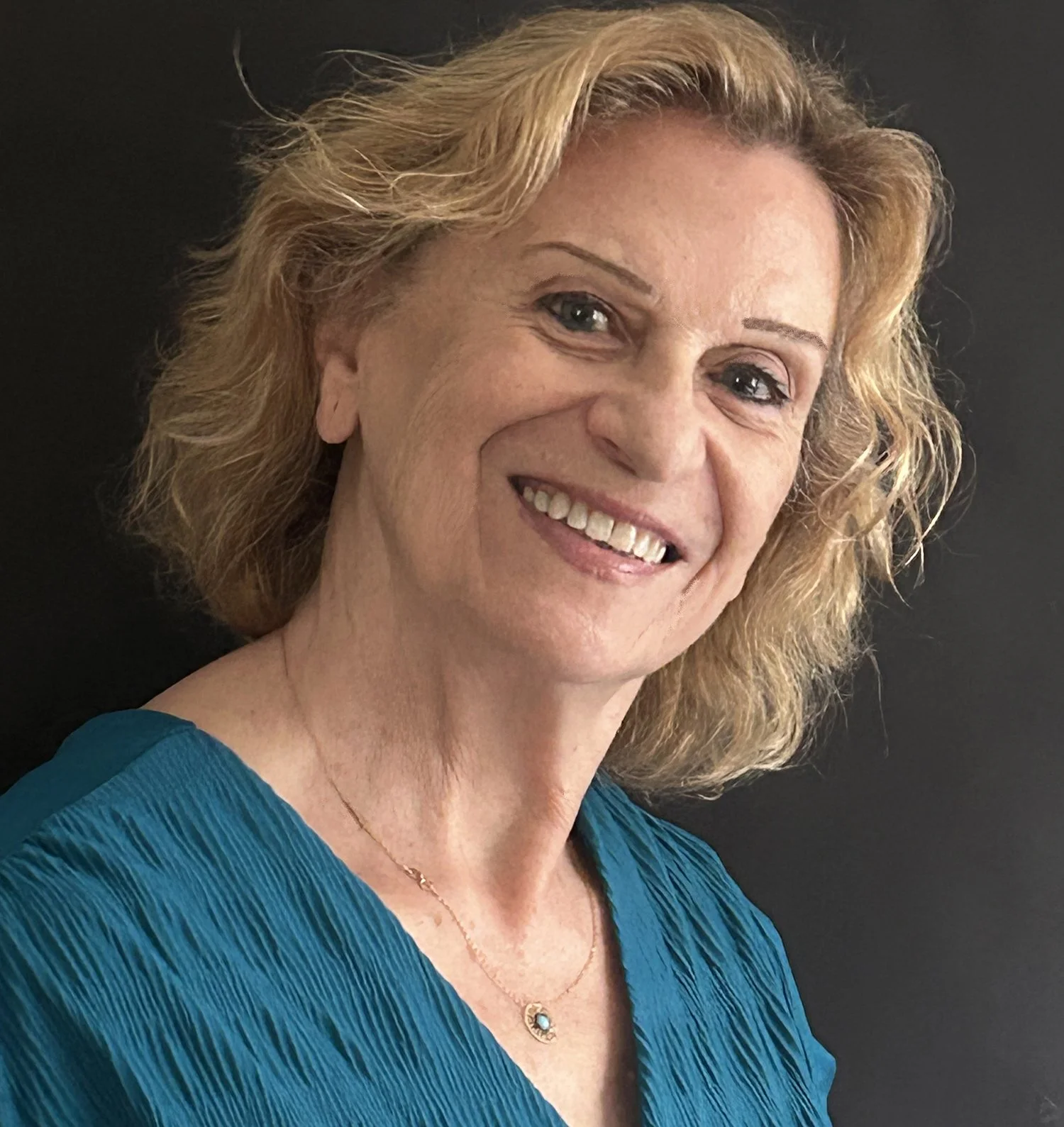
Maria Karametou, a first-generation immigrant to the U.S. from Athens, Greece, is a visual artist whose mixed media works are exhibited internationally in numerous museum and gallery shows and featured in various collections. Her long career as a university professor includes, among others, a Fulbright Research Scholar award. Inspired by her experiences and history of migration, mobility, and displacement, her work, both visual and literary, relates to identity and our personal journey of self-discovery. She lives in the suburban Washington, D.C., metropolitan area. The Amalgam is her first novel.
Norah Vawter is the co-founder and fiction/nonfiction editor of Washington Unbound. She’s a freelance writer, editor, and novelist. Her debut novel will be published by Regal House Publishing in 2028. Follow her on Instagram @norahvawter and check out her Substack, Survival by Words.