
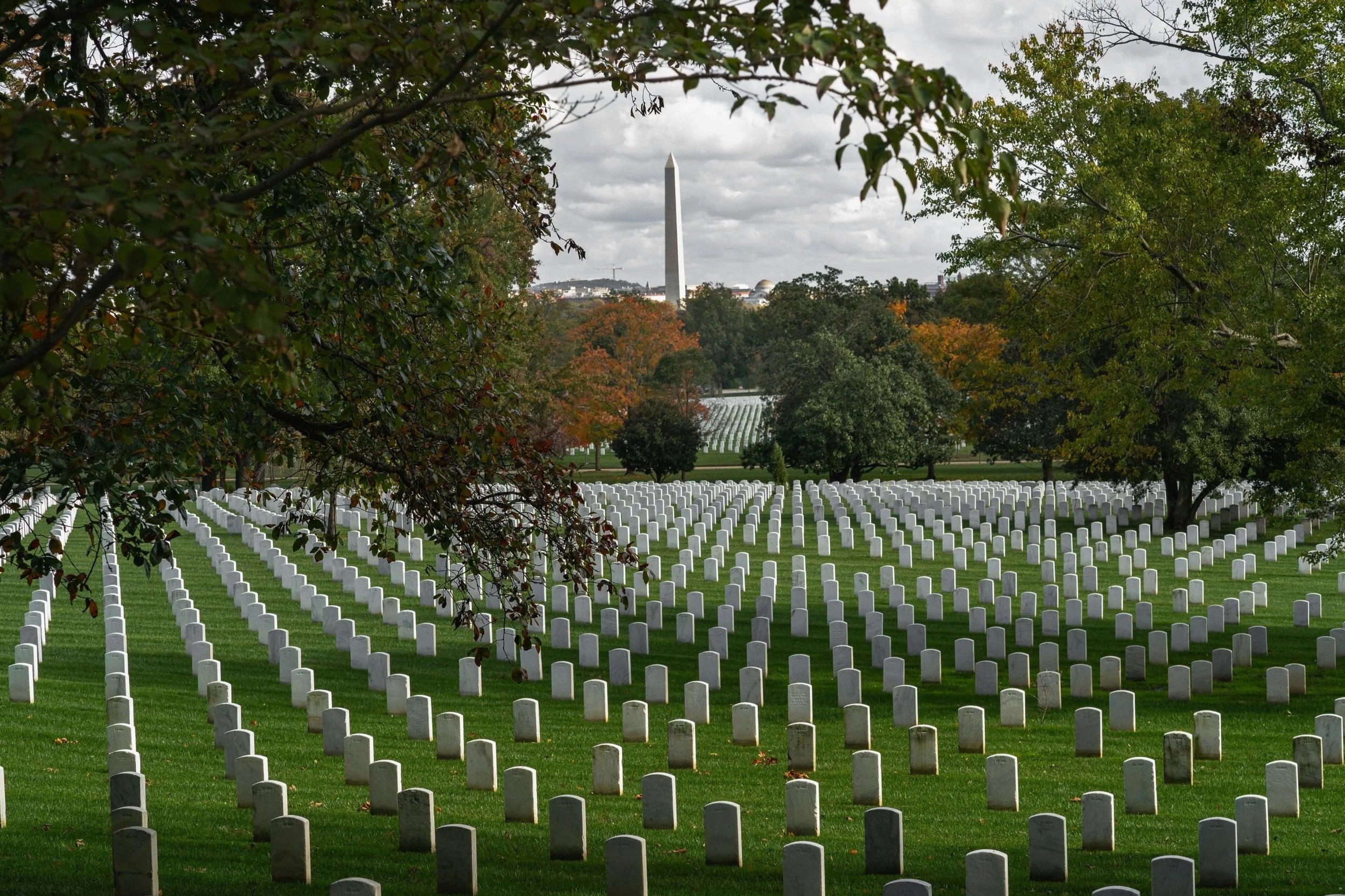
An interview with Kim Roberts Meikle about The District’s Departed
By Gregory Luce
Though Washington has the reputation of being a city of transients, there is a very large population of permanent residents. The DMV is home to many fascinating and beautiful historic cemeteries filled with famous, infamous, colorful, and too often unsung individuals.
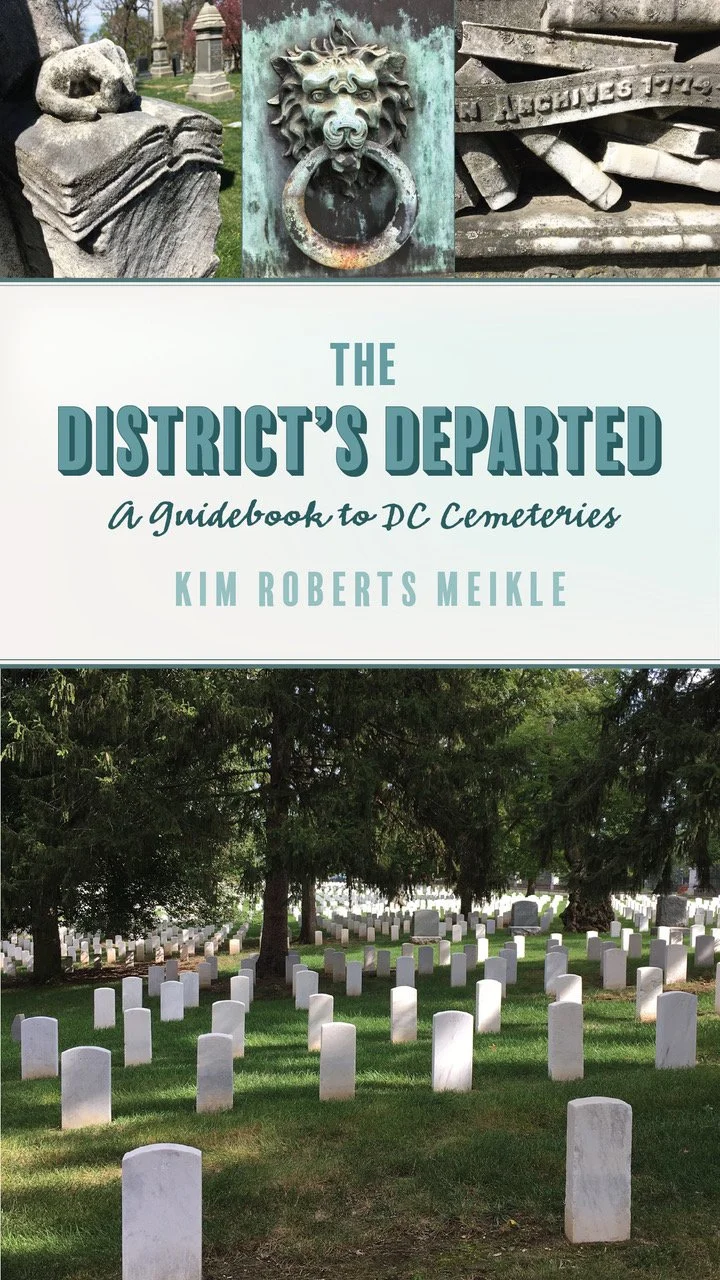
Kim Roberts Meikle, D.C. poet and literary historian extraordinaire, has written a wonderful guidebook to some of the area’s most important and interesting burial grounds and other memorials. Just in time for Halloween, we caught up with Kim, who regaled us with stories of noted decedents, intriguing monuments, the history of American burial customs, and changing attitudes toward death and remembrance.
WU: The most logical question to begin with is: What prompted you to create this book? Why did you decide to write this?
KRM: When I was researching my earlier guidebook, A Literary Guide to Washington D.C., I did a tour on Henry Adams for that book, and I became totally obsessed with the grave site that he made for his wife Clover (and then he later was added to that grave). And so the start of all of this was the Adams Memorial, which has been nicknamed Grief, and it is arguably the most significant piece of funerary art anywhere in the nation.
Clover Adams committed suicide, and that was considered very shameful in that time period, and many cemeteries, especially religious cemeteries, would not have agreed to accept her remains in their consecrated land. And Henry Adams knew that a standard sentimental grave site would not be appropriate, so he asked his friends to create something entirely new. And as it turned out, his friends were the most prominent sculptor and the most prominent architect of his time period. So he had this amazing talent work on this problem of how to commemorate someone who died of suicide. It's very moving. The architect Stanford White created this octagonal space. It's an open room, and the walls, the green walls, are boxwood. It's very experiential. You walk up a few steps, and then you're in a completely removed place. It doesn't feel like you're in the cemetery at all anymore. There are these small white pebbles on the ground that make this pleasing little sound as you walk on them, but all other sounds from the cemetery feel like they're muted. Stanford White created this bench that goes around one side of the octagon that has stylized lion legs, and it's all made of white marble, and faces this very mysterious sculpture, which was created by Augustus Saint-Gaudens. You were not supposed to know if it was male or female. You were not supposed to know if it was Eastern or Western in origin. Saint-Gaudens had in mind a Bodhisattva, an esteemed ancient Buddhist figure called Guanyin, who was the symbol of infinite compassion.
The figure is draped in robes that go over its head. It's amazing. The folds in the robes are so realistic, even in the bronze. It looks like cloth, and there's no names or written inscriptions anywhere in there. Clover died in 1885, but the memorial took a very long time to create, and it was finally installed in 1891, and it's got such power and beauty. Other people, other than me, have been obsessed with it as well. I wrote a long pantoum that was published in my book of poems, The Scientific Method, about it. But I've also been collecting. So far, I've found 14 other poets from different time periods who have written poems about the memorial.
Anyway, my first walking tour was of Rock Creek Cemetery, because I wanted to show off this amazing bit of funerary art to other people. I started looking at who were Clover's neighbors in the cemetery. And there's a lot of notable funerary art in that cemetery.
WU: I read the acknowledgements and the notes at the end of the book, and dipped into some of the guidebook parts. So, I know you acknowledge many people, such as staff members at these various cemeteries who were helpful. You certainly mentioned your spouse Tracey, who went on all the trips with you, which is commendable. Is there anybody else who was especially encouraging or helpful, or did you have a first reader or more than one first reader?
KRM: Tracey does deserve a lot of credit. You had asked me earlier, Greg, about what the process is of putting these tours together, and I have to tell you, you have to spend a lot of time on site. I would usually have a couple of sites that I knew were my anchor sites, and then I would try and figure out a circular route that included those, adding other stops along the way. And I would do a lot of research, and then I'd go visit the sites. I would walk them, and then realize, oh, this order doesn't make sense. We should go the opposite direction. You know, so what you have in your head is so different from the experience of being on the ground.
Tracey was with me from the start of writing the book. The only tour that I wrote before we got together was about Rock Creek Cemetery, but all the other ones after that were with her company, and thank God she was interested because it meant for every single cemetery going again and again and again, multiple times, and rewriting and clarifying between every single time that we walked it. So she gets a lot of credit.
The original idea for the book came from my editor at the University of Virginia Press, so he should get credit too. Mark Mones liked my earlier guidebook and encouraged me to think about putting together another one. This is my first book that is not specifically about literary history, and so I felt like I was sort of going outside of my area of expertise. Although you know I love anything about the built environment of cities, I needed him to push me. And I’m so glad he did. There are guides to a few individual cemeteries, Arlington National, of course, Congressional Cemetery has been written up a lot, but amazingly, there was no book before this that was a guide to all of the D.C. cemeteries.
WU: That is kind of surprising given our rich history. So Mark recognized that.
KRM: Yeah. And then there are a bunch of friends who also encouraged me along the way. I want to give special thanks to Peter Montgomery, who read through the introduction and helped me edit it, but also other friends were really encouraging. You know, when you're working on a project like this over several years, they have to hear in painful detail about all of your obsessions. Dan Vera, Gwen Rubinstein, John Gann: those are some of the friends who were behind it through the whole process and pushing me further on.
WU: Peter Montgomery. That name's familiar.
KRM: He’s Dan Vera’s husband. Pete is a political analyst who covers the Religious Right. He’s extremely well read, and amazingly thoughtful.
WU: That's what I thought. He's a great guy.
KRM: He is a great guy and an amazing writer, also, of poetry as well as nonfiction—and really has a great eye for editing.
WU: Shout-out to both Dan and Peter here. It’s really excellent what you just said, talking about working with the press because that obviously leads into my next question. This is your third book with them now, I believe. What's it like working with UVA Press? How did you end up with them in the first place for your first book with them?
KRM: As it turns out, there are not a lot of academic presses doing regional titles in this area. There are, by my count, three academic presses located in D.C. proper, and two of them don't do this type of title. Gallaudet University Press does Deaf culture titles.
Smithsonian Institution Press only publishes titles by people who've been employed by them. And the third press, which has done a lot of great work, Georgetown University Press, didn't exist when I first published A Literary Guide to Washington D.C. They weren't doing regional history then, so my only choices were to go outside of D.C. to the presses that have done D.C.-specific titles in the past, and there are two main ones: Johns Hopkins University Press and University of Virginia Press. University of Virginia Press expressed interest, but there was a long process with them. They were going through some major changes at the time that I approached them, so it was many years between the time they first expressed interest and when they actually started working on the book. University presses are considerably slower in their publishing process, even in the best of times, than any commercial press. They have to do an internal review, then it goes out for peer review, then it comes back for a second internal review. They have a long process, but they keep their titles in print. They give a great deal of respect to their authors, and there's support within the press. So I have, for example, a publicist who is assigned to the book who I work with. So for me, it's been just a great relationship that I feel incredibly fortunate to have. I'm already working with them on what I hope will be the next title.
WU: Excellent.
KRM: I mean, it won't come out for at least two years, maybe three. They're slow.
WU: But there's something to look forward to.
KRM: Yeah, there you go.
WU: I was looking for the ordering information, and I've been to the press website before, and it does look, from just seeing the range of titles that they have, like a really nice one to be associated with.
KRM: Oh my God, they've been around for so long. Their list of authors is really eminent. It's an honor to be part of that.
WU: Do you have any personal favorites? You talked a lot about “Grief“ in the Rock Creek Cemetery, and I think many of us have been to that particular piece of art and that location. I think it's a favorite probably for a lot of people in the D.C. area who are familiar with it. But aside from that, do you have any other favorites? Any particular places that you've enjoyed visiting more than once? I mean, I know you visited them all more than once, but what really stands out for you? Your favorite cemetery, or your favorite memorial, or however you want to address that.
KRM: Well, Tracey and I chose a site for ourselves— for our cremated remains—at Oak Hill Cemetery. Oak Hill is a site in Georgetown that plunges down dramatically into the Rock Creek Valley, and it's just simply gorgeous. There are all these curving carriage roads and trails that go up and down the valley. There are fabulous views, and crypts and obelisks, and it's very Victorian in a lot of the design. It's a charming place, and I love going there. I've been there in the morning and seen a herd of deer wandering around, and I've seen foxes, and birds, tons of birds. Tracey's a birder. So that's one site that I would recommend. I also love Congressional Cemetery which has the only dedicated section of any cemetery that I know of in the entire U.S. for LGBTQ+ individuals. It's been nicknamed the Gay Corner, and it has some very prominent people, but also some lesser-known people who have opted to be part of that eternal queer family.
I talk a lot in the introduction about how cemetery design has changed over time, and the big contribution that D.C. has made to world cemetery design is military cemeteries. And you know Arlington National Cemetery is an amazing, huge site, but also we have tons of smaller military cemeteries. I found those fascinating.
Going back to Congressional Cemetery, they also have one of my least favorite sites. It’s the grave of Mathew Brady, and oh my God, it is a monstrosity. You have to go just to look at the visual jumble. Mathew Brady, who is the most famous photographer to come out of the Civil War, was buried in Congressional Cemetery, and he had a simple grave marker that was wrong. It lists the wrong year of death, and a group of people decided they were going to correct this in 2022, not by putting up a new marker—the original marker, with the mistake, is still there. They decided to build a monument next to it, with a crypt where modern burials could take place. And oh God, how do I even describe it? There's a standing section that reprints some of his famous photographs, but it also reprints other period photographs that he didn't take. There are some life-size standing statues, bronze statues of people who I guess are just representing the time period, so there's an Abraham Lincoln and there's a Frederick Douglass. There's a plaque for Anna Murray Douglass, Frederick Douglass's first wife. There's a raven sitting on top of a skull. There's this bronze tripod with a camera on it, which is not the type of camera that Mathew Brady would have used. He used wet plate cameras. It is just so weird.
The whole thing to me is scary. Do not let this happen to your own grave.
WU: Okay, excellent. Well, that's a wonderful transition to the last question that I had. I think we all, whether we really believe in it or not, think of cemeteries, graveyards, burial grounds as haunted in some way, even if only metaphorically. But are there any particularly scary or spooky ones that you think people should check out? This or any Halloween?
KRM: Of course. See, I've said horrible things now about Congressional, which I love. So let me say a nice thing about Congressional. It has the Arsenal Monument, which is near where the Mathew Brady grave is,and it is a monument to the 22 young women who were working in the Washington Navy Yard during the Civil War, hand-packing explosives, and there was an accidental explosion, and all of these women died. It was the largest civilian casualty of the Civil War, and it is memorialized with a tall obelisk. Abraham Lincoln, among other well-known people, attended that burial ceremony, and a lot of our modern traditions around how to best commemorate our beloved dead started with these types of major losses during and after the Civil War.
WU: I think you mentioned in your introduction that the Civil War and its immediate aftermath were a true turning point in Americans' view of death as a public experience, not just one’s father passed away or one’s aunt or sadly a child, but on such a mass scale, and we have no provision for dealing with that.
KRM: The first holidays commemorating the dead date to the Civil War, and this was when modern embalming practices were first developed. So we have our first funeral professionals in that period.
There was not a single town or city anywhere in the U.S. where there were not major losses, and I'm talking major. At that point regiments would often sign up geographically, so if all the men in your town of fighting age ended up at the front line at Antietam, say, a significant portion of the population of that entire town would be devastated, and for decades, there would not be enough men to repopulate the town, to add to the culture of that town. This is why we don't set up geographical regiments anymore. So it really felt like the losses were so widespread and so devastating that not a single American could have gone unscathed through this experience, and so that of course changed how we think about commemorating the dead. It went from, as you said, a very private commemoration to events that were public, a sense that these are experiences that should be shared throughout the country, so that's when cemeteries changed completely. And, of course, D.C. was the center of Civil War activity. How could the capital city not be transformed?
WU: I live in Arlington, within sight of Arlington Cemetery, just outside of what was originally Freedman's Village, and close to some of the neighborhoods where the Black residents were relocated when the government cleared out all that to make Arlington Cemetery. Probably almost anybody that lives at least within a certain radius of D.C. is close to some place related to what your book is about, even if it's not one of the famous cemeteries.
And there are a lot of lost cemeteries as well. One of the heartbreaking things is learning about, for example, a cemetery for African-Americans that was nearly lost in Georgetown, right near Oak Hill, Mount Zion Methodist Cemetery and the Female Union Band Society Memorial Park. I also remember walking with my kids when they were little through an area right around 3300 Q Street, and stumbling across these little bits of grave markers that were left over from that.
KRM: Mount Zion has been saved, and is being preserved by a nonprofit group, Black Georgetown Foundation. The brick vault at the rear of that small cemetery was used as a stop on the Underground Railroad, and is well worth visiting. The other site you mention has been lost. We know that there was a cemetery that the houses on Q Street are now built on top of, and there's also a park right there, and that was also part of the cemetery land. Any time any resident does any work on those houses on Q Street, more remains are found, and they have to bring in the city archeologist.
When L’Enfant planned the city, he did not include any cemeteries. There were two major civic cemeteries that were added to the plan later, but people didn't have a complete idea of how diseases were spread, and so after these major cemeteries were established, and many people laid to rest there in Eastern and Western cemeteries, the city later came through and made a law that said all cemeteries had to be outside of the old city, so they could be in what was then Washington County, but not in Washington City. Florida Avenue used to be called Boundary Road. That was the boundary between the city and the county. So everything had to be moved north of Florida Avenue, but not all the bodies were moved, and even sometimes there was no more family left to approve a transfer. But mostly, what happens is that they bring in a contractor to remove the bodies and re-inter them somewhere else, and they never do a complete job. The records aren't complete, or they miss some remains. And I have to say, in the segregated cemeteries that were set up for people of color it is pretty egregious. There were contractors who would come in and would knowingly do a partial job.
And so in D.C. we have this record of cemeteries, early cemeteries, that were moved out into Washington County, and then were moved again further out in the county, or even into Maryland. So there are examples of people who were disinterred sometimes two or three times, and what happens with every move is you get farther and farther away from where the original records were, and so even if there are markers, a lot of times the markers aren't moved. But even if there are markers, they don't always match where the bodies are. It's a real issue of not respecting the dead, or respecting the families, respecting the living who need these places of commemoration.
So D.C. has a long history of lost cemeteries and weird things that happened like Suitland Parkway in Southeast. Part of it is paved right over a historic old cemetery.
WU: This is especially interesting to me, and I know you do mention in the book, that the area that now includes Rhode Island Avenue Metro Station and the surrounding area included was once an African-American cemetery called Columbian Harmony Cemetery, and how most of that got cleared out for building the Metro, and as you mentioned, further development around the Metro since then. So even some of the promises about commemorating have not been kept, right? At least there should be some markers or some things that indicate what was there before, and many of those are either not accurate or they were never done.
KRM: Those sanitary laws created a big problem. But also cemeteries would fill up, and there was no new income, and so cemetery associations with the best of intentions would contract with places to handle disinterments. They would sell that land, and buy land further out, not realizing what a poor job would be done.
WU (Norah): I have a little Civil War cemetery tidbit that I can share. The town where I grew up, Winchester, Virginia, in the Shenandoah Valley, changed hands about 20 times. So there are tons of Civil War battlefields there. It's one of those places where you can go out and pretty much any weekend for some reason there's people who were continuing to fight the Civil War, and it's the same people every weekend. They just keep coming back. But the interesting thing is that in the town cemetery there's a huge Civil War section. But it's only for Confederate soldiers because Virginia, of course, was in the Confederacy. But there were Union soldiers who were also killed, and they buried them in the town as well. But they didn't want to bury them in the same cemetery. So the Union cemetery is across the road, and I remember as a kid thinking it was very strange that it wasn't the opposite, you know, that the United States soldiers should be buried in the town cemetery.
KRM: So a couple of things. Montgomery C. Meigs was the general who made the design of military cemeteries, and a lot of cemeteries, of course, already existed. People had been buried, and then they imposed the new military cemeteries upon them, and sometimes there was a lot of resentment, and people had issues around, for example, do we put Northern and Southern soldiers together, and so even Arlington National Cemetery initially only had Union soldiers, and when they made a separate section for the Confederate soldiers, even the shape of the gravestones is different. There was a sense that we needed to say these are not all Americans. These are separate. These are Northern Americans or Southern Americans.
WU: What's the distribution in Alexandria National Cemetery? I think there's probably more Confederate soldiers there than there would be in Arlington. There's that whole little cemetery complex right around where that is. The Wilkes Street Complex.
KRM: Confederate soldiers are not buried in the military cemetery there. They are buried in the cemetery next to it, called Methodist Protestant Cemetery.
WU: In one of the cemeteries in that complex, there's a famous part of Alexandria history, the grave of the unknown woman. I don't know if that quite fits what you were doing with the guidebook. But I did go to see that specifically. I don't know if you want to say anything about that.
KRM: If you happened to have the misfortune to die in a town where you were just passing through, the question arose: Where do you bury them? We cannot vouch for that person's morals and religious affiliation, and so forth. Each municipality had to decide how to take care of travelers and other outsiders. What’s now known as “The Female Stranger” in St. Paul’s Episcopal Church Cemetery was a famous case that was covered in a lot of newspapers because they could not confirm her identity, and so there were some ghost stories that built up around her, and people were making up stories about tragic lost loves, etc. But citizens did come together and pay for a rather nice tombstone for someone who they didn't know. And it has remained a spot that a lot of people like to go visit.
Later on, they did actually identify her.
WU: Ah, right. It's more fun to keep the mystery alive, though.
KRM: It actually is. Yeah.
WU: It's worth visiting the whole Wilkes Street Cemetery area with all the various smaller burial grounds within it. Some of them belong to churches in Old Town that have a few prominent people buried right on their grounds—and some of those still remain—but they have most of their interments in their piece of Wilkes Street.
KRM: That's another example of sanitary laws. Because there were multiple outbreaks of yellow fever in colonial Alexandria, they made a law that said all new burials had to take place outside the city limits. On what had been a family farm, the city developed this land, and different churches could have extensions of their cemetery plots. But also, that's where the Alexandria Military, the national cemetery, is, and there's a freedmen's cemetery there, and there's the remains of an even older African American cemetery, and there's a plot for what they call a Potter's Field there. There's a Jewish cemetery called Home of Peace there because anyone from a religious minority could not be buried in church grounds. The Wilkes Street Complex has 14 cemeteries in one area. Some are surrounded by fences and others flow into one another.
The Wilkes Street complex was once considered far enough outside of town that citizens believed it wouldn't infect the water supply. Again, they didn't quite understand how yellow fever works. Yellow fever is spread by mosquitoes. But the town continued to grow, and now buildings completely surround those cemeteries. It's no longer outside of town.
A lot of those are covered in the book's “Also of Interest” chapter. There are 11 separate walking tours in this book. And then the “Also of Interest” chapter has 24 additional sites. It is intended to be a pretty complete look at area cemeteries.
WU: I had forgotten that the ashes of the Folgers [founders of the Folger Shakespeare Library] are actually interred right there in the Great Hall.
KRM: It's actually in the research library on the backside of the Great Hall.
WU: Before we close, please tell us about any events related to the book that you have coming up.
KRM: The book release event will take place on Halloween Day, Saturday, October 31 at 3 pm at Politics and Prose Bookstore, 5015 Connecticut Avenue NW, Washington, D.C. I'm going to be in conversation with Laura Brower Haygood, who is the executive director of the D.C. History Center. Admission is free. You don't have to reserve.
Other events will be listed on my author website.
WU: Kim’s book would make a great gift for any occasion, but especially now with Halloween rapidly approaching. Buy it here.
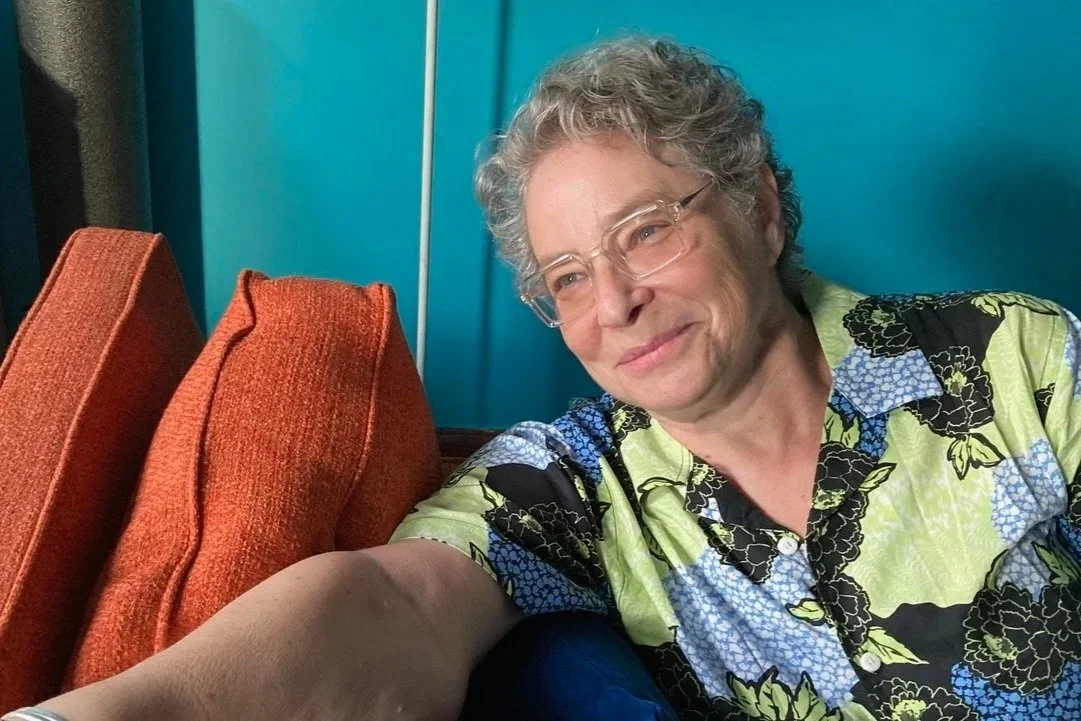
Kim Roberts Meikle is the author of two guidebooks, The District’s Departed: A Guidebook to DC Cemeteries (Rivanna Books, 2026), and A Literary Guide to Washington, DC: Walking in the Footsteps of American Writers from Francis Scott Key to Zora Neale Hurston (University of Virginia Press, 2018). She has written seven books of poems, most recently Q&A for the End of the World, a collaboration with Michael Gushue (WordTech Editions, 2025). Meikle co-directs the Pride Poetry Fellowship at the Arts Club of Washington. She has been the recipient of grants and fellowships from the National Endowment for the Humanities, Humanities DC, the DC Commission on the Arts, the Rose Library at Emory University, and 21 artist colonies and residency programs. https://www.kimrobertsmeikle.com/
Gregory Luce is the co-founder and poetry editor of Washington Unbound. He has published six chapbooks. He lives in Arlington and writes a monthly column for the online arts journal Scene4.