“Moving through the world with openness, courage, and curiosity”
An interview with Ebony Walden
By Norah Vawter
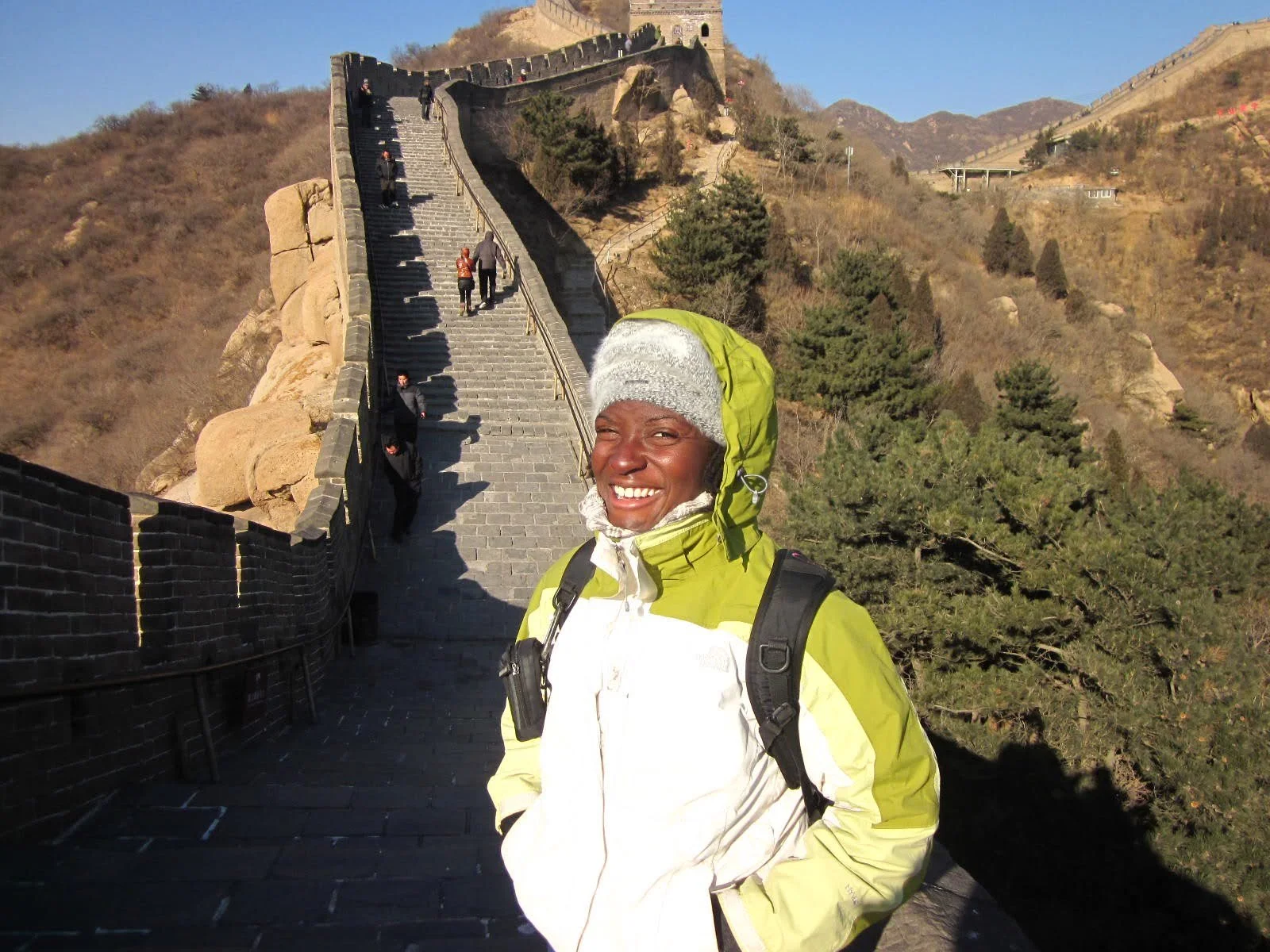
When Ebony Walden was nearing 30, she decided to travel the world. She raised money, planned out an epic journey, quit her job, and lined up opportunities to volunteer and teach English. Traveling to many countries and five continents, she spent eight months on her solo trip around the world, sharing her love of poetry with the people she met. Years later, she has written a memoir about her travels, and what she learned about herself in the process. She was kind enough to chat with me about her book, Where I’m From: A Poetic Journey Across Five Continents.
WU: Can you start us off by introducing yourself to our readers? Tell us a little about your childhood, family, education, and what led you to want to travel around the world at age 30.
EW: I am an author, filmmaker, consultant and speaker who has been to fifty countries and all fifty U.S. states. I grew up in Jamaica, Queens, and Hempstead, Long Island, in New York. I was raised in a single-parent household with my mom and two sisters. Though we often struggled financially, my childhood was full of the support of extended family and love.
I went to Georgetown University for undergrad, where I studied business administration, and the University of Virginia for graduate school, where I studied urban planning.
I have always been someone who could envision a life beyond my circumstances. That is how I got to Georgetown and UVA. In 2007, I made a vision board of my life goals. On it was a passport and a globe. I knew I wanted to visit six continents in my lifetime but I had no idea I’d go on an around-the-world trip and visit them all in one fell swoop. So the trip felt both intentional and impulsive at the same time.
In the summer of 2009, a friend called me and said he was going on an around-the-world trip. I was intrigued by the idea. So I did research on it, then planned my route, sold my car and valuable possessions, and fundraised by asking 150 people to give me $150. A year after that phone call, I was on a plane.
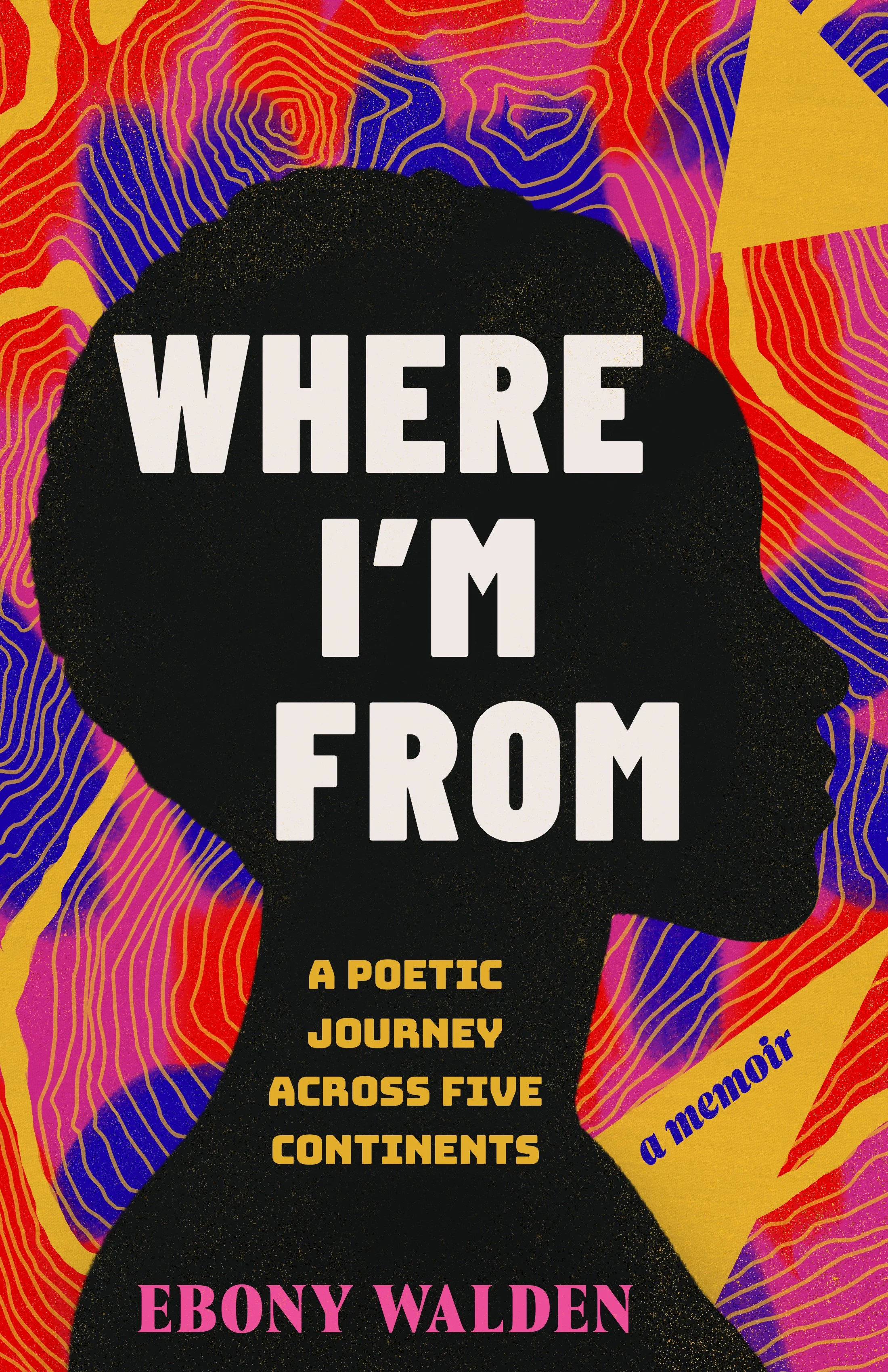
WU: When did you start writing and performing poetry? It seems like the open mic scene in Charlottesville was a big part of your life in 2009 and 2010 when you were imagining this trip. How did your love of writing intersect with your interest in traveling?
EW: I started writing and performing poetry because I hosted an open mic. In March 2009, a friend asked me to help him promote a one-time poetry event in honor of a community poet. I said, “Only if I can host it.” He said yes, and the event was so diverse and successful that I decided to do it monthly.
Because I hosted it, people assumed I was a poet. After about three events, I was inspired and said, “I can do that.” I started writing and performing, first mimicking what I saw and then finding my own voice. I loved watching and creating space for others to share their stories of joy, excitement, humor, and even pain. We were being human together.
I was a writer before then, though. I have written way too many blogs since I graduated from college. I blogged and wrote poetry during my trip, which I called The Poetic Justice World Tour.
The purpose of the trip was to use my blog, poetry, and the “Where I’m From” poems I wrote with people to highlight the beauty and brokenness in the world, and to find the beauty in the brokenness. Poetry was a tool for reflection and engagement. Travel was the source material.
I left thinking I was going to document other people’s stories of where they were from and the beauty and brokenness in the world. But travel became a mirror that forced me to examine my own childhood, family, identity as a Black woman, ambitions, and wounds. It ultimately changed my perspectives on life, love, and relationships.
I had to come to terms with my own story and identity and find the beauty and brokenness in both.
WU: What was your favorite place to visit? Your least favorite?
My favorite place on the trip was probably Kenya. I LOVED the people. They were very welcoming, full of generosity. Even though they weren't rich financially, they were rich in spirit and grace. They also embraced me as a Black person. I think it also does something for the soul of a Black American to go to a majority-Black country. We are a “minority” in the U.S., so it is nice to be in a place where being Black is the norm.
I also loved going on safari in the Maasai Mara. It was fantastic. You really get to see the circle of life, to borrow from The Lion King. You realize how small we all are, but also how things fit together in nature. That was the best experience of wildlife and the natural environment.
I don’t know that I have a least favorite place, but South Africa and Peru were the most challenging by far. I had challenging volunteer experiences in both places, struggled with health issues in Peru, and South Africa’s racial dynamics were difficult to witness. But each place gave me something different, even when the experience itself was challenging.
WU: Can you talk to us about the challenges you faced as a Black woman traveling alone?
EW: Oh, the vicissitudes of traveling while Black! My backpack was 50 pounds, and being a Black person and a woman was something I also had to carry with me everywhere. I could never put it down.
In a piece I wrote for Parlé magazine, I chronicle my experiences across six continents. Sometimes I was a sister. In Kenya, I felt embraced, and while volunteering in India, the children called me didi, meaning sister. Other times, I was a spectacle. I was photographed at the Taj Mahal, and I was stared at often. In the mountains of Peru, an entire school stopped when I walked in on my first day volunteering. I don't think they had seen a Black person before.
Everyone was curious about my locs. My hair was its own character, but I took it all with a grain of salt. People were rarely malicious, and I didn’t experience any overt racism.
As a woman, I always had to be hypervigilant about my safety. I was aware of my surroundings, and I never walked alone at night.
People ALWAYS asked if I was married and if I had children.
I also witnessed how precarious being a woman around the world can be: many marrying young, living with the fear of sexual assault, and not having proper sanitary products and missing school as a result.
On the flip side I saw how powerful, creative, and resilient women are around the world. Most of the places where I volunteered, including schools, community centers, and children’s homes, were started and run by women. Women were also showing up as craft makers, social entrepreneurs, and pillars in their communities.
The whole experience was about embracing the both/and of life, identity, my story, and womanhood, being both strong and soft.
WU: What advice would you give to someone contemplating a similar trip?
EW: Know your purpose, your why for doing the trip, because it will get hard, and you have to know why you embarked on it to begin with.
Have some planned rest and luxury stops. It can be hard to take in the world on a constant basis. Make space for a retreat.
Find friends of friends and meet up with them. I also joined Servas, an international hospitality organization, met up with people through Couchsurfing sites, and now I join “Black in ___” groups on Facebook. You can travel alone, but you will need community. Those connections were lifesavers for me.
Lastly, write and capture everything. I had three journals, still have a bunch of trip paraphernalia, and 200 pages of a blog, so I could come back to the experience and write about it extensively.
WU: What are you reading, watching, or listening to? Bonus points if it’s a D.C. area author!
EW: I’m reading like four books right now:
My friend Robert J. Patterson, who lives in the DMV and is a Black Studies professor at Georgetown University, has a new book called Black Narratives on Slavery: A Very Short Introduction.
Never Tell a Black Girl How to Black Girl by Amena Brown
Where the Wildflowers Grow by Terah Shelton Harris
Queenie Is Working on It by Candice Carty-Williams
I also just finished A Different World on Netflix. LOVED it!
WU: What have I missed? If there’s anything you’d like to add, go for it!
EW: This book is for anyone, but especially Black women who love to travel and are interested in explorations of identity, growth, healing, self-discovery, and cross-cultural exchange. I hope readers are inspired by my journey, but I don’t think you have to go around the world to live like a traveler.
Living like a traveler means moving through the world with openness, courage and curiosity, practicing presence, making meaning of everyday experiences, connecting deeply with yourself and others, and being open to the ways in which new experiences can be portals to transformation.
This spirit of adventure continues through my travel documentary series, Black Beyond Borders, which explores Black life and culture across the African diaspora and beyond. Season One follows my six-week remote-working trip to Dakar, Senegal, and has won several awards for Best Web Series. Season Two, coming in 2027, explores Afro-Colombian life and culture across three cities in Colombia.
I also write Beyond Borders on Substack, where I explore travel, transformation, and liberation.
You can learn more about my work as an author, filmmaker, consultant, and speaker at www.ebonywalden.com and follow me on Instagram at @ebonywalden80.
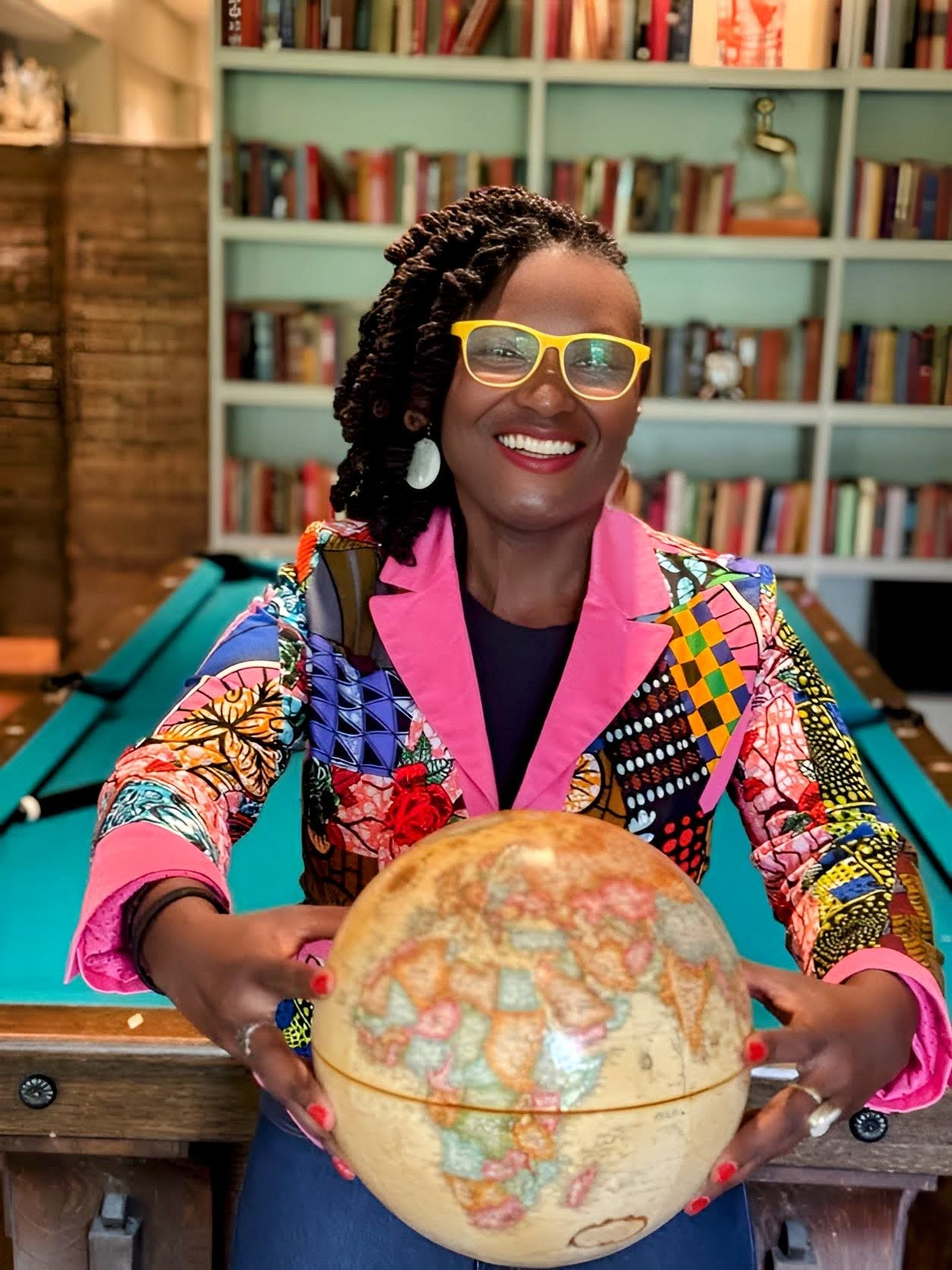
Ebony Walden is an author, filmmaker, consultant and speaker who has traveled to nearly fifty countries and all fifty US states. She is the author of the soulful travel memoir, Where I’m From: A Poetic Journey Across Five Continents and the creator of Black Beyond Borders, an award-winning documentary series and podcast exploring Black culture across the African diaspora. Ebony also writes Beyond Borders, a weekly Substack newsletter on travel and transformation. She lives in Richmond, Virginia.
Norah Vawter is the co-founder and fiction/nonfiction editor of Washington Unbound. Her debut novel will be published by Regal House Publishing in 2028. Follow her on Instagram @norahvawter and check out her Substack, Survival by Words.