Creating art, conversations, and community
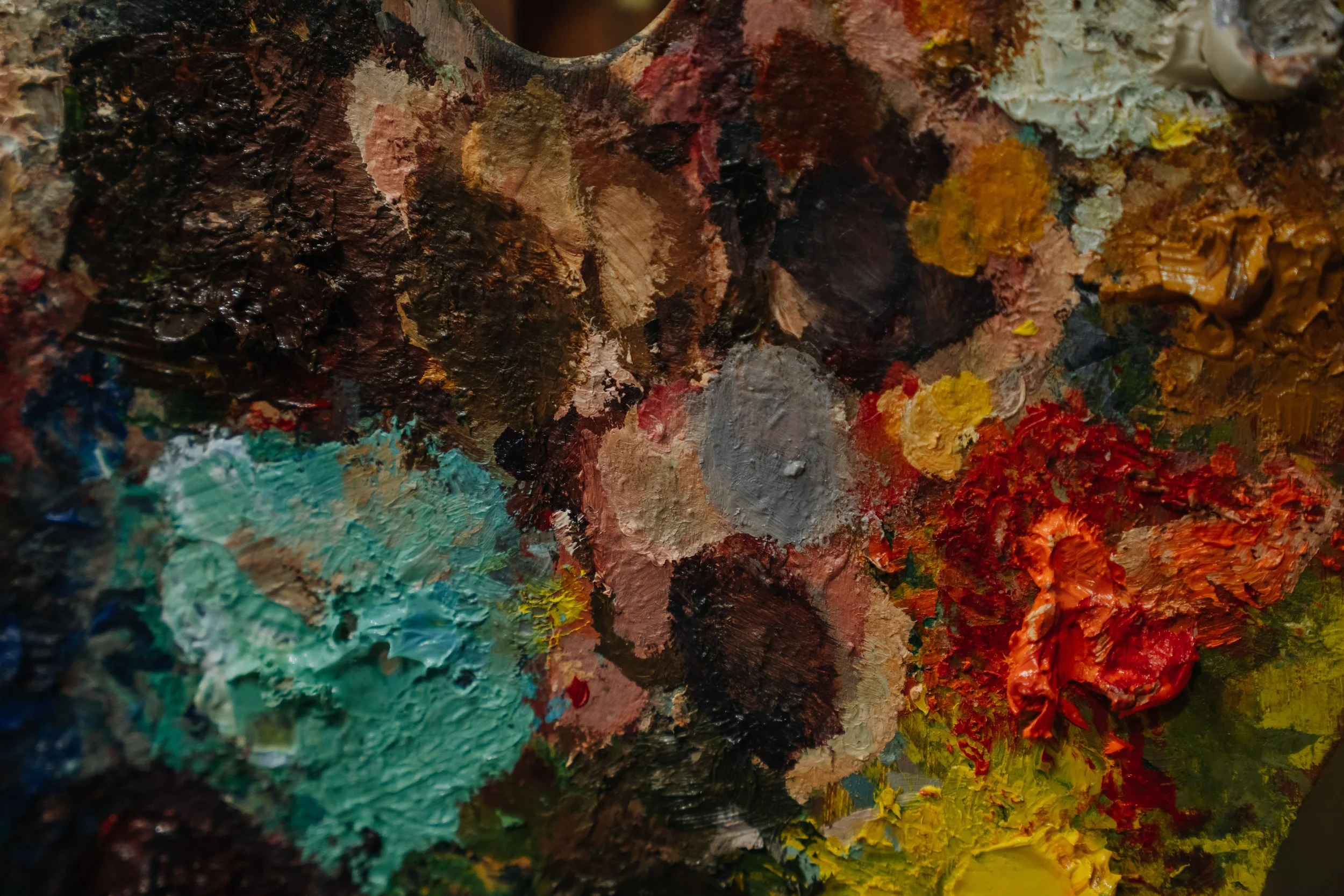
An interview with ARTWIFE Magazine co-founder Hannah Harlee
By Norah Vawter and Gregory Luce
ARTWIFE Magazine is a D.C. based literary journal founded by Hannah and Erica Harlee in 2022 accepting fiction, nonfiction, visual art, and video art. But it’s so much more than a journal. Hannah Harlee was kind enough to sit down with us and tell us the origin story of this very cool venture. The more we chatted with Hannah, the more we realized that what she and her wife Erica are interested in is sharing their love of words and art, but also building community and fostering conversation. Over the last few years, Hannah and Erica have truly integrated themselves into the DMV literary community, while at the same time expanding ARTWIFE to include a podcast and an online “creative hour.” They are now actively planning to open an independent book and wine store.
I genuinely loved every moment of this interview, and it hammered home to me, once again, how special the DMV literary community is, not only because Hannah and Erica are examples of fantastic literary citizens, but because this is a special place where new publications and organizations can not only survive but thrive. Greg and I talk all the time about what makes the Washington area literary community so special, and believe me when I say we have a lot of thoughts and theories. We started Washington Unbound because we love this community so much, and we wanted to find a way to give back and to be part of the ongoing conversation and creation of the DMV lit scene. Our general theory is that what’s special about our community is that it is so warm, welcoming, and generally noncompetitive. And there’s so many of us. The bench of talent and enthusiastic literary citizens in the Washington, D.C. area is incredibly deep. This makes the area particularly fertile for new ventures. It’s in this fertile ground that ARTWIFE has put down roots, and within this wonderful community that ARTWIFE will no doubt continue to grow, expand, and give back.
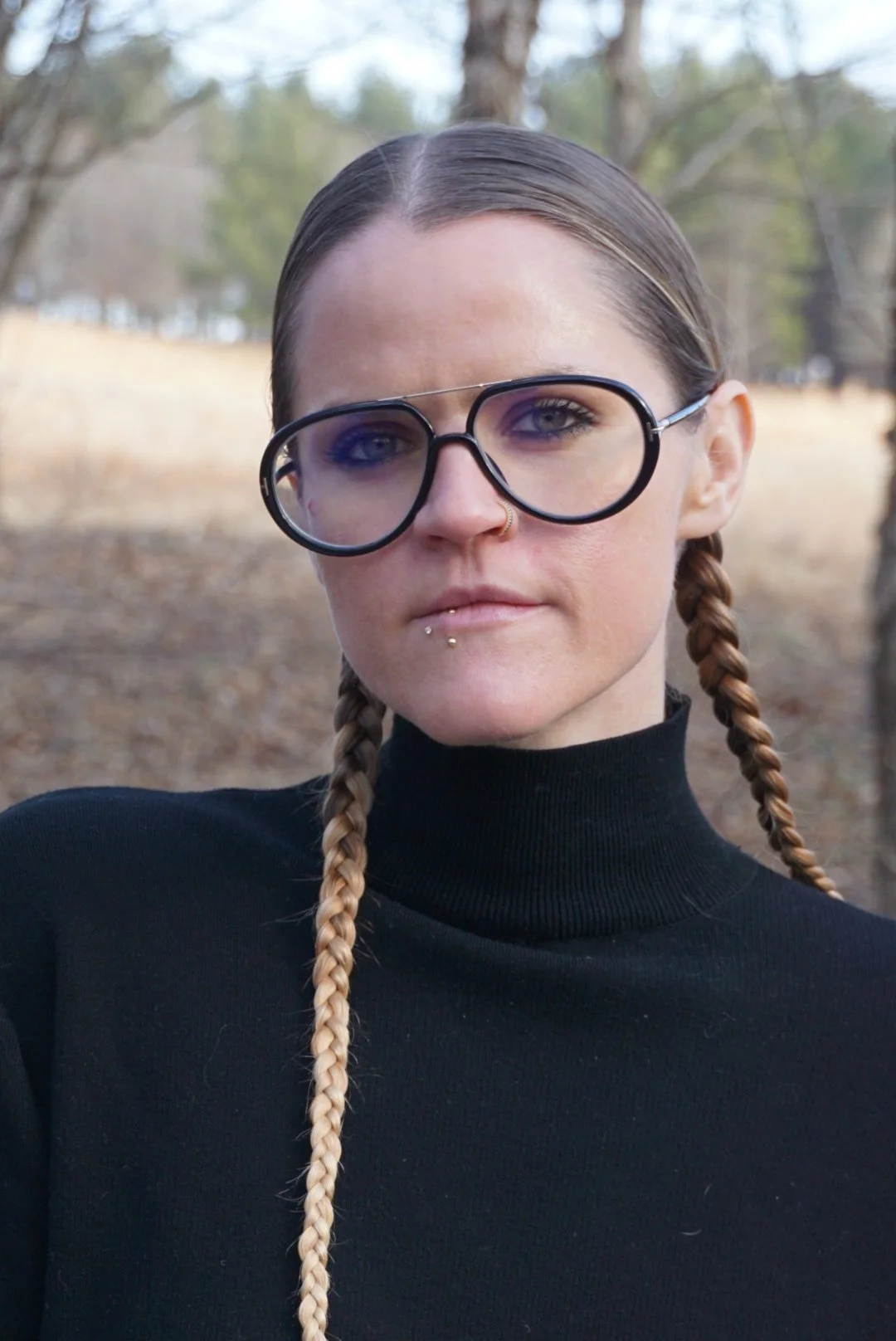
Hannah Harlee
WU: Can you start off by telling us about your background, and your wife's background. When and why you started to write, to be a creative person.
HH: I've always been interested in reading and books, like so many writers. I think we all have that in common. I didn't always know that I wanted to be a writer, but I always felt drawn to the arts. I used to be more interested in painting and drawing when I was younger. When I graduated from college, I had gotten a degree in education. I thought I wanted to be a teacher. All my family are teachers in public schools, on both sides of my family. But after a little bit more consideration, I realized that wasn't the right path for me, and so I went abroad to teach English to kids, and you know, tutor English for families in Istanbul, Turkey.
When I was traveling, it was 2010 and blogs were a big deal. Blogs were all the rage, and everybody was doing that. So that's how I got started writing, and it started to get to the point where I would write something, and I would feel ... the way that I describe it is that I would feel clean, like I had finally done the thing that I was meant to do. It got to this place where if I didn't write my blog post, I would feel kind of gunky or blocked in a certain way. So I just followed that thread, followed that feeling, and started studying the craft. I started doing writing workshops and things like that, and then I went to get my MFA, and that was a great experience. I'm so glad that I did that.
Now Erica is different. I call her Sporty Spice in our relationship. She's got a business background, and she's a very embodied person. She's a martial artist, so she trains jiu jitsu, and she trains Muay Thai, and she also teaches those disciplines. She's a martial arts coach, but the place where we have an overlap is that we really love pop culture, and culture in general, and we're huge Lady Gaga fans. And so, we had gone to see Lady Gaga on the Chromatica tour, and just came away from that really lit up and excited and inspired by this person who was living her art in such a complete way, and such a unique way. I started getting visions in my mind of this magazine. It wasn't called ARTWIFE at that point in time, but I just started thinking about it. I had worked on a literary journal when I was in my MFA program and really enjoyed that experience, and so started thinking about [creating a new publication].
I'm so grateful that Erica and I have these two different backgrounds, because I bring the writing side to it and the editorial, and she brings more business acumen, which I'm so grateful for, and she files the taxes and does things like that, so it's really nice to have that kind of a balance.
WU: I just want to interject something quickly. I feel like your website reflects some of your original interest in visual art. I don't know if you have a specific web designer, if it's you and Erica or someone else, but it's so attractive, and it draws you in. It's clear somebody gave a lot of thought to the visual impact, which I think is a lot of times people don't think about. I worked in publishing, and the design elements were very important. So, I wonder if you have something quickly to say about that.
HH: Well, first of all, thank you. That really means the world, because it is very intentional, and I do all the design, that's my role, and it's a really fun part of it for me to have that creative outlet.... When I first was visualizing this magazine, we didn't have money to pay contributors. We now do $20 per publication, but in the early days we didn't have that. So, I was thinking: How can I give people value in non-monetary ways? I thought portraying their work in a way that respected the work and made it look professional and cared for—here's how I can contribute, and make people feel like their work is important to us, because it is. I'm also a submitting writer myself, and sometimes I have felt like, gosh, I know this is a great journal, but the way that it looks, it almost detracts, or makes it feel a little bit amateurish, or something like that, just because design isn't at the fore. And that's okay, not all journals have to be like that, but [the design] was something I really wanted to focus on and pay a lot of attention to. It's a great creative project for me as well.
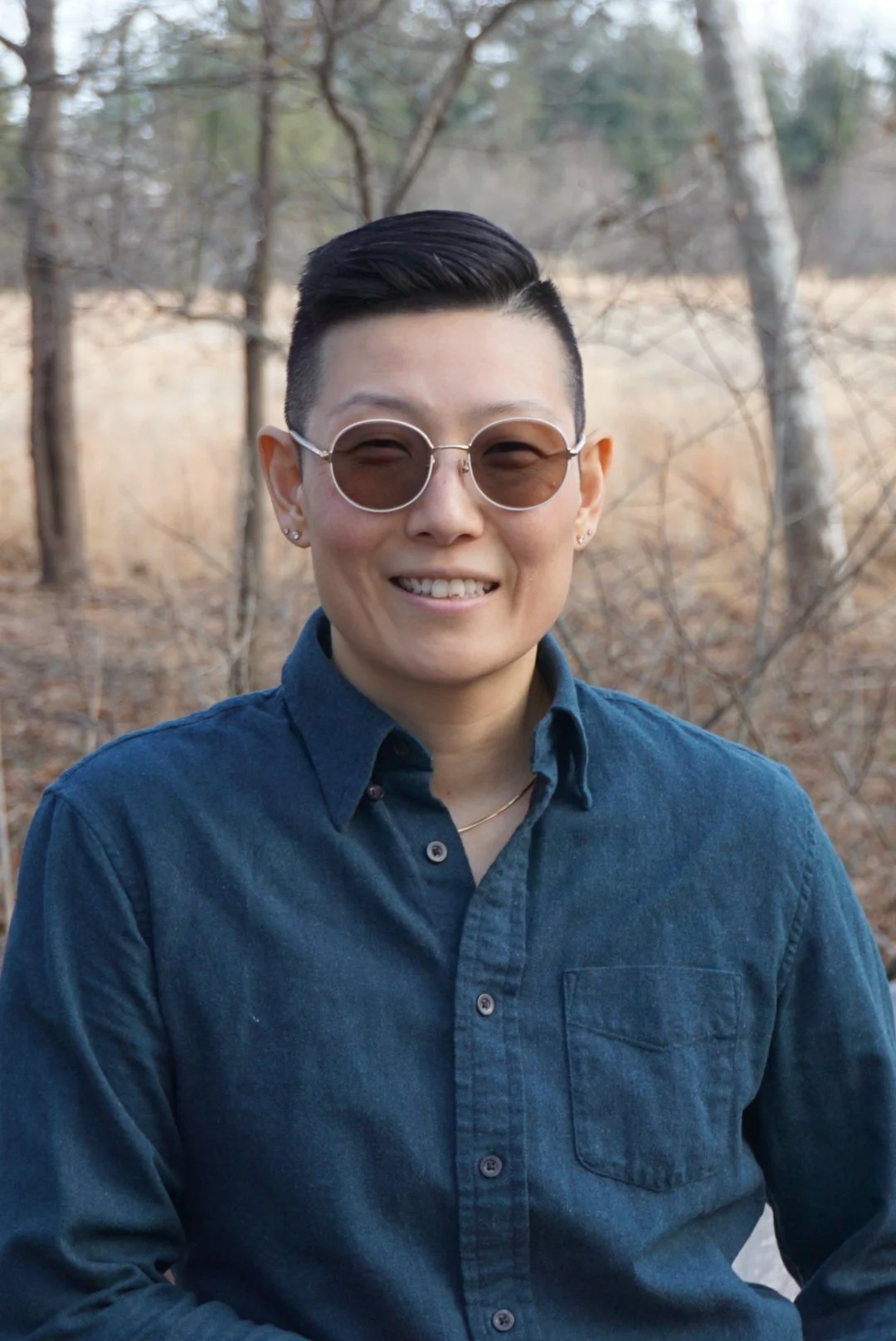
Erica Harlee
WU: I love that, and I do think that as a writer submitting it makes a big difference how professional the publication looks, and how much care has been put into it. I love what you're saying about honoring the submitters. So, where did the name ARTWIFE come from? And then how did you get started with this publication?
HH: That was a really collaborative effort. I originally wanted to call it Art Form, and Erica had the brilliant idea to go, well, let's look at what other things are named and not name [it something that was too similar to an already established publication], and of course, there's Art Forum, and so that didn't make sense. It's way too similar.
For a week, maybe, we were batting around names. Art Class, Art School, all these different kinds of portmanteaus. I can't remember if it was her, I think it was her, she said Art Wife, and we both paused, and we were like, this is it. That feels right...I mean, first of all, it makes sense because the two of us, we're wives working on this project together. But I really like the bigger implication of being wedded to one's art. The idea of the spousal relationship, it's a lifelong commitment, and I like that idea of being married to your art as well, and committed in a lifelong way. So that's what we're trying to evoke with that name.
Oh, and then how we got started. Well, like I said, I was really fortunate to have the experience of working behind the scenes on a journal in my MFA program. I was the managing editor for a while, and then the faculty advisor after I graduated. That gave me everything I needed to know about running a magazine or a journal. I would recommend that to anybody who is interested in this path or is an MFA student, to volunteer for a journal. It's a really good way to learn.
It took several months to get [ARTWIFE] off the ground. There was a lot of work behind the scenes to figure out our web hosting platform, join CLMP, get our Submittable account, but mostly it was the design aspect that took the longest time. I had to learn Photoshop. I had never used it before, but I taught myself with videos on YouTube. And then, you know, just kind of figuring out our operations and getting those written out and listed on the site. So that was the part that took the longest, and then we launched in November 2022. And from the beginning it's been mostly people we didn't know. Submittable is such a great way...I know people have their pros and cons about Submittable, but it's a really great way to get connected with writers all over. From the very beginning we had a lot of submissions from people around the world.
WU: You began on the West Coast. Tell us a little about starting out there, and how did you end up here?
HH: I am from the West Coast. I was born and raised in Tahoe. I went to college in San Diego, and then lived in San Francisco for about a decade. Erica is from New York. She grew up in Queens and Long Island, and then she went to college here in D.C. She went to George Washington, and her mom now lives in Virginia. She runs a small business, a nail salon in Old Town Alexandria. We were in San Francisco for a lot of years, and that's where we met, where we got married. I love San Francisco, and the West Coast is home for me, but we were both working in Silicon Valley, and for Erica, especially, that type of work wasn't sustainable anymore in terms of aligning with our values. To live in San Francisco without having a Silicon Valley job is really challenging price-wise. So, we got to the point where it was time for a change, and so it made sense to come live [near her mom] for a while. We'd lived close to my family for a while.
We moved in October 2023, and I absolutely love it here. I had no idea what to expect. I'd been to D.C. once briefly when I was younger, but I had no idea what to expect. I spent the first year, or maybe like 15 months, kind of in my own little cocoon working on a manuscript, but then once that was finished, I started exploring, you know, the city and the communities more. I was incredibly pleasantly surprised by the literary community here. How active writers are, how welcoming, how warm. I really think of Washington, D.C., and the surrounding areas as a template for what a strong, positive, vibrant literary community can be, and I had no idea, so that was a really, really pleasant surprise.
WU: That's the whole point of Washington Unbound, which is also why we wanted to interview you, because you are a growing part of the community here. Sometimes D.C. [is thought of] like we're second rate to New York. New York has many things that we don't have, but they don’t have the kind of community we have here.
HH: It's a lot to be proud of. I have been so impressed. I've just felt welcomed from day one, and like we’ve talked about, you and I met at Barrelhouse, but we crossed paths at 804, we've crossed paths at the Tenley Library readings.
WU: Yeah, AWP and Inner Loop, all of which are great examples of the way the community functions. So, what kind of work does ARTWIFE look for, and what's your decision-making process?
HH: We publish short stories and personal essays. We also accept submissions of visual art and video art. For prose, we take submissions up to 3,000 words, and we skew literary, we don't tend to go for genre. We have published some speculative, but I wouldn't say that that's our primary focus by any stretch. In terms of that more intangible question of what we look for, you know, it's hard to describe, but the thing that I always say is that we want writing that takes care with itself. Where you can tell that the writer is making choices consciously on the page. That's what makes good writing, of course, but you can really feel it when the writer is in there, and I would say we tend to publish a lot of fairly emotional work. The emotional specificity and presence is a throughline in a lot of the work that we tend to accept. In terms of the decision-making process: I read all the submissions. Our submission windows currently are two months long, so I like to get all of the submissions in, and then look at them as a whole before making a lot of solid decisions, unless it's one of those just immediate [yeses], I know this is the one. And when it comes to visual art, I look at all those submissions as well, and then that's when I pull Erica in for another opinion, because visual art is neither of our area of expertise. We just do it because we appreciate it, and we enjoy it ourselves, but I've always really liked the way that Erica looks at and engages with visual art. One of our very first dates when we met was [when] we went to the SF MoMA, the Museum of Modern Art in San Francisco, and I remember I said to her, you're really having an experience with these works, I could tell that she was being moved by these pieces of art, and you know, it's not always like that. A lot of people will kind of outsource their experience to the descriptive wall text or something like that, but she was really engaged with each piece of work, and so I really like to get her thoughts and feelings on the visual art submissions that come through. So, it's just the two of us.
WU: I'm guessing that you, and especially Erica, are probably enjoying the art offerings of the D.C. area?
HH: Oh, it's so great. To have these free museums, is really special, you know, and it's not just here in DC. We've really enjoyed going to Glenstone up in Maryland. That's really special. Yeah, it's a feast.
WU: How's the publication grown since you founded it?
HH: That has been a really lovely, kind of surprising, and very fulfilling part of it that I didn't expect. By August of 2023 we had launched the ARTWIFE podcast, which started as monthly episodes on the craft of writing. We were getting all these submissions in the queue, and I was seeing some similar problems with some of the ones that we were declining. I wanted to be able to give feedback [but] it's too laborious to do it one by one. The podcast has since morphed into conversations with writers, with artists, with our contributors, and it's now more of an interview series. That has been really fulfilling and lovely, to meet new writers that way, and one of the best parts of that has been a collaboration with the Inner Loop in D.C. They have their great program, the Authors Corner, in which they spotlight local artists or local authors. Last year we did their podcast interviews, and I'll be doing them again this year.
WU: The Inner Loop has brought so much to the scene here. I guess they've been doing it for a little over 10 years now. We are going to be partnering with them as well. So I think this brings us to another of your initiatives, The Creative Hour.
HH: I was thinking about how to create more community. I felt like we had gotten so many wonderful submissions and published a lot of work that I felt really strongly about, but I didn't know so many of these people still. And I like to work [in the way that the Creative Hour allows for]. I like to have focused blocks of time where other people are helping me to focus, just by their mere presence. We've been doing it over a year now. It's on Monday evenings for an hour, starting at 8:30 Eastern time. Anyone can come, any medium is welcome. We mostly have writers. We also have screenwriters. We've had someone who was directing a play. We've had painters. It's obviously free. It's just an artist working hour. It's kind of an accountability hour, and you come when you feel like it. It's been wonderful. I get a lot of work done during those times. We've got a nice little core group, and then a lot of people who kind of float in and out from week to week. I like that it breaks up some of the solitude of the actual act of creation, especially for writers. A lot of people who join are locals, so that's been a really nice extension of what we're doing at ARTWIFE as well.
WU: How does it work? Is there any chatting, or is it just about getting into the work?
HH: We start the hour with a little bit of chit chat, and then I'll ask people, what are you working on tonight? And there's no pressure, people don't have to talk if they don't want to, but pretty much everyone does. And then we will go on mute, and we'll spend most of the hour working. Some people leave their cameras on, some people turn them off, and then towards the end of the hour, I'll call everybody back, and we'll do just a brief check-in about how it went and what people got done, so there's a little bit of accountability there too.
WU: We’re also excited about your idea to open a bookstore and a wine shop. How did this come into your mind, and what's the process here?
HH: Oh, we're so excited too. This really, really comes down to the vibrancy and the warmth of the D.C. lit community. I have just been so buoyed by that, and inspired, and this feels like the right place to have some sort of brick and mortar operation. The vision is a bookstore that stocks primarily literary fiction. We'll have a local authors section, and then the bulk of the bookstore will be literary fiction. And then we're going to serve wine from, they're called wine walls, these machines that are self-service and auto-measured, you may have seen them in various places. It's going to be a place where the community can come and hang out, spend an evening, spend an afternoon, read a book, work on a laptop, have a glass of wine. We plan to have tons of events, open mics, author readings, workshops.
We're in early phases. We've done a lot of business planning and background work, and we just went public with our plans to do this a few weeks ago. We're still in the process of securing a space, so we've seen some real estate here in D.C. We're in a good place with our funding, and we also started a crowdfunding campaign. We have been so moved by the enthusiasm and the support that we've gotten from the community. It's early, but the hope is to be up and running by the end of this year. That's the plan at this point, we'll see how it goes, with all the various factors that go into opening a business, but that's the plan for ARTWIFE Books and Wine.
WU: I think if you're going to come up with a business like that in any market, you could hardly do better than D.C., because we seem to be able to sustain a fairly large number of independent bookstores, particularly relative to our population. Now, on the subject of books, we know you have a novel coming out next year. Congratulations! Do you want to tell us a little more about that?
HH: My debut novel, it's called Celine in Silence. It's coming out May 11, 2027 from Indirect Books. They are a brand-new independent publisher. Actually, at the time of this interview, they just released their first title yesterday. They're a really great risk-taking publisher, and I've been really happy with them.
The story [of my book] is about a young woman who has recently moved to San Francisco, she doesn't know anyone there. She's really quite lonely and isolated, and gets tangled up with a group of spiritual seekers whose practices keep escalating into deeper and deeper extremes. So we see her interfacing with those practices and ideologies and the ways she does and doesn’t change, internally, in the intensity of that environment. And we see her attempts to untangle herself, and the complexities of getting free…as well as the question of whether she actually wants to get free.
WU: That sounds fascinating. Thank you so much for your time, and give our best to Erica. Tell her we would have loved to have met her at this, and look forward to doing so in the future. We're really glad to have you in the community.
HH: I'm so glad to be here. It's the best writing community I've ever been a part of, no contest.
Read the ARTWIFE Magazine and check out the website at artwifemag.com
If you’re interested in joining the weekly Creative Hour on Monday evenings, learn more here. Another way to be part of this community is to visit the digital community bulletin board, and even submit events to the website and newsletter. Also check out the ARTWIFE podcast, with links to listen. And of course you can read the magazine and submit your work. The next open submission period opens very soon, encompassing July and August. And finally if you are interested in the crowdfunding campaign for ARTWIFE Books & Wine and the vision for this shop, learn more here.
Hannah Harlee is the founding editor of ARTWIFE Magazine and the host of The ARTWIFE Podcast. She has an MFA in Creative Nonfiction from UNR Lake Tahoe, and her work has been published in The Rumpus, Khôra, Entropy, Hypertext, The Normal School, and elsewhere. Her debut novel, Celine in Silence, is forthcoming in 2027 with Indirect Books.
Erica Harlee has a Bachelor's degree in Business Administration from George Washington University and she is the head of business operations at ARTWIFE Magazine. After working in Silicon Valley for several years, she is transitioning to a career in mental health and is currently a student in the Master of Social Work program at University of Maryland Baltimore, where she is a SUDIF fellow. She is also a martial artist and a martial arts coach; she has a purple belt in Brazilian jiu-jitsu and over ten years of training in Muay Thai.
Norah Vawter is the co-founder and fiction/nonfiction editor of Washington Unbound. Her debut novel will be published by Regal House Publishing in 2028. Follow her on Instagram @norahvawter and check out her Substack, Survival by Words.
Gregory Luce is the co-founder and poetry editor of Washington Unbound. He has published six chapbooks. He lives in Arlington, serves as Poetry Editor of The Mid-Atlantic Review and writes a monthly column for the online arts journal Scene4.