

A review of Maria Teresa Ogliastri’s From the Diary of Madame Mao
By Serena Agusto-Cox
Under the guise of social equality and defending socialism as a matter of national pride, the Cultural Revolution in China (1966-76) was actually embarked upon to rout out Mao Zedong’s political opponents, elites, Chinese traditionalists, and capitalists. His fourth wife, Jiang Qing (also known by many other names, including Madame Mao) led the “Gang of Four,” which violently suppressed dissent. From the Diary of Madame Mao is an English translation of Venezuelan poet María Teresa Ogliastri's fictionalized collection of poetic diary entries exploring the life of Jiang Qing, Mao Zedong's fourth wife, also known as Madame Mao. Translators Yvette Neisser, founder of the D.C.-Area Literary Translators Network, and Patricia Bejarano Fisher of the University of Maryland bring Ogliastri's Spanish-language work to English-speaking readers, making this complex poetic portrait of a controversial historical figure accessible to a new audience.
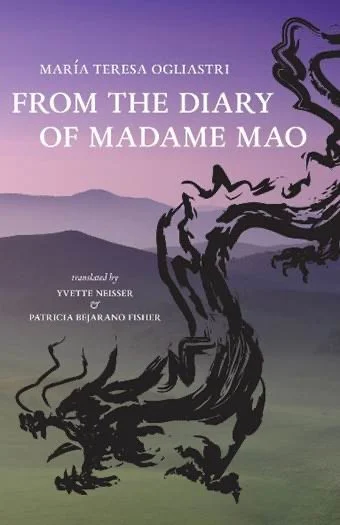
Where do these fictionalized diary entries of Jiang Qing begin? It begins with cruelty. The collection’s central tension lies in its invitation to understand Madame Mao without overlooking her cruelty. Ogliastri’s intimate images bring the reader close to her subject, then unsettle that closeness with glimpses of the power she will wield.
In “Since Then I Have No Mercy,” the young Li Yunhe (Jiang Qing’s childhood name) encounters cruelty through her grandfather’s response to a crab that pinches her toe. He impales the crab on a stick as a lesson in conquering fear. She asks him to kill it, but he releases it instead. The episode brings hurt, revenge, and the exercise of power into the same childhood scene. Its conflicting lessons make the poem more unsettling than a straightforward account of a child retaliating after an injury.
Pain marks the childhood depicted in these poems, including foot binding and abuse by her father. These experiences form part of the collection’s imagined background to her later exercise of power. In “Lotus Feet,” foot binding promises luck and marriage but leaves her feet “gnarled like an old tree.” The contrast between the promised future and the bodily damage makes the image unsettling.
Her mother’s advice to suppress her will extends the poem’s expectation of submission: even after foot binding has damaged her feet, obedience remains the demand. The ending abruptly reverses that arrangement. Readers move forward in time to Madame Mao’s unchecked authority, with “a hundred thousand heads” at her feet. The shift transforms the feet from a site of imposed suffering into the focal point of a terrifying image of power.
These poems view Madame Mao’s past through an empathetic lens while repeatedly turning toward her historical future. Detailed images and storytelling give her journey a three-dimensional form, but each sympathetic moment is juxtaposed with something terrible or unsettling. In “A Tiger’s Leap in the Brush,” the worm’s gradual contraction becomes a lesson in suppressing suffering until she can reclaim her power. The movement from the diminishing worm to the leaping tiger turns that inward suppression into an image of force, mirroring the unleashed violence she wields as the leader of the Gang of Four.
As Madame Mao gains power, she appears increasingly intoxicated by its possibilities, losing the restraint that once governed her actions. This is particularly evident in the poem “Colors of Violence,” in which a painting she intends to depict a bird pecking at an orange morphs of its own accord into a devastating scene of a carriage pulled by horses tumbling over a cliff. The transformation suggests that violence has become inseparable from her world, just as mayhem, murder, and death follow her actions as the leader of the Gang of Four, regardless of her initial intentions.
Her submission to power’s elixir is even more evident in “White-Boned Demon,” when the speaker confesses, “when he kissed me/I felt the tongue of the beast/nesting in my body.” She recognizes that something is taking hold of her, yet she makes no effort to resist it: “I kept threading a needle and sewing my eyes shut/so I wouldn’t see him.” The image suggests a willful refusal to acknowledge what is consuming her.
Upon her imprisonment, Madame Mao is left alone until her death. In “If You Raise Crows,” she laments, “I am left/at the mercy of the mob/where are my guards/those handsome young men.” She has been wholly abandoned, even by those she once commanded. Yet, in “The Chill of Siberia,” she remains uncertain about her circumstances, asking, “what do they want me to confess?” Even in solitude, she has not engaged in meaningful self-reckoning or acknowledged her role in the suffering of others.
Through the English translation by Yvette Neisser and Patricia Bejarano Fisher, Ogliastri's complex portrait reaches readers beyond its original Spanish-language audience. From the Diary of Madame Mao by María Teresa Ogliastri, translated by Yvette Neisser and Patricia Bejarano Fisher explores power’s ability to corrupt and the unsettling ways suffering and cruelty can coexist in one person. Through intimate childhood memories, disturbing physical imagery, and increasingly violent visions, the translators take what Ogliastri constructs and paint a portrait that invites readers to consider the experiences behind Madame Mao's ambition without absolving her of the devastation she later helped inflict.
The poems' shifting perspectives resist an easy distinction between victim and perpetrator, revealing how the pursuit of power can consume the very person who seeks it. Rather than offering a defense of Madame Mao, the collection leaves readers confronting a more difficult question: how do we understand the forces that shape cruelty without losing sight of those who suffer its consequences?
Order From the Diary of Madame Mao from The University of Chicago Press. Yvette will be reading from and discussing the book on December 3 at 7 pm at JF Books.
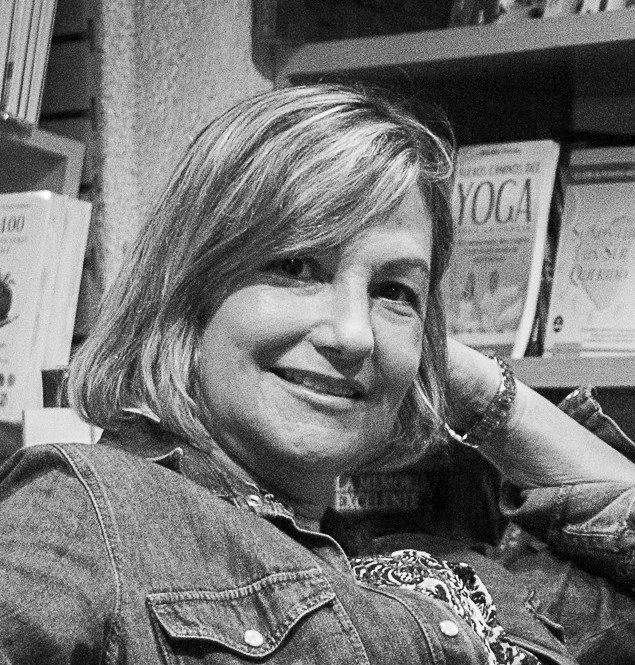
María Teresa Ogliastri was born in Los Teques, Venezuela, in 1952, and lives in Caracas. Author of six collections of poems, she has been featured at poetry festivals throughout Latin America, and her poems appear in several anthologies of contemporary Venezuelan poetry. She has taught philosophy at the Universidad Central de Venezuela, as well as worked as a researcher and editor at public institutions such as the Venezuelan National Library, the Caracas Museum of Contemporary Art, and Fundación Cultural Fundarte.
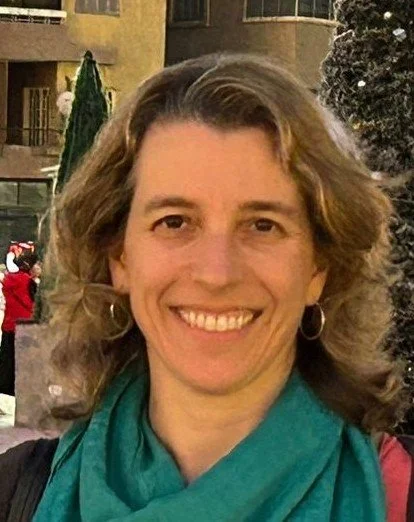
Yvette Neisser is an award-winning poet, Spanish translator, and founder of the DC-Area Literary Translators Network (DC-ALT). Her poems, translations, and essays have appeared in Foreign Policy in Focus, Tikkun, Virginia Quarterly Review, and Split This Rock’s The Quarry. She has taught writing and translation at George Washington University, The Writer’s Center (Bethesda, MD), and other institutions. She lives in Silver Spring, Maryland.
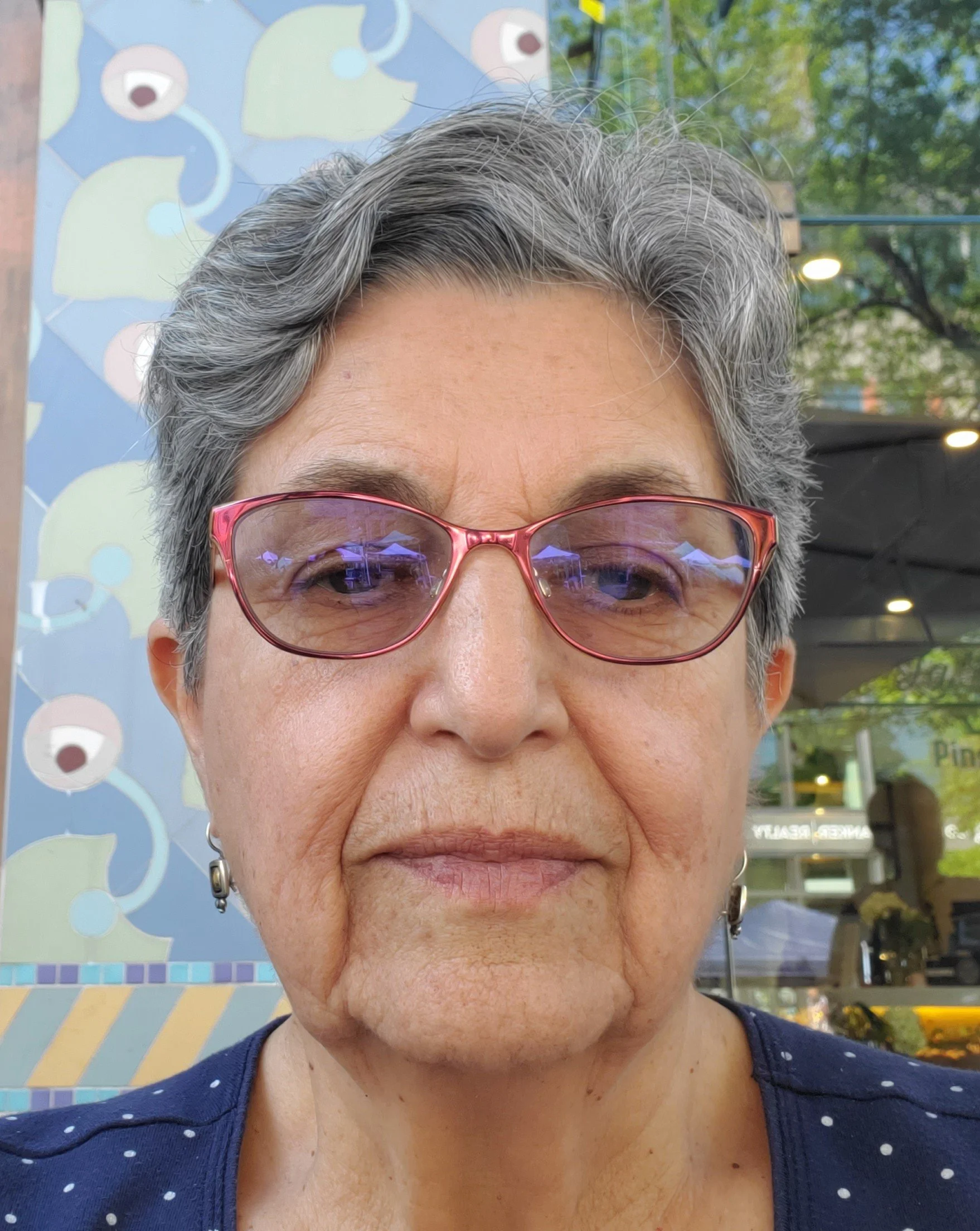
Patricia Bejarano Fisher’s background is Linguistics, foreign language teaching and learning materials development for adult students. A native speaker of Spanish, fluent speaker of English, and avid reader of French and Italian literature, her current focus is literary translation. In addition to co-translating two books by María Teresa Ogliastri with Yvette Neisser, her translations include poems in Laura Shovan’s The Last Fifth Grade of Emerson Elementary (Wendy Lamb Books, 2016). She lives in Columbia, MD.
Serena Agusto-Cox is a Pushcart Prize nominee and Contributing Writer for Washington Unbound. She coordinates poetry programming for the Gaithersburg Book Festival and the Festival’s high school poetry contest. Her poems appear in multiple magazines and anthologies. To help poets, she reviews and markets collections through Savvy Verse & Wit and Poetry Book Tours respectively. Echoes Carry (2026, Beltway Editions) is her debut poetry collection.