
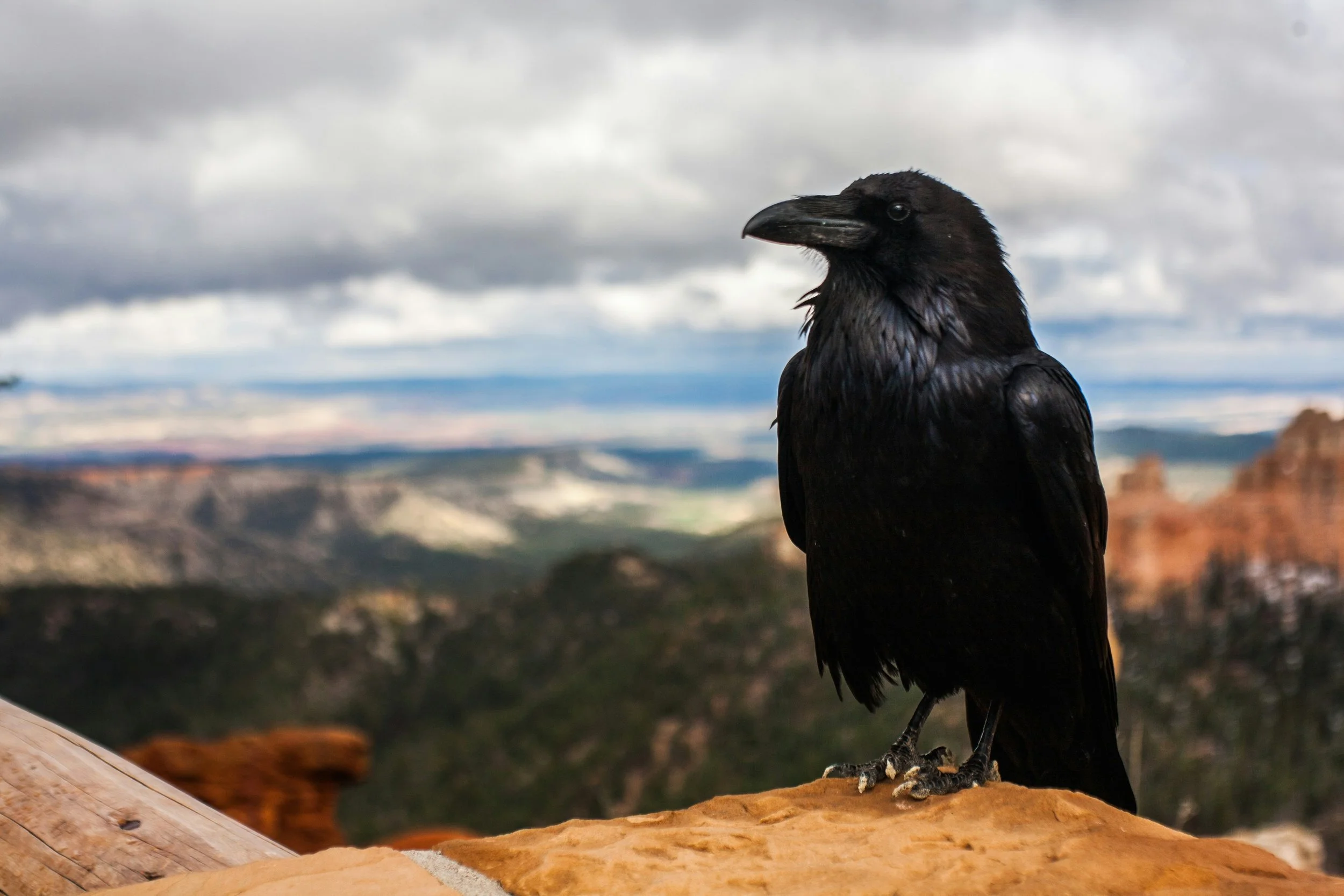
I am looking at just a crow, only one, and wait for more.
A review of J.D. Smith’s The Place That Is Coming to Us
by Gregory Luce
One of the most welcome new books by a DMV poet is J.D. Smith’s The Place That Is Coming to Us (Broadstone Books, 2025). Smith is a long-time mainstay of the D.C.-area poetry community and, from the evidence on view in this collection, his powers have not diminished.
J.D. Smith is a prolific writer of both poetry and prose. The Place That Is Coming to Us is his seventh poetry collection. He has also published a novel, a non-fiction collection, and a children’s book. He is also a great supporter of authors both local and national, frequently sharing submission calls, poetry news, and celebrations of awards and other successes. The very definition of a good literary citizen, Smith is deserving of a close reading of his own work.

Such a reading of The Place indeed pays dividends to its reader. Starting with “Introit,” whose title refers to a piece of music performed as a priest approaches the altar, we are put into a spiritual, if not strictly religious, frame of mind.
“After a great absence
an emigrant returns to a city
he does not recognize, one
that does not recognize him….
Blossom, flock, hibernator are shaken,
and all with them, on seeing
the place that is coming to us.”
This poem both sets the tone for the rest of the volume and also introduces a theme that underlies many of these poems: migration in its several forms or simply the desire to live somewhere different, perhaps more secure, as in “Desideratum”:
“I would like to live
in a former bank, all
stolid columns and masonry
around a vault made for bullion,
built as an anchor
and gated place that chaos
could not prevail against.
One hears rumors of such a place.”
Many of the poems deal with animals and animal-human interactions. It’s hard to choose only only three or four given the quality of all, but here’s some that particularly stood out for me:
“Everything has been said about dragonflies
and their damsel, darning needle kin—
the quartet wings, bowsprit heads,
lengthy coupling in flight—
but how much, today, about this
iridescent specimen that swerves
and hovers barely above water
as if its kind hadn’t done so
since times of dinosaurs and giant ferns?”
(“At Longwood Gardens”)
The precision of the description coupled with the poetic language is typical of this poet’s work.
Smith also considers animals that many find frightening or repulsive, like bats:
“You know they’re out there,
seeming mice of the air
that in fact make up their own order
and mark the skies over
every continent save one….
If no one wants to share an attic
with their waste and ways,
even then they suggest
a wholly other sort of knowing
and inhabiting the world.
For that alone you might miss them
if they disappeared, not to mention
their eating of many mosquitoes.”
(“Of Bats”)
And my personal favorite as a birder and lover of all Corvids:
“Just a crow, the kind found
wherever I’ve lived, where millions have,
one of a species sustained and even favored
by human surplus (i.e., garbage), a species
we might call colleague or mirror,
which troubles us more than loud caws….
I am looking at just a crow, only one,
and wait for more.”
(“Corvid”)
In “Dream With Policy,” though not made explicit, the poet returns to the motif of emigration, depicting an encounter between a seeming refugee and a police or military antagonist:
“one rests in thought on a beach
before a uniformed figure
begins the nightstick beating
one tries to dodge and block
but does not flee—
no thought in pain—
until the uniformed figure
tires and switches hands
then one runs into the surf
shots miss in waves and foam….
one does not look back
but settles into strokes and breaths
toward no other shore
no desired state for now there is
only swimming swimming”
The Place is somewhat of a departure for this poet, at least in my experience, known for his frequent graceful use of formal devices and witty observations. This book is the work of a mature poet who is comfortable with his craft, honed over many years into the quiet yet intense voice on display here. I cannot recommend this collection more strongly.
To learn more about J.D.Smith, visit his website. Order The Place That Is Coming to Us from Broadstone Books.

J.D. Smith has published seven collections of poetry, and he has received Fellowships from the National Endowment for the Arts and the Virginia Center for the Creative Arts. His other books include the fiction collection Transit and the essay collection Dowsing and Science. Smith lives in Washington, DC with his wife Paula Van Lare and their rescue animals. Further information and occasional updates are available at www.jdsmithwriter.com.
Gregory Luce is the co-founder and poetry editor of Washington Unbound. He has published six chapbooks. He lives in Arlington, serves as Poetry Editor of The Mid-Atlantic Review and writes a monthly column for the online arts journal Scene4.